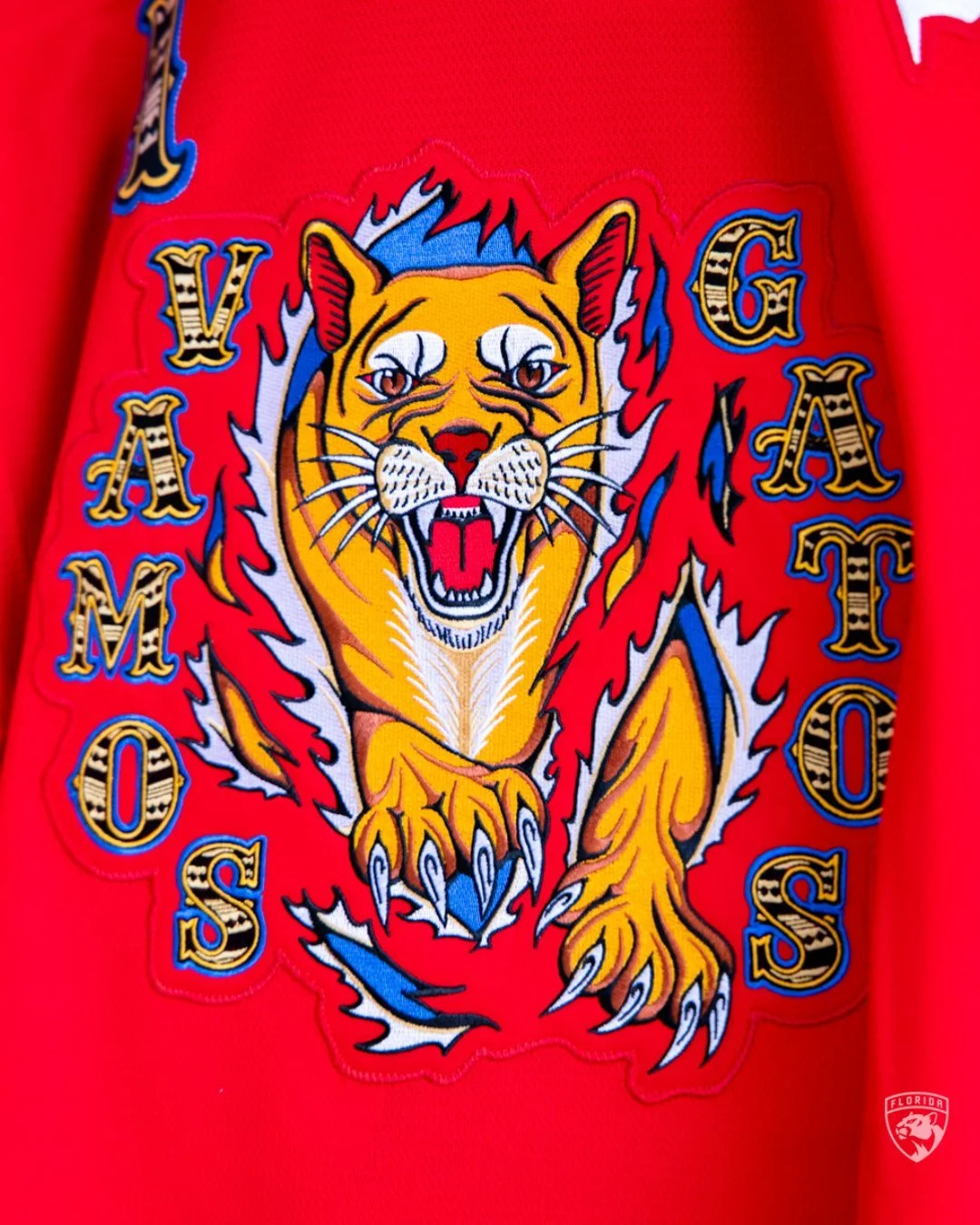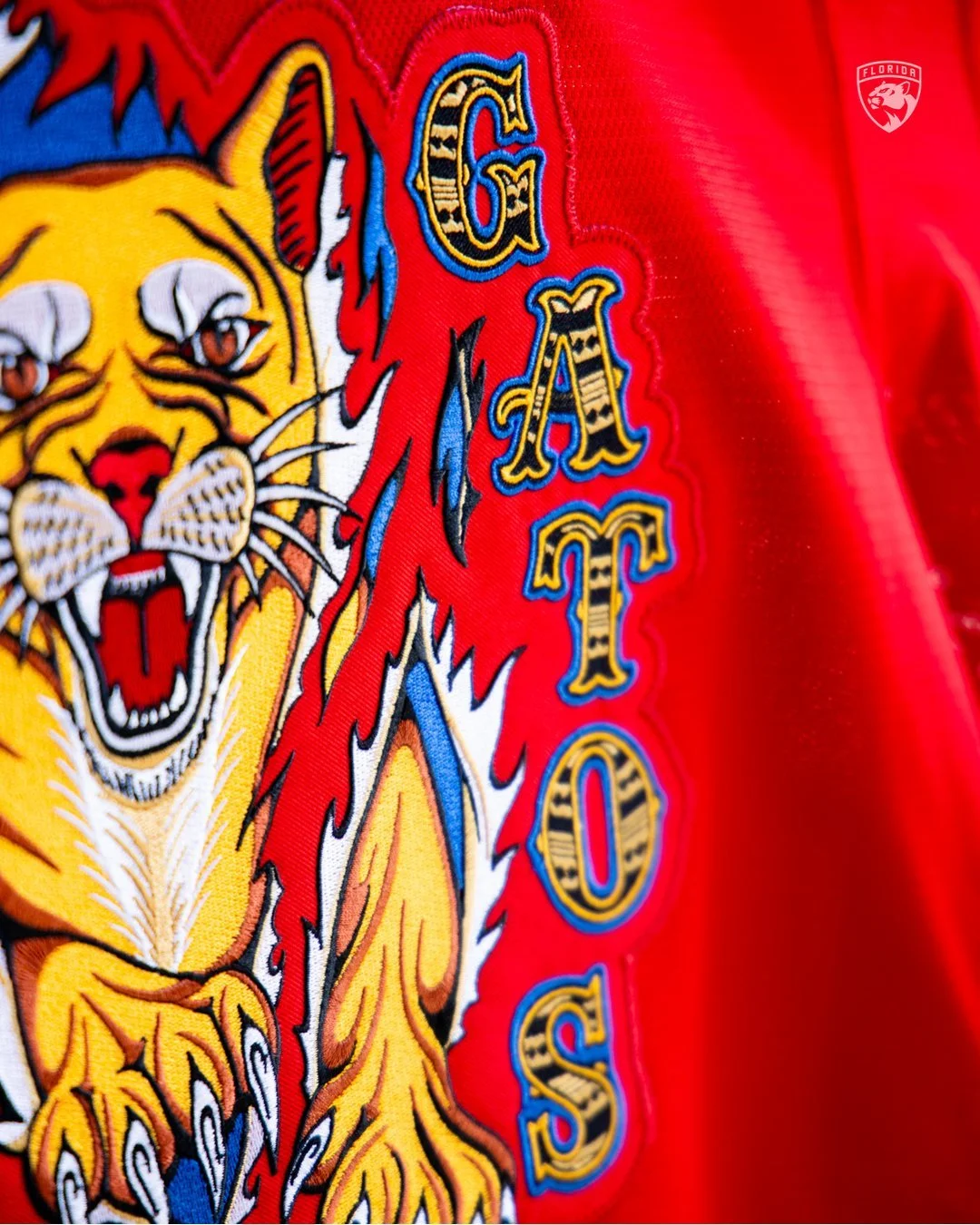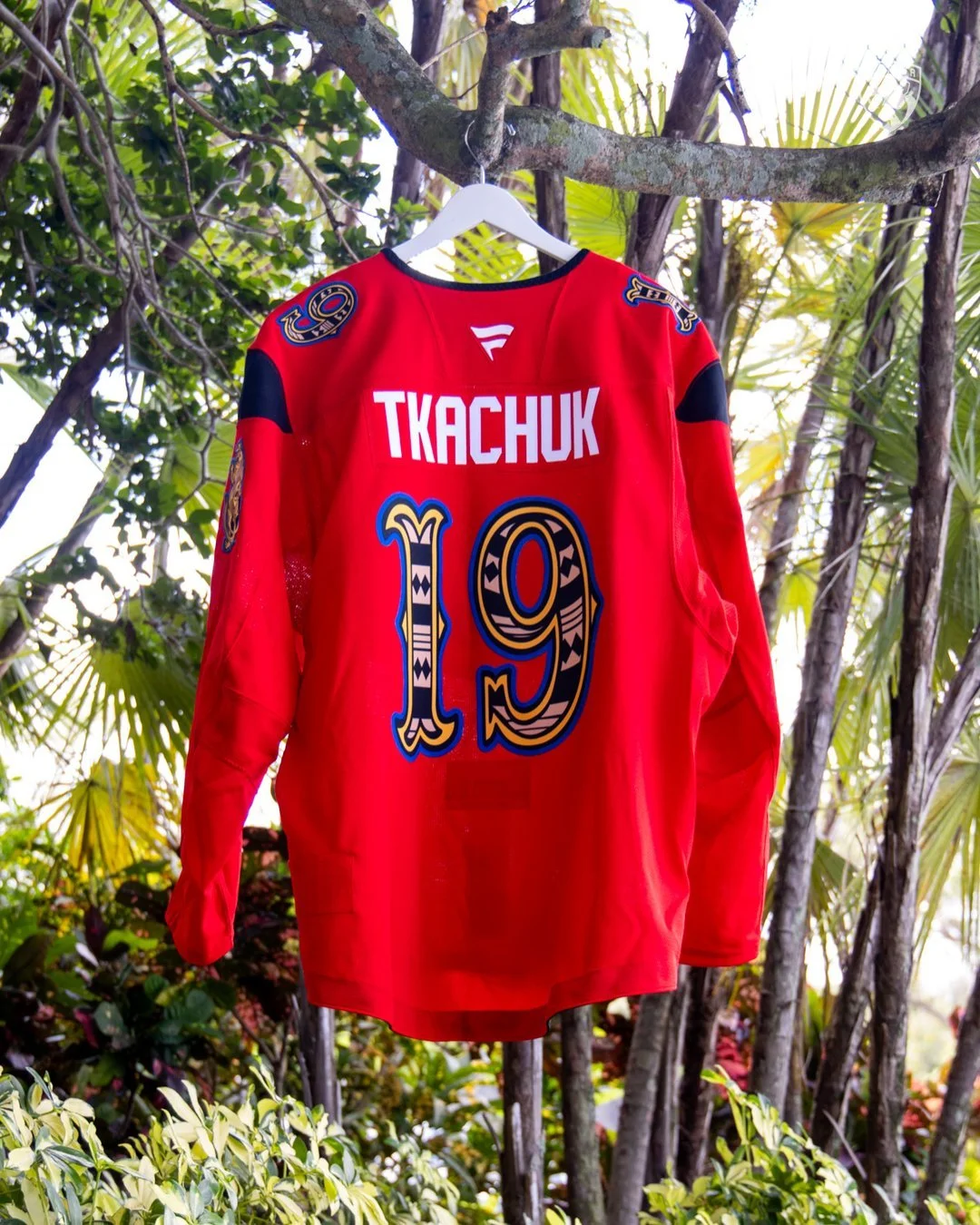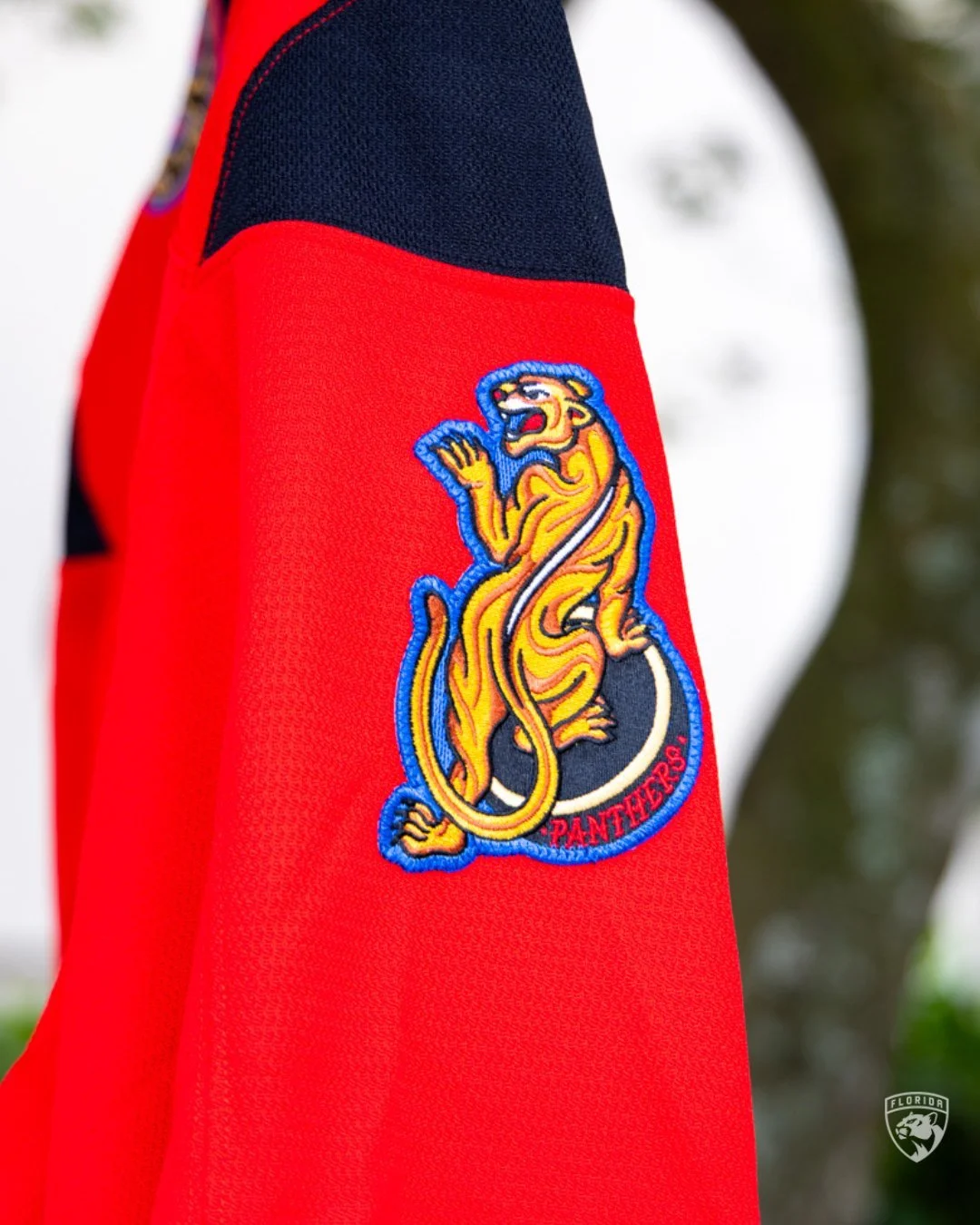
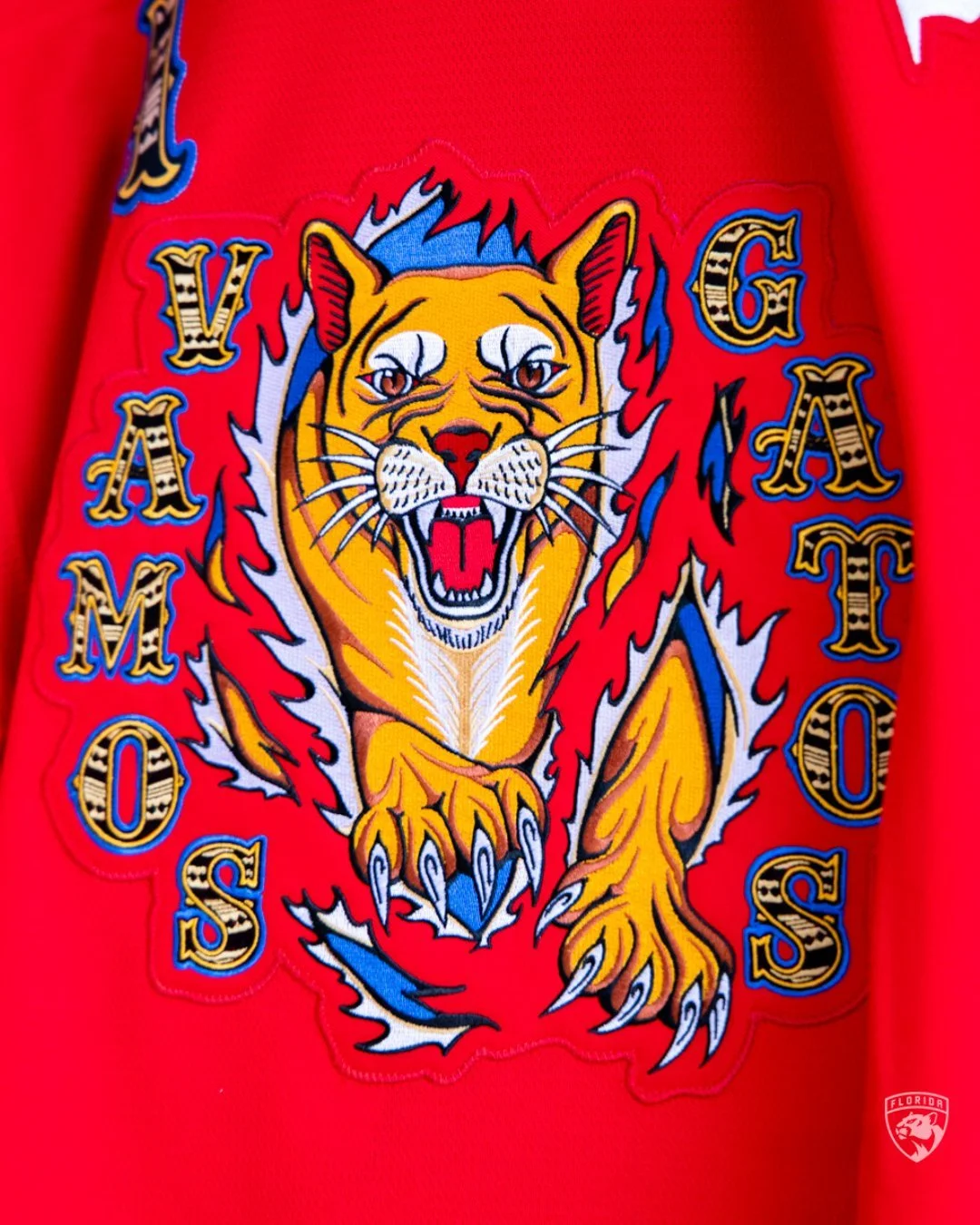
The Florida Panthers are celebrating South Florida’s Hispanic and Latino culture with a special 2026 Vamos Gatos jersey designed by artist Natalia Marin. Featuring a reimagined panther crest, decorative lettering and patterned numbers, the jersey brings a bold artistic approach to the team’s identity.
The exclusive design arrives as part of Vamos Gatos Night on Thursday, October 15, at Amerant Bank Arena.
A bright red base sets the stage for Marin’s detailed artwork. On the chest, a gold panther bursts through jagged blue-and-white shapes, its extended claws and open mouth giving the crest an aggressive, expressive appearance.
“VAMOS” and “GATOS” run vertically on either side of the panther, framing the illustration. The decorative letters feature dark interiors filled with gold patterns, gold edging and a bright blue outer outline. That combination gives the wording its own presence alongside the oversized cat.
The embroidered execution adds texture throughout, from the panther’s facial features and whiskers to the intricate details within each letter.
The same visual approach carries into the jersey’s numbers. The back and shoulder numerals feature geometric patterns, including diamonds, triangles and horizontal lines, within ornate gold-edged forms outlined in blue.
White player-name lettering contrasts with the detailed numbers, keeping the back readable while allowing the custom typography to stand out.
A separate sleeve patch introduces another illustrated panther, posed upright with a curling tail above “PANTERAS” lettering. Dark shoulder panels and collar trim help frame the red jersey, leaving the artwork as the focal point.
The jersey is part of a wider Vamos Gatos celebration honoring the region’s Hispanic community through music, art, food and recognition of local leaders.
With an expressive panther crest and coordinated artwork across the lettering, numbers and sleeve patch, the 2026 Vamos Gatos jersey gives the celebration a distinctive visual identity, one built around the Panthers and the community they represent.
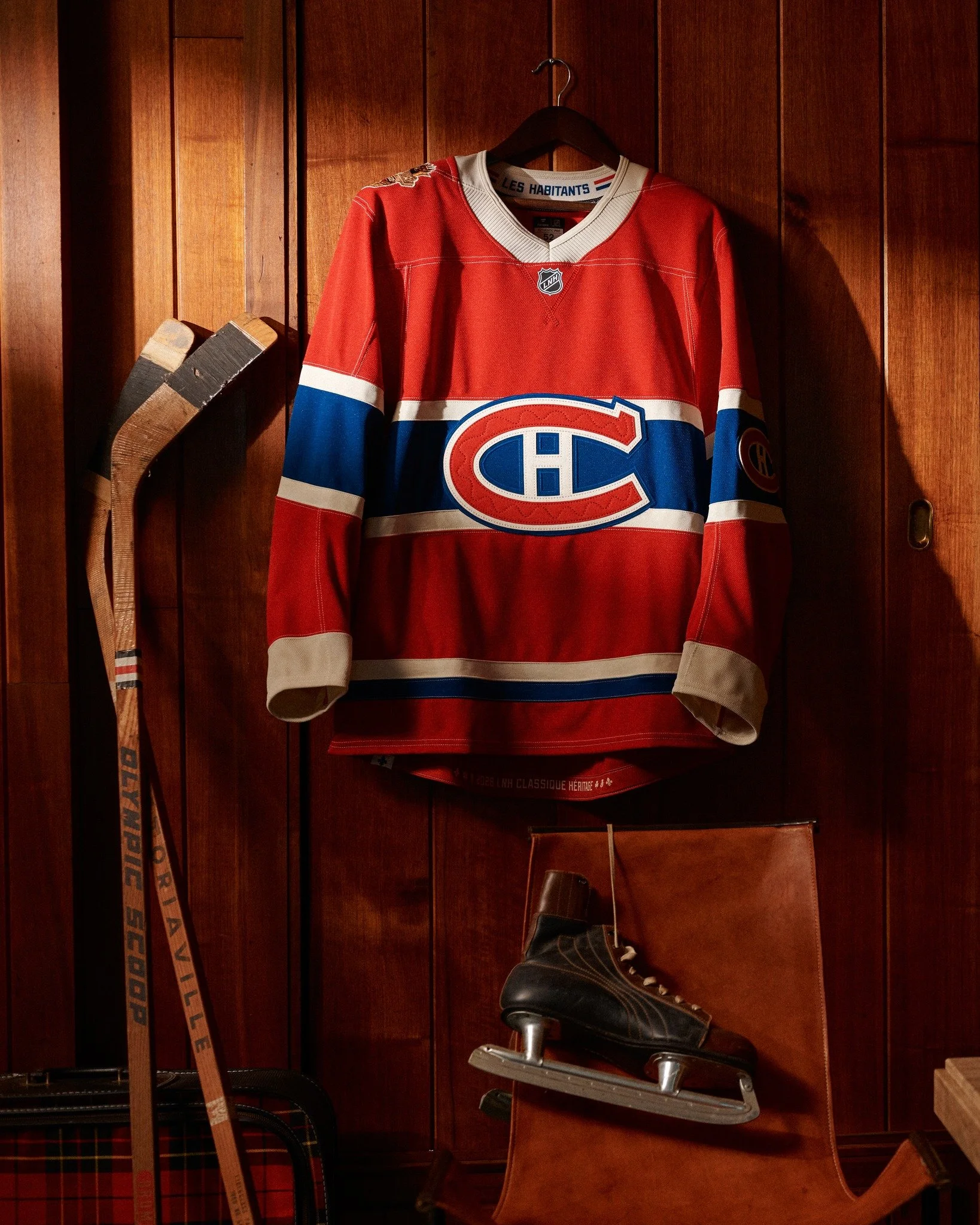
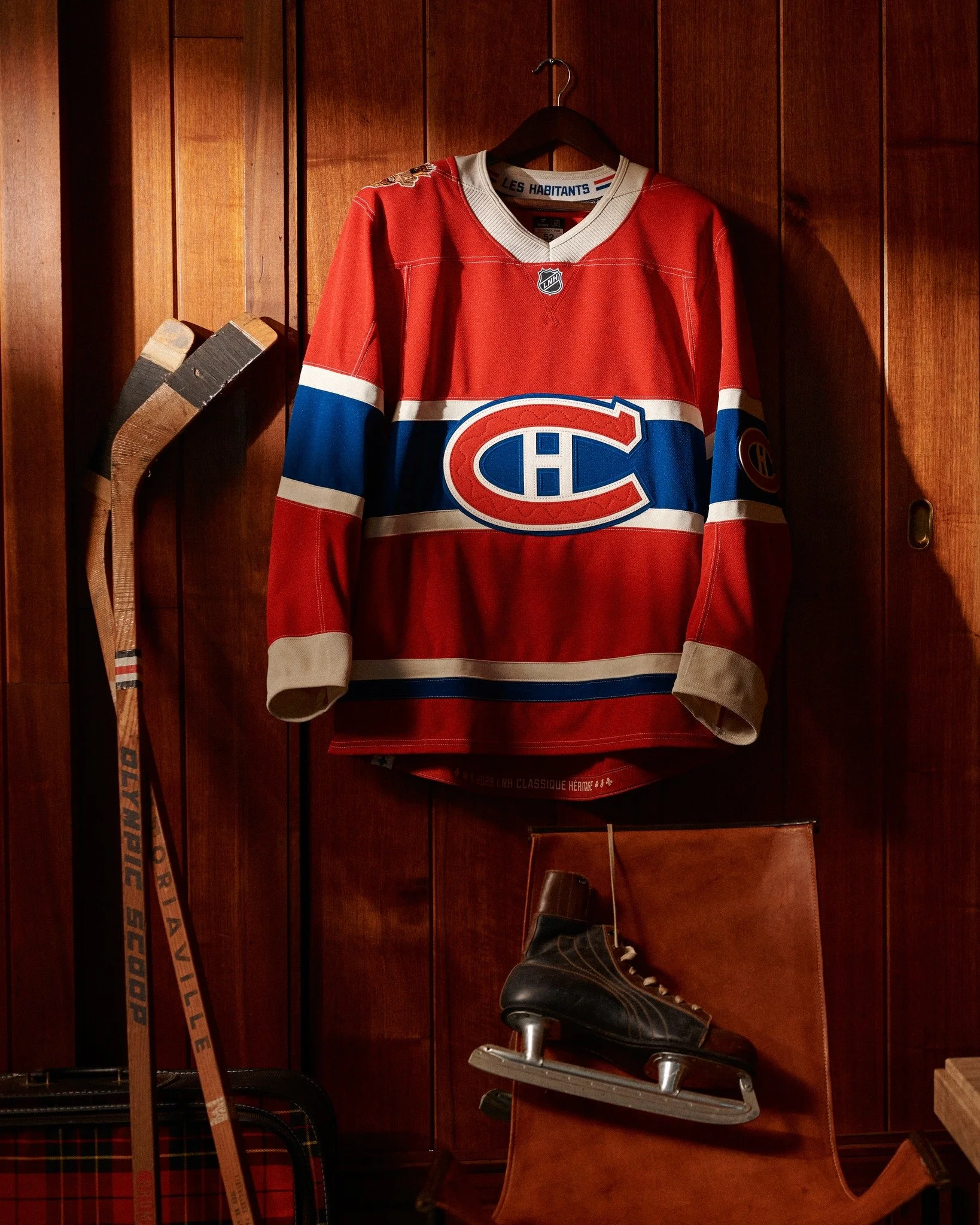
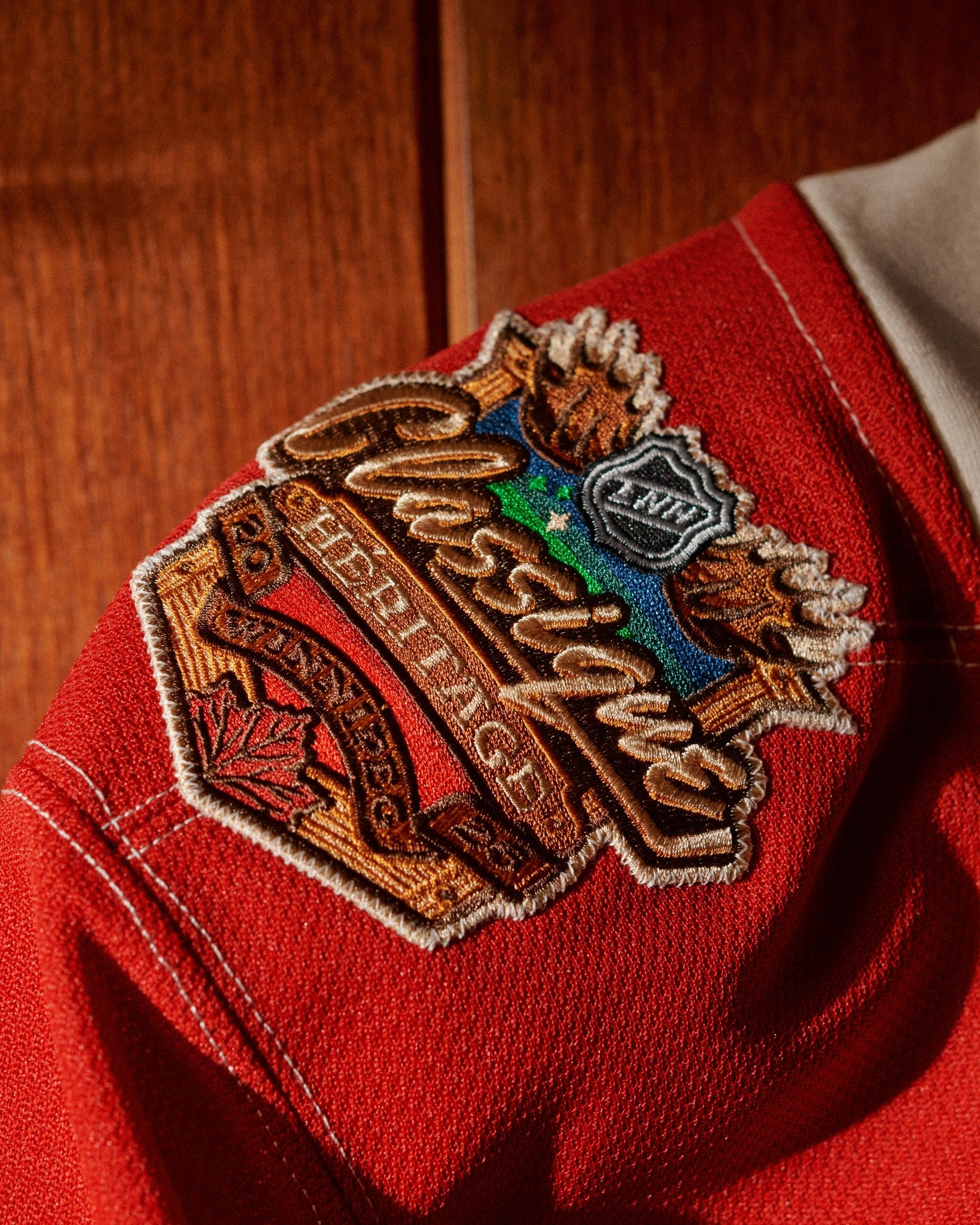
The Montreal Canadiens are bringing a fresh interpretation of their historic identity to the NHL Heritage Classic. Set to face the Winnipeg Jets outdoors at Princess Auto Stadium in Manitoba on October 25, Montreal will wear a sweater that combines elements from past uniforms with details honoring the team’s nickname and Quebec roots.
Created by Fanatics in collaboration with the NHL and the Canadiens, the design stays grounded in the franchise’s unmistakable bleu, blanc et rouge color scheme.
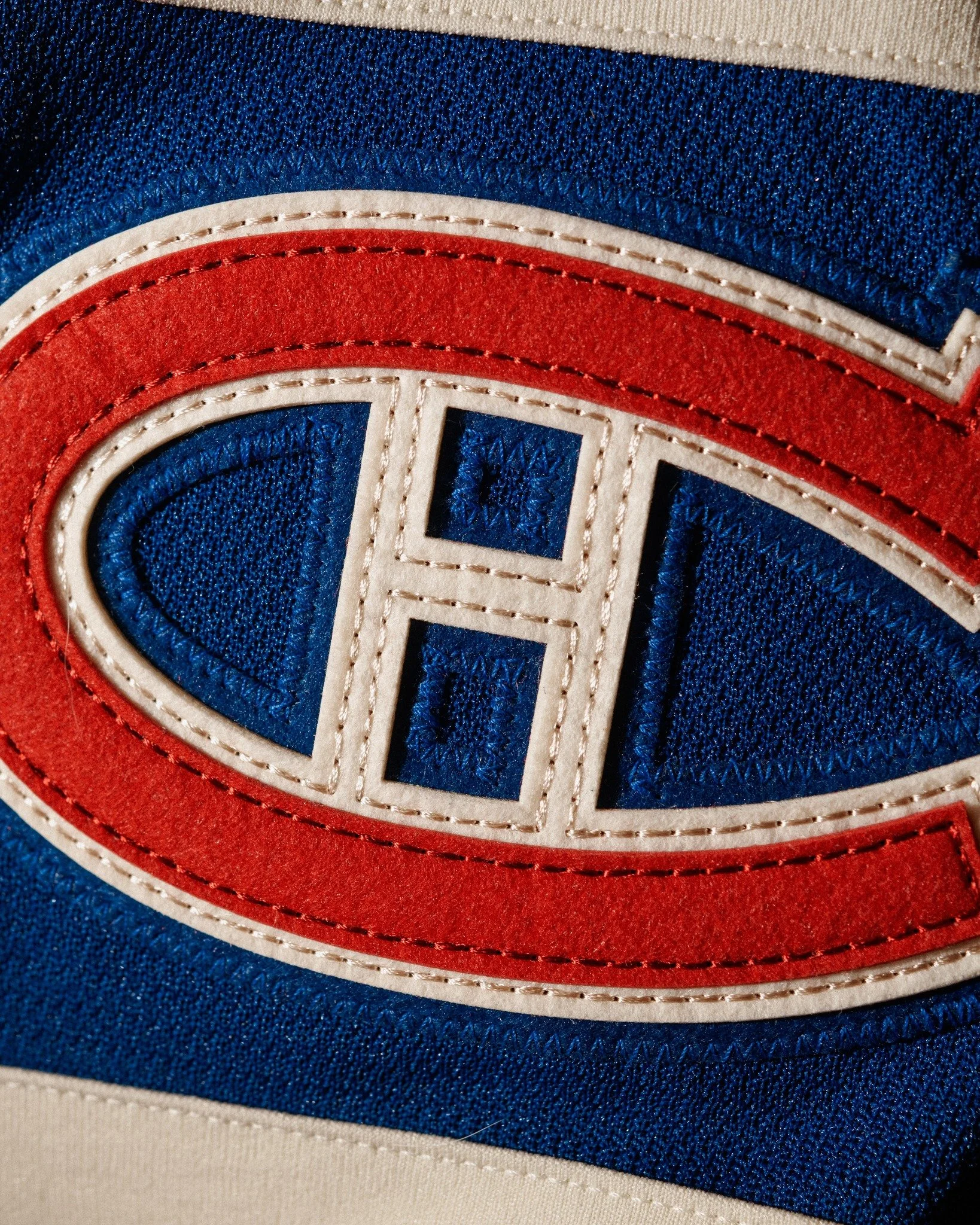
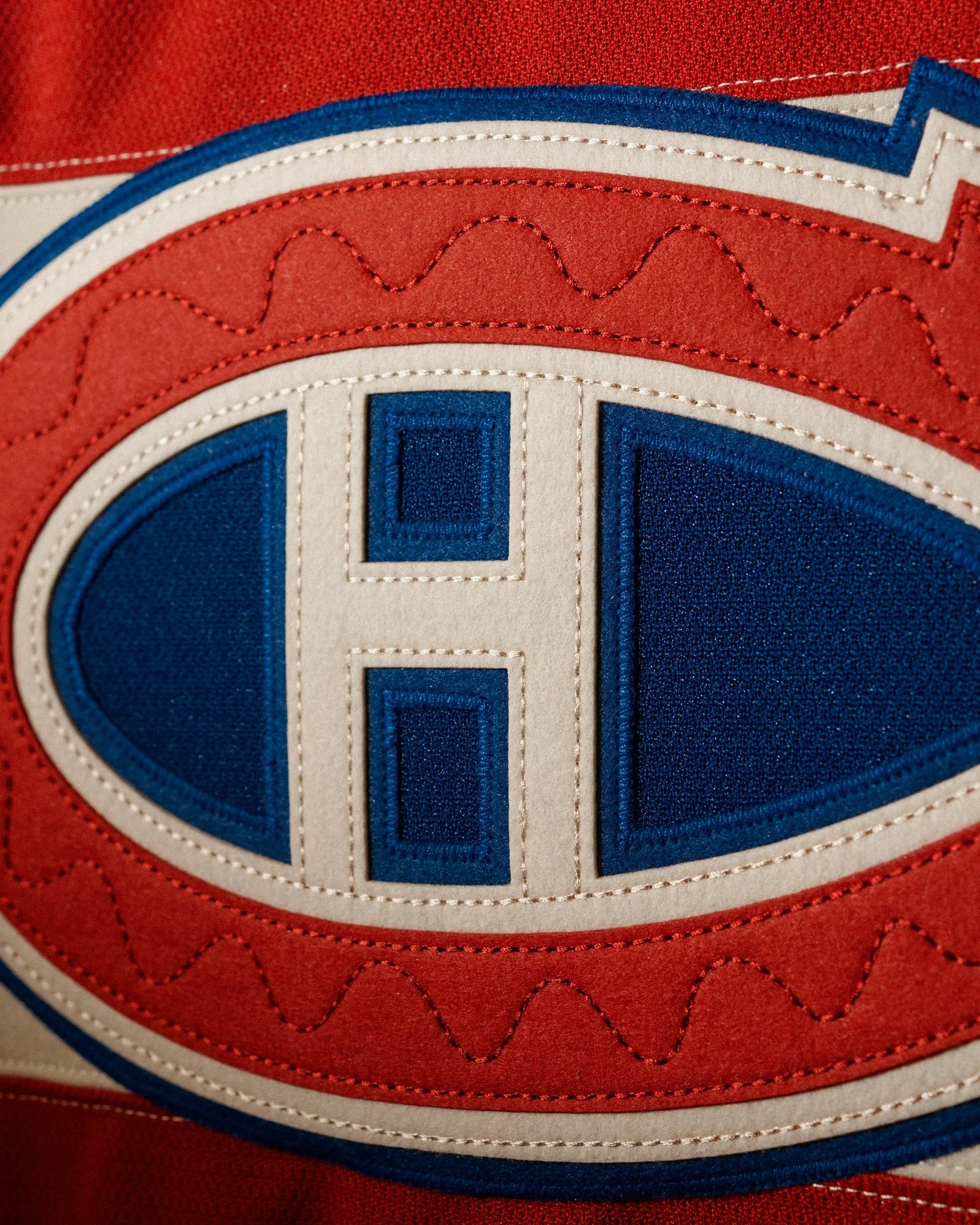
The Canadiens’ logo receives a subtle redraw for the Heritage Classic, preserving its recognizable identity while introducing running-stitch detailing. That finish gives the crest a crafted appearance suited to an event built around hockey history.
The sweater draws from several uniforms in Montreal’s past, bringing those influences together within the blue, white and red palette that remains central to the team’s look. For a franchise with such an established visual identity, the smaller details give this edition its own character.
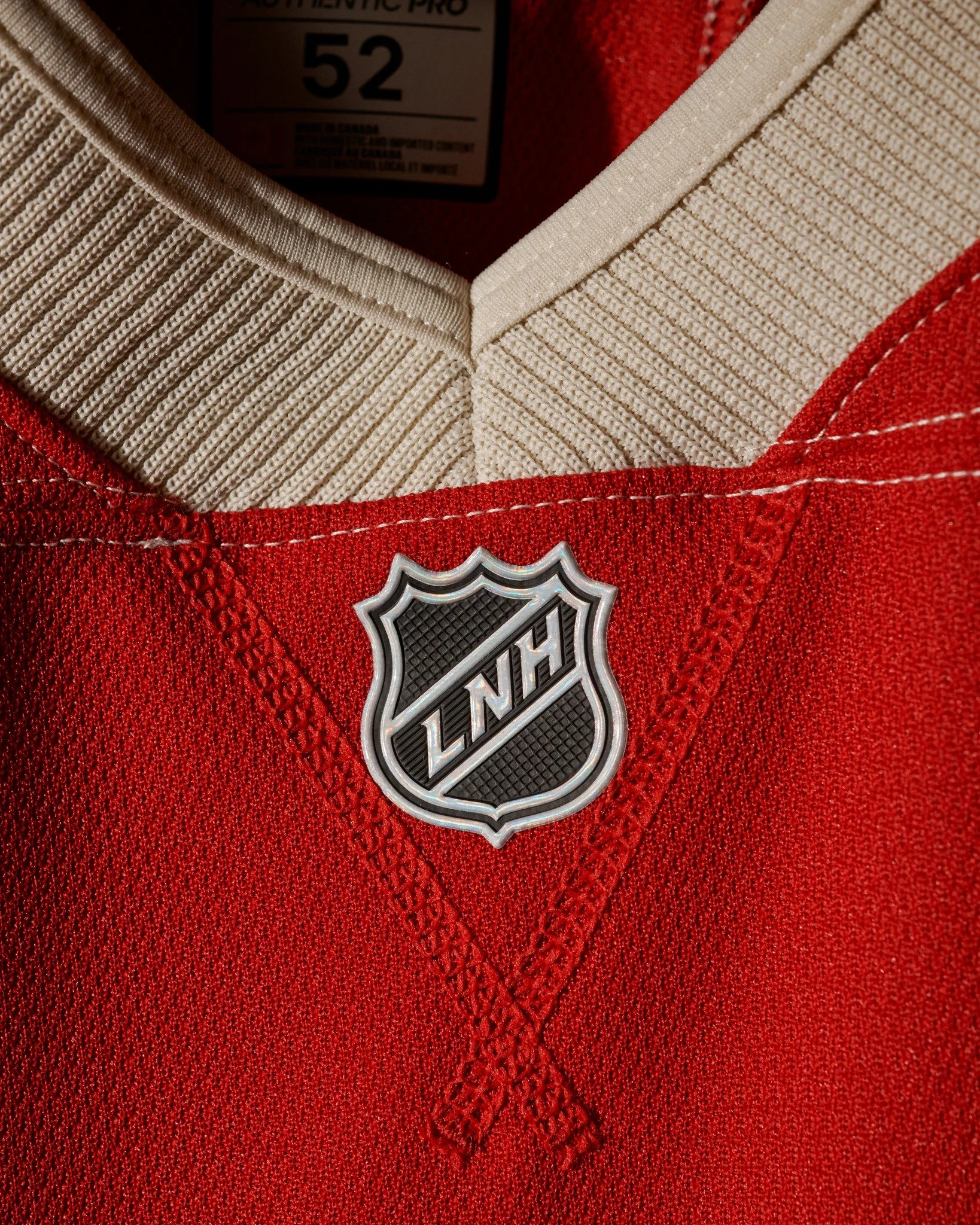
Inside the back collar, the words “Les Habitants” appear for the first time on a Canadiens sweater. The inscription references the nickname behind the team’s familiar “Habs” identity, giving fans a detail to discover beyond the crest.
A fleur-de-lis on the loop label adds another connection to home, honoring the province of Quebec. Together, the collar inscription and label extend the sweater’s story beyond its colors, recognizing the language and regional identity associated with Montreal hockey.
The Canadiens were part of the first Heritage Classic in 2003, facing the Edmonton Oilers in the event that launched the NHL’s Canadian outdoor game series.
The October 25 matchup will mark Montreal’s fifth outdoor appearance and third Heritage Classic, adding to a history that also includes the Winter Classic and NHL 100 game.
For this return outdoors, the Canadiens have kept their defining colors front and center while giving fans new details to explore. Running stitches, “Les Habitants” and a Quebec tribute bring a distinct finish to one of hockey’s most recognizable sweaters.
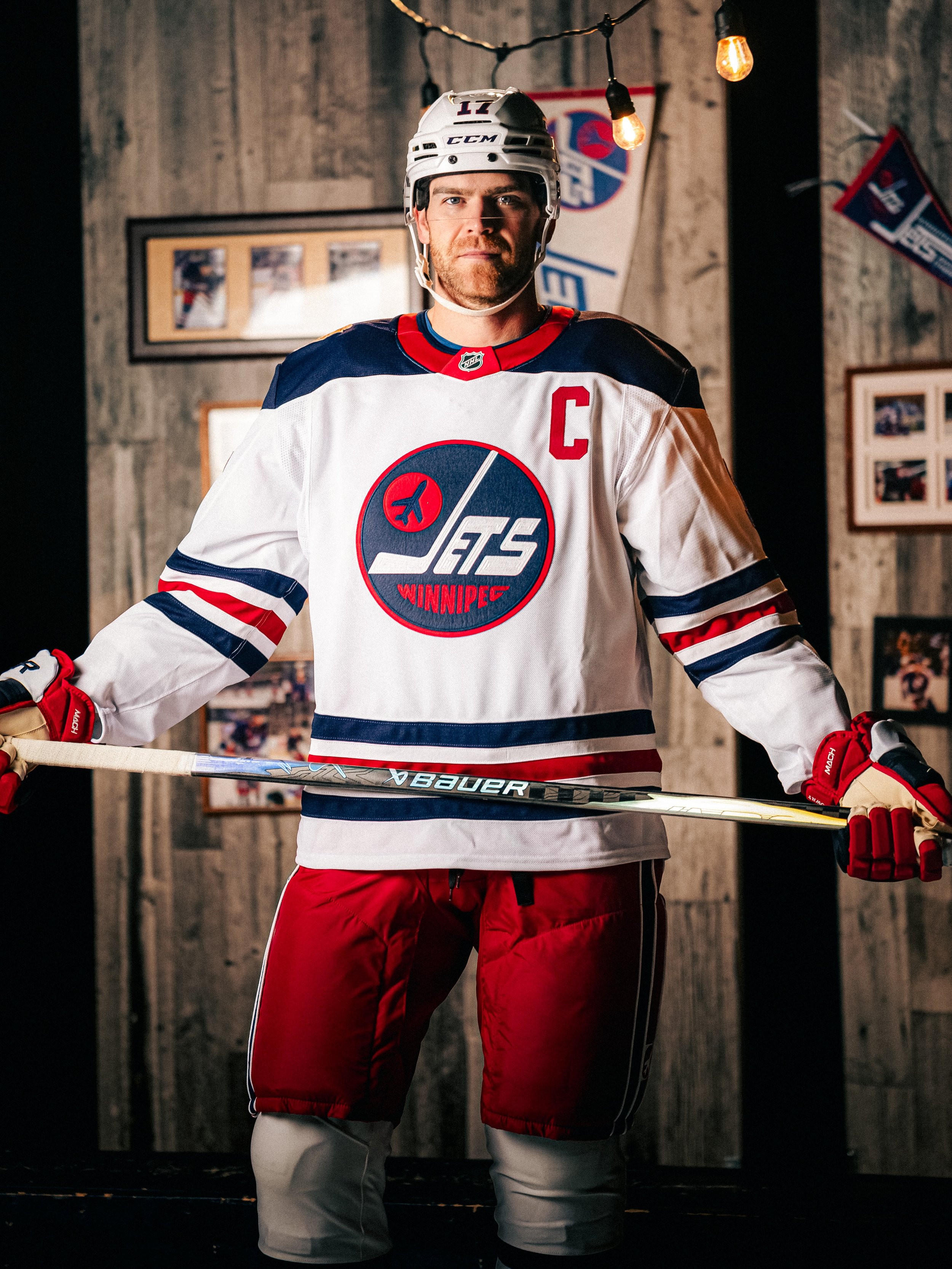
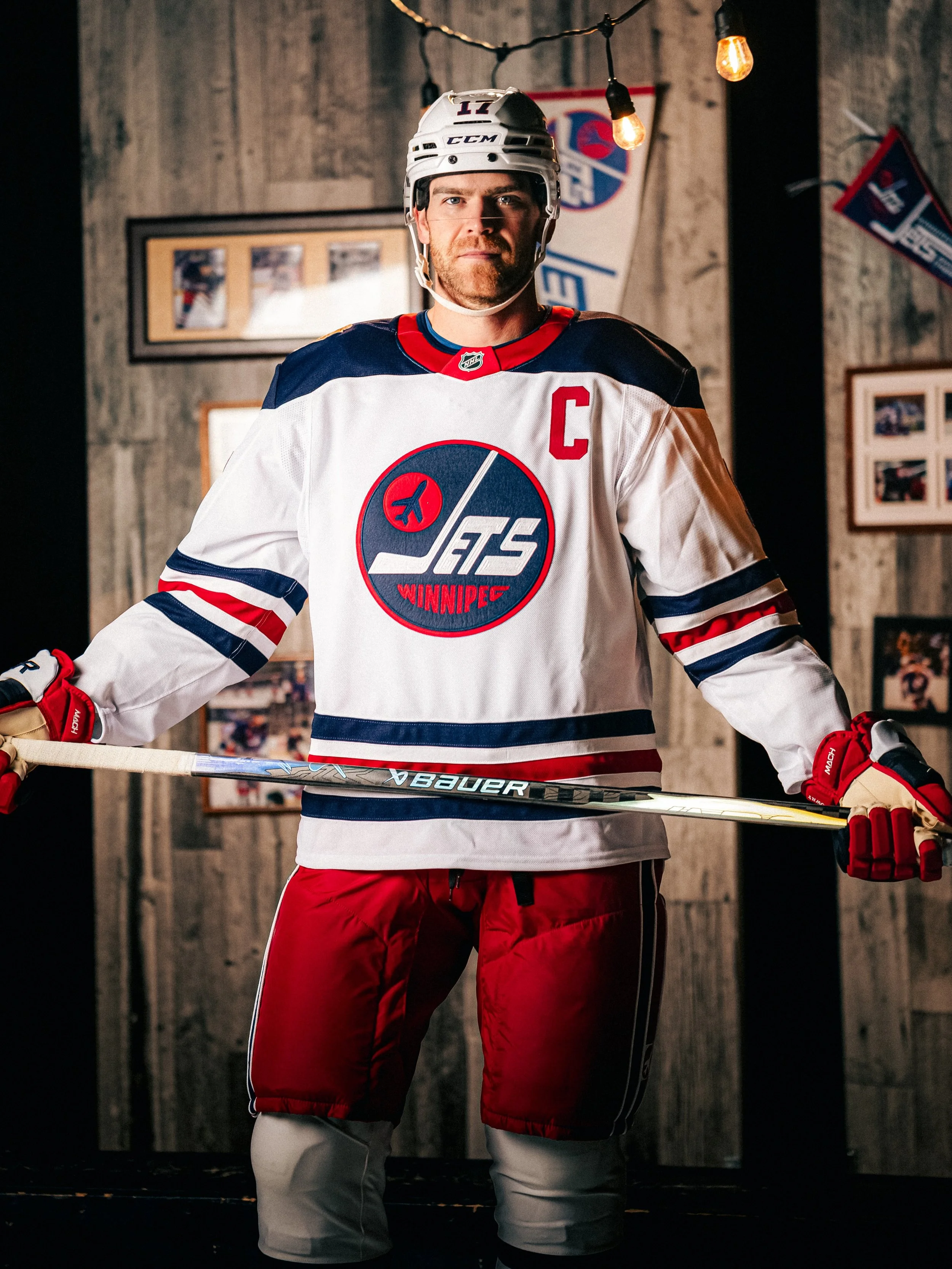
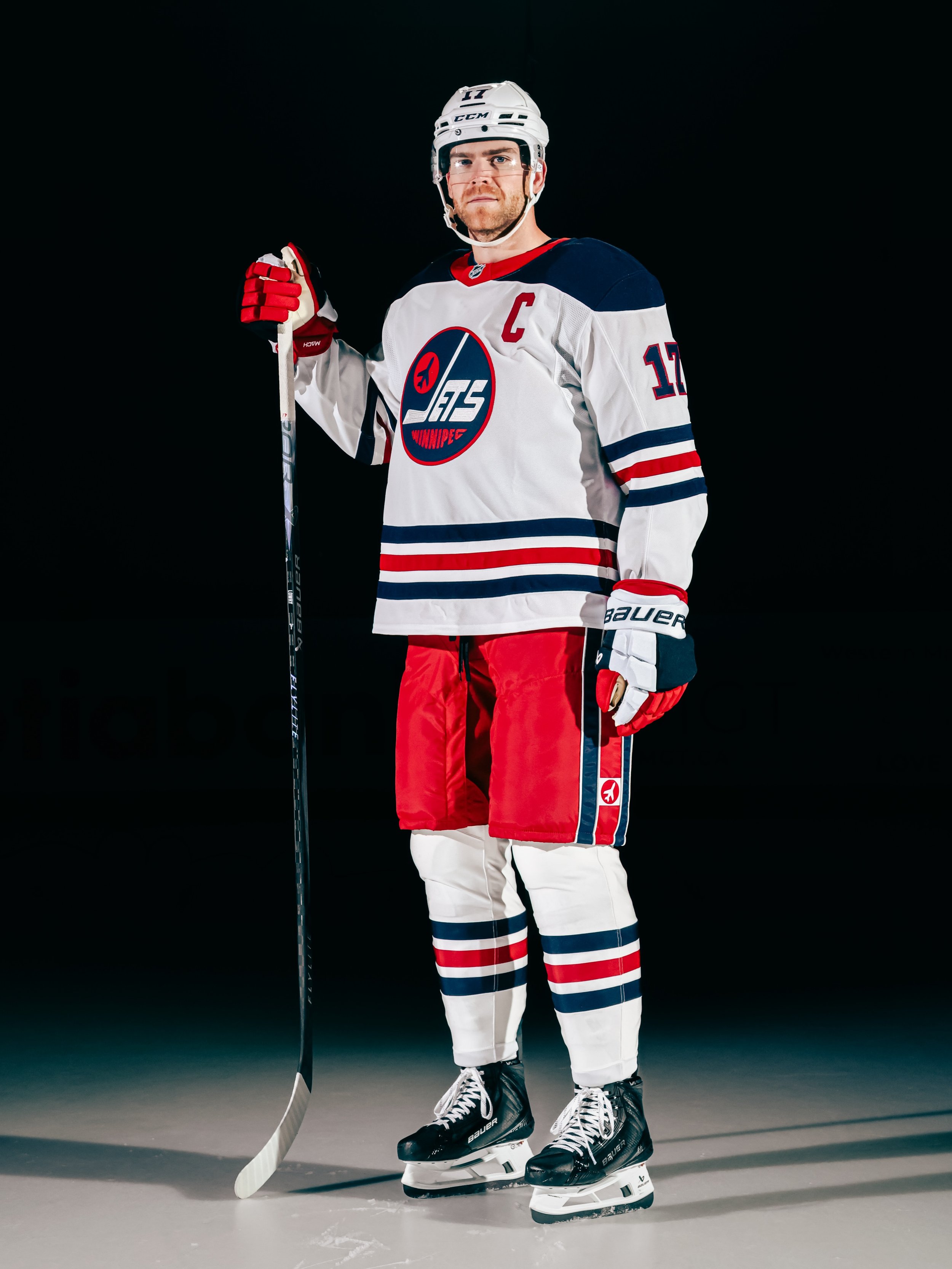
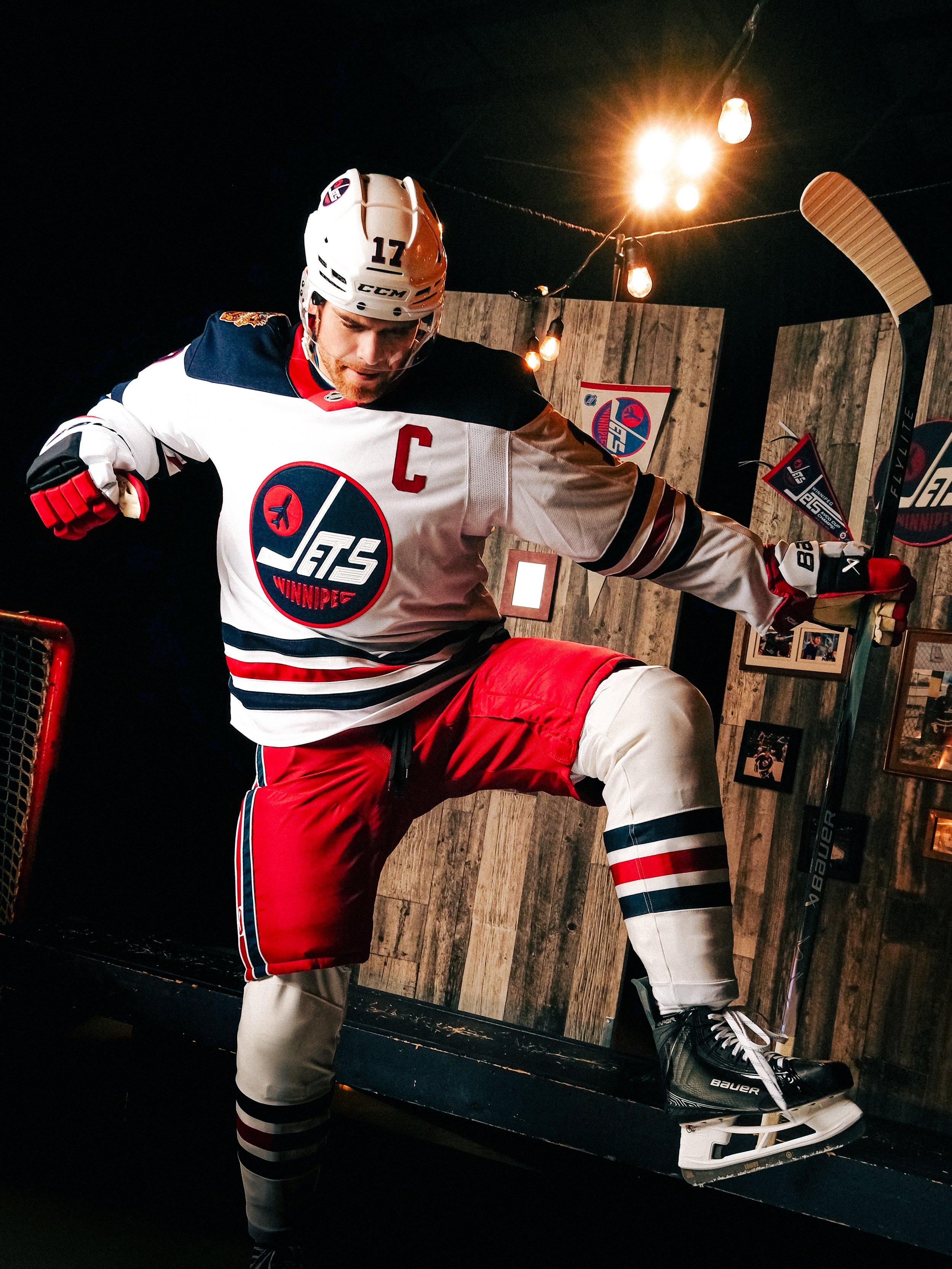
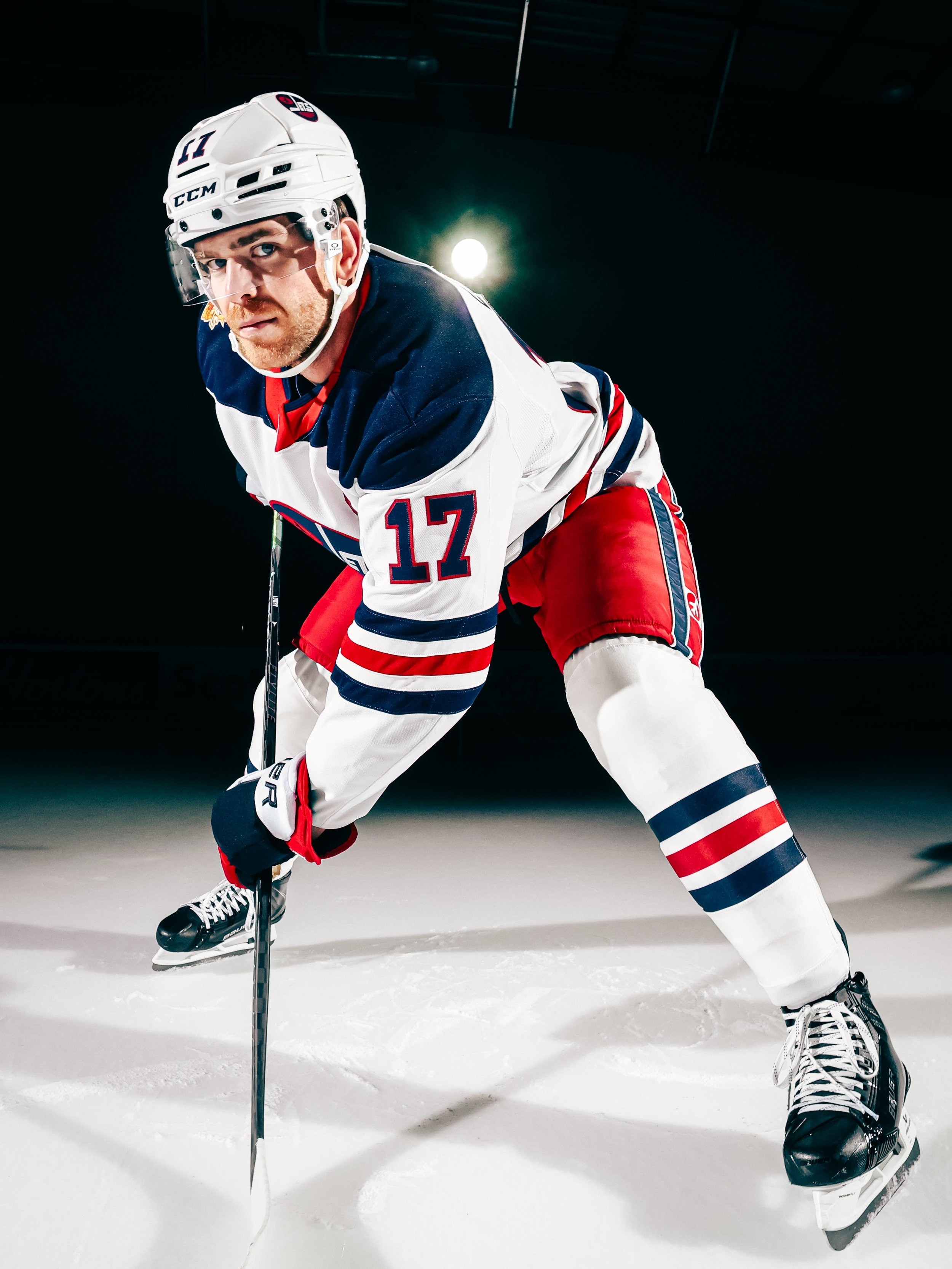
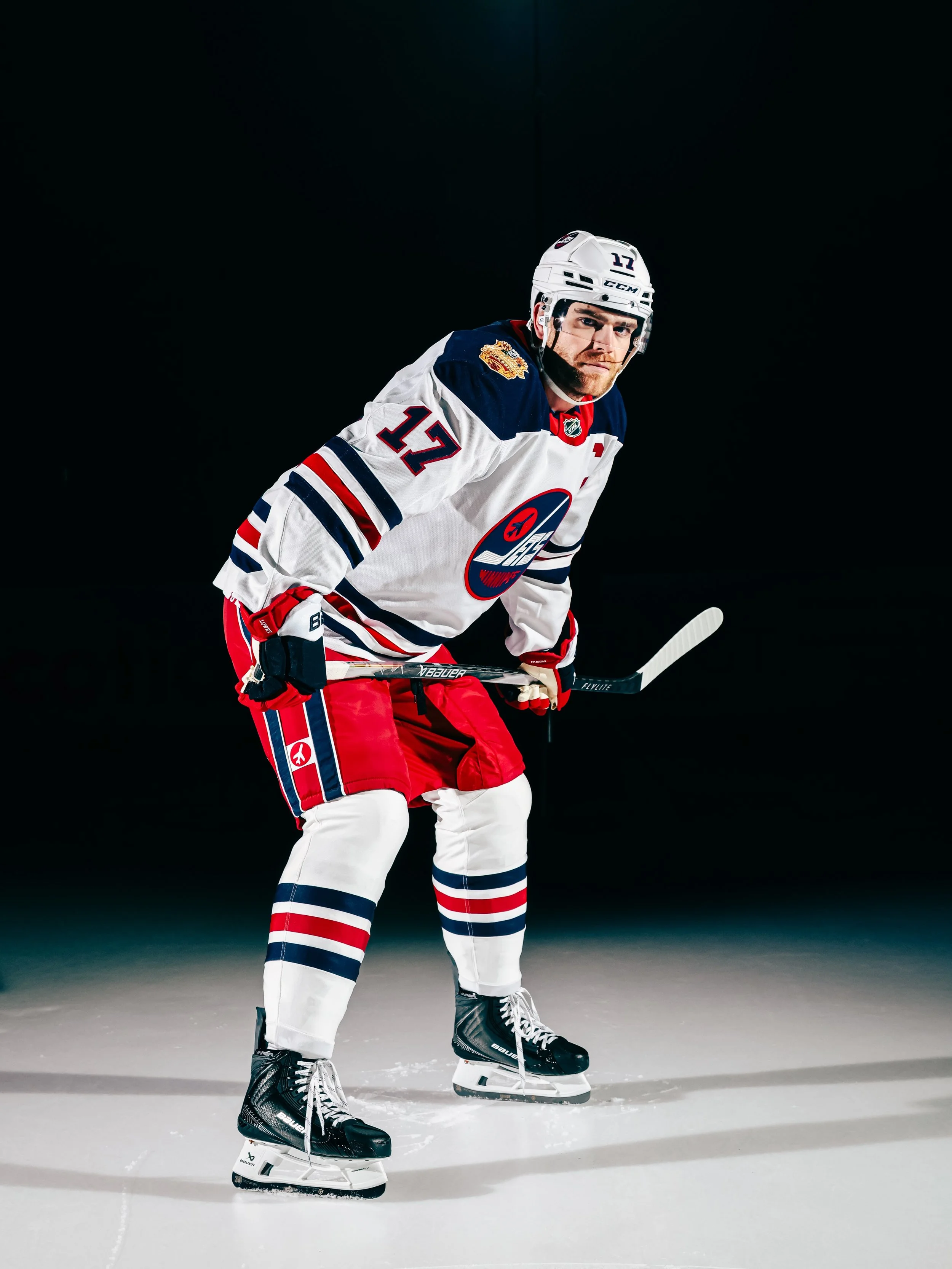
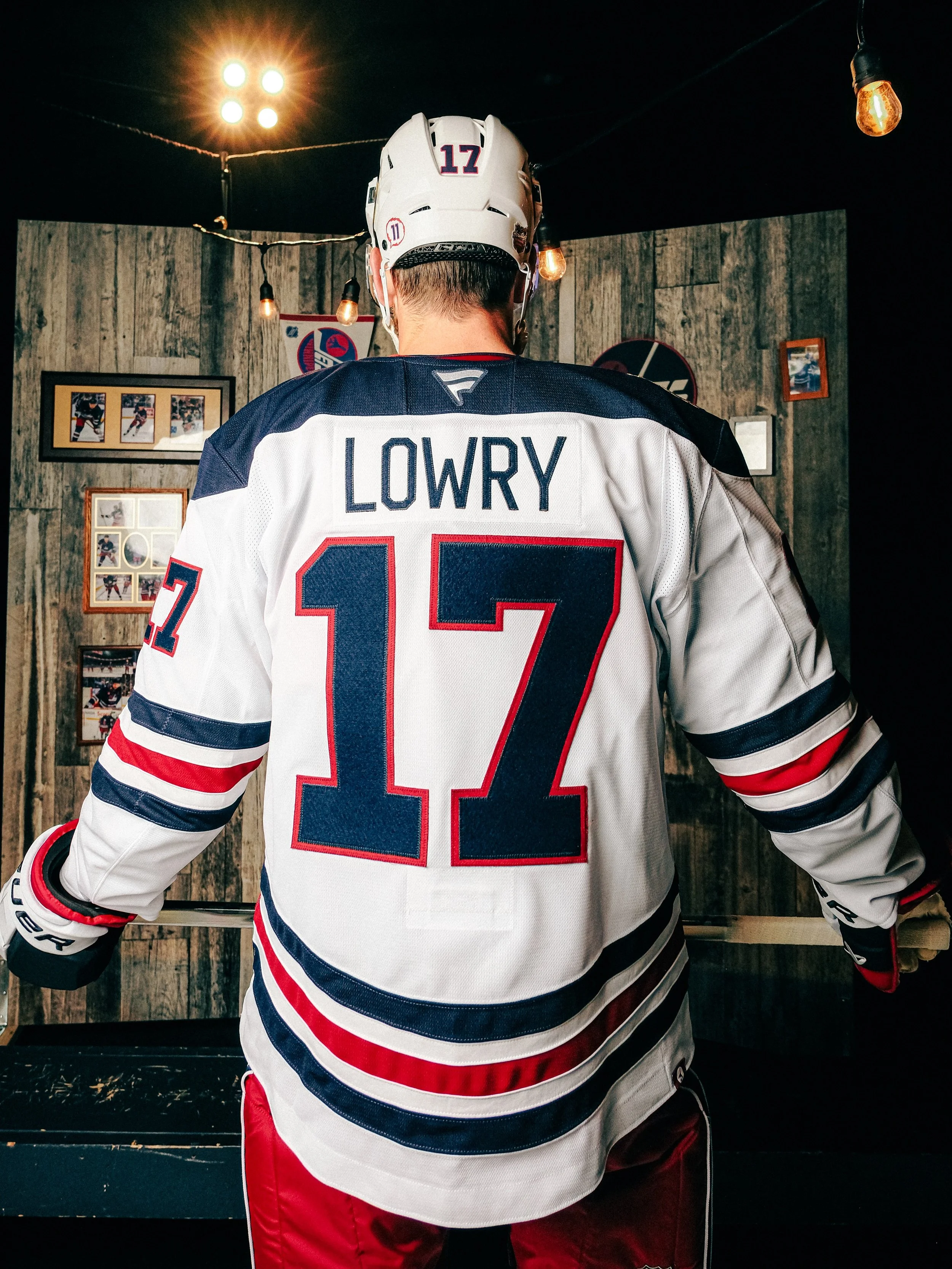
The Winnipeg Jets are turning to the original team’s identity for their latest Heritage Classic sweater. When they face the Montreal Canadiens outdoors at Princess Auto Stadium in Manitoba on October 25, the Jets will wear a white throwback inspired by the franchise’s looks from the 1980s and 1990s.
The design also recalls Winnipeg’s 2016 Heritage Classic sweater, which paired a white base with the team’s legacy crest. This edition revisits that combination with felt construction and stitched details that give the familiar look a new finish.
At the center of the sweater is the Jets’ legacy crest, rendered in felt with chain-stitched detailing. The treatment adds texture to the logo while reinforcing the vintage character of the uniform.
Fanatics, the NHL’s authentic on-ice outfitter, worked with the league and both teams on the Heritage Classic designs. For Winnipeg, the result puts the original Jets identity at the forefront, using the white throwback as the foundation for a sweater rooted in the city’s hockey past.
The back numbers feature a two-layer felt treatment, carrying the material choice from the crest through to another prominent part of the sweater.
That consistency helps bring the design together. The crest’s chain stitching and layered felt numbers give the uniform a tactile quality, adding depth to a look fans will recognize from earlier eras of Winnipeg hockey.
The Heritage Classic returns after a three-year break, bringing the NHL’s Canadian outdoor series to Manitoba for the Jets-Canadiens matchup.
It will be Winnipeg’s third outdoor game, with all three appearances coming in the Heritage Classic. The new sweater builds on that event history while revisiting the white-and-legacy-crest combination worn in 2016.
For a game played in front of their home province, the Jets are leaning into a familiar identity. The white base connects the sweater to the original Winnipeg team, while felt and chain stitching give this Heritage Classic edition its defining details.
Fans of the Utah Mammoth are getting a new and unforgettable addition to the game-day experience this season, and it’s rolling right onto the ice.
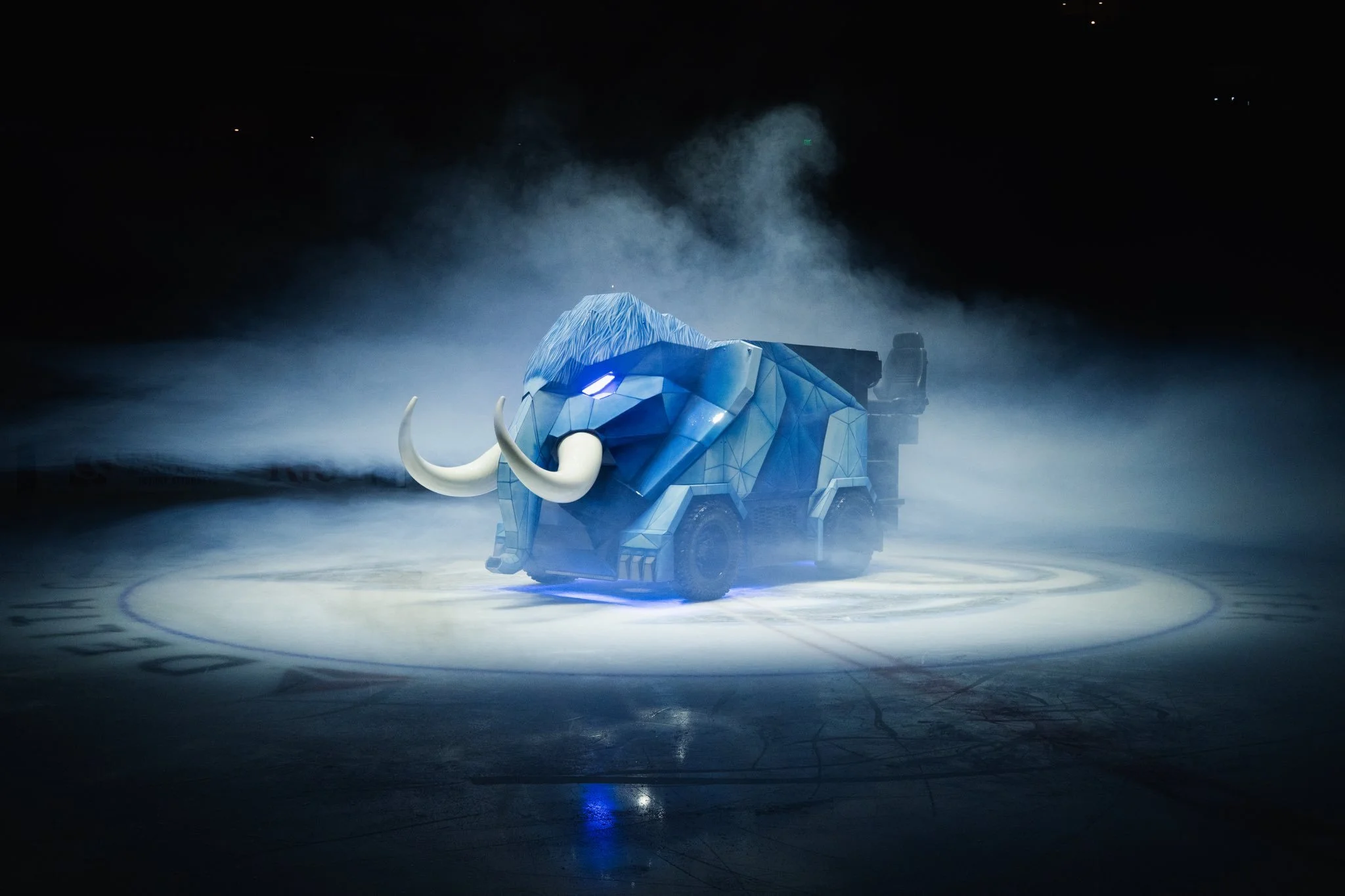
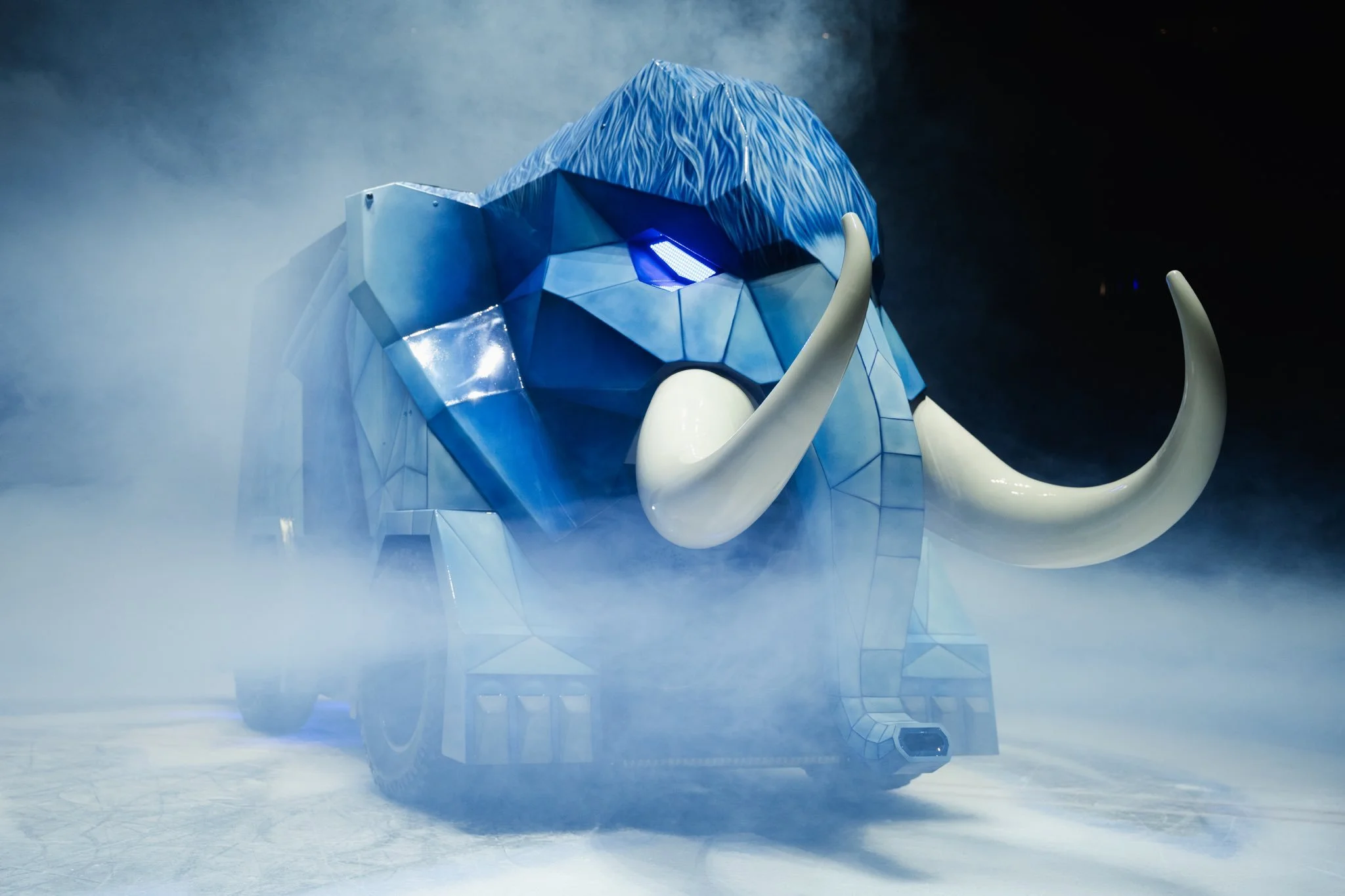
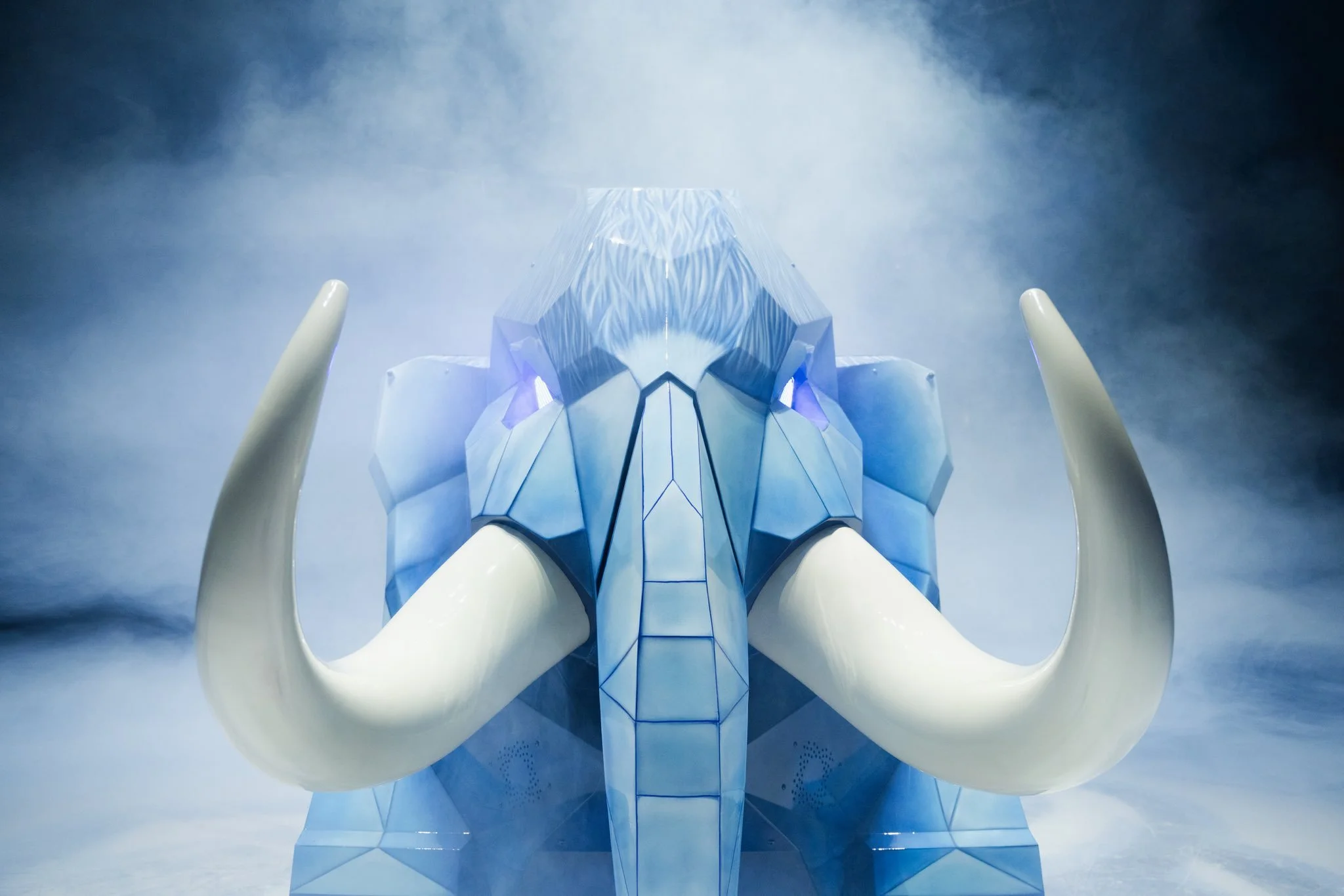
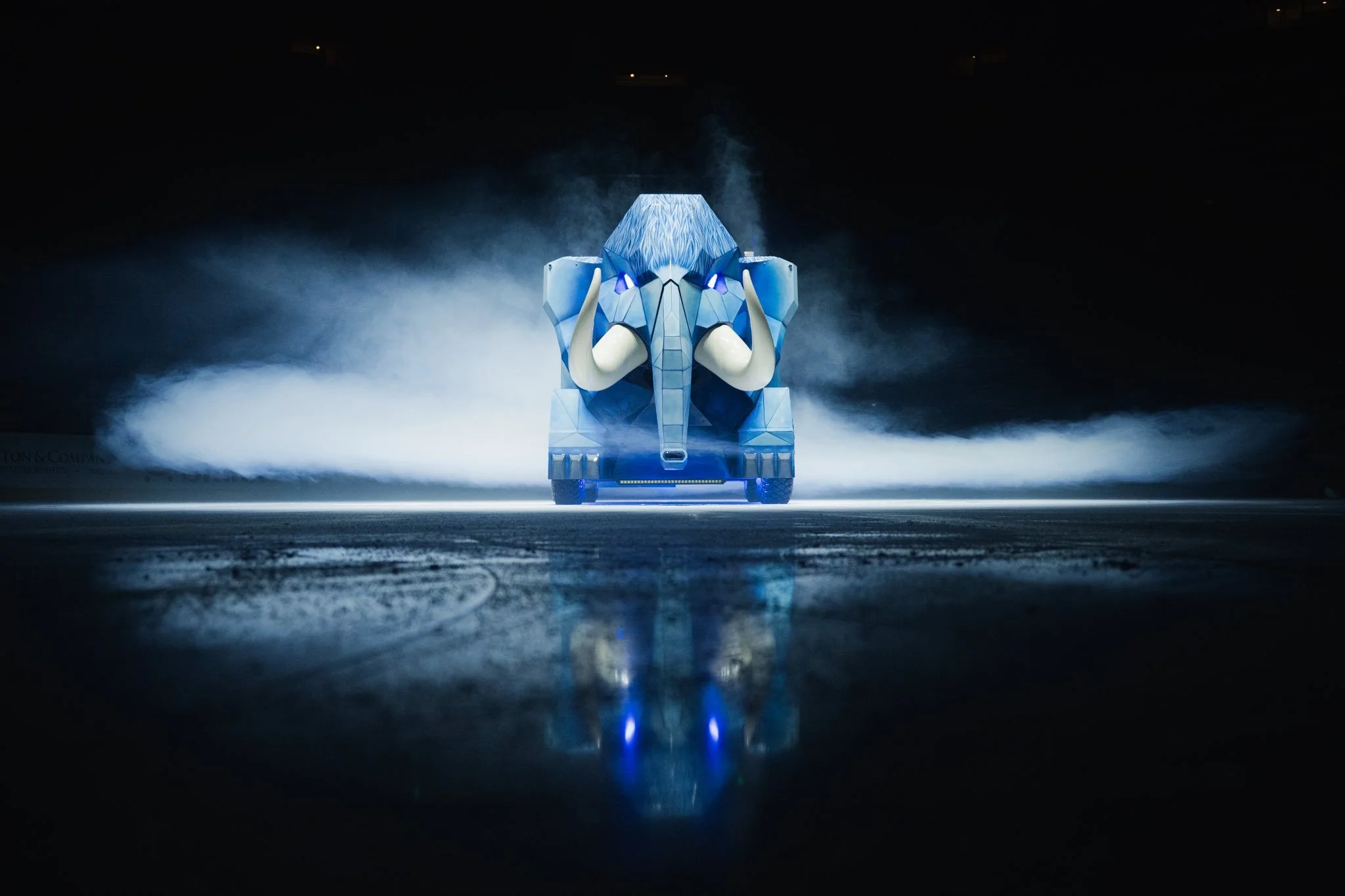
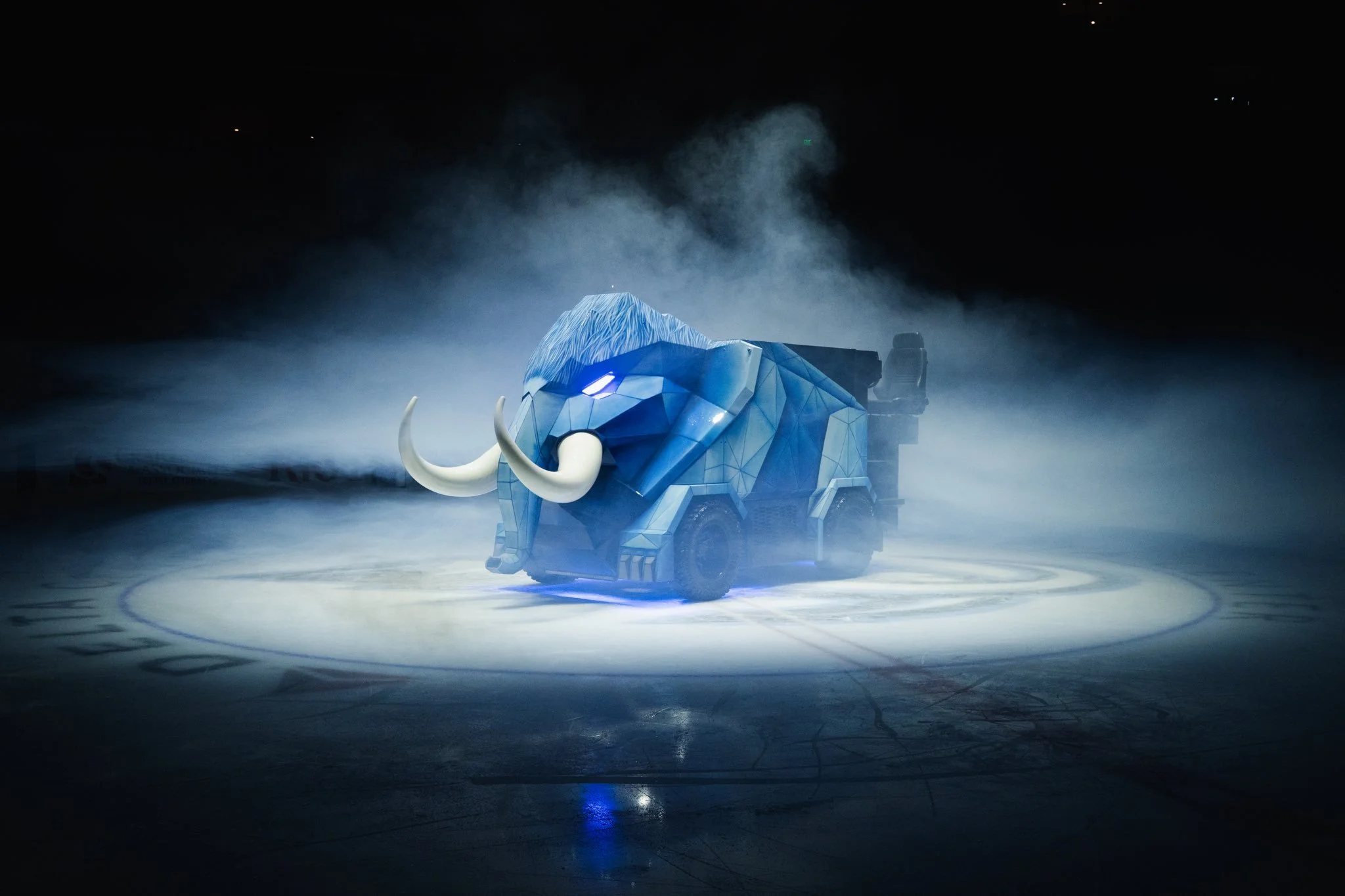
the team unveiled a brand-new look for its ice resurfacing machine, revealing a Mammoth-themed Zamboni that the organization has officially dubbed the “Zammoth.” The custom design blends the team’s branding with a creative, larger-than-life aesthetic that instantly turns a routine part of hockey operations into a centerpiece of entertainment at the rink.
Beyond the fresh design, the Zammoth carries a unique piece of sports history. The machine itself is the same Zamboni used during the 2002 Winter Olympics, connecting Utah’s newest NHL-era identity with one of the state’s most iconic sporting moments.
Now, more than two decades later, that same machine has been transformed with a bold Mammoth makeover.
The exterior features a sleek graphic treatment inspired by the team’s prehistoric namesake, complete with massive tusk visuals and Mammoth-themed detailing that wrap around the body of the resurfacer. The result is a machine that looks just as intimidating and memorable as the team’s branding.
The Zammoth isn’t just for show, it’s also designed to bring fans closer to the action. The resurfacing machine can carry up to eight fans at a time, offering a unique ride experience as it circles the ice during pregame and intermissions at Delta Center.
For the Utah Mammoth, the new Zammoth represents more than just an ice resurfacer, it’s a blend of team identity, fan experience, and Utah sports history all wrapped into one ride around the rink.
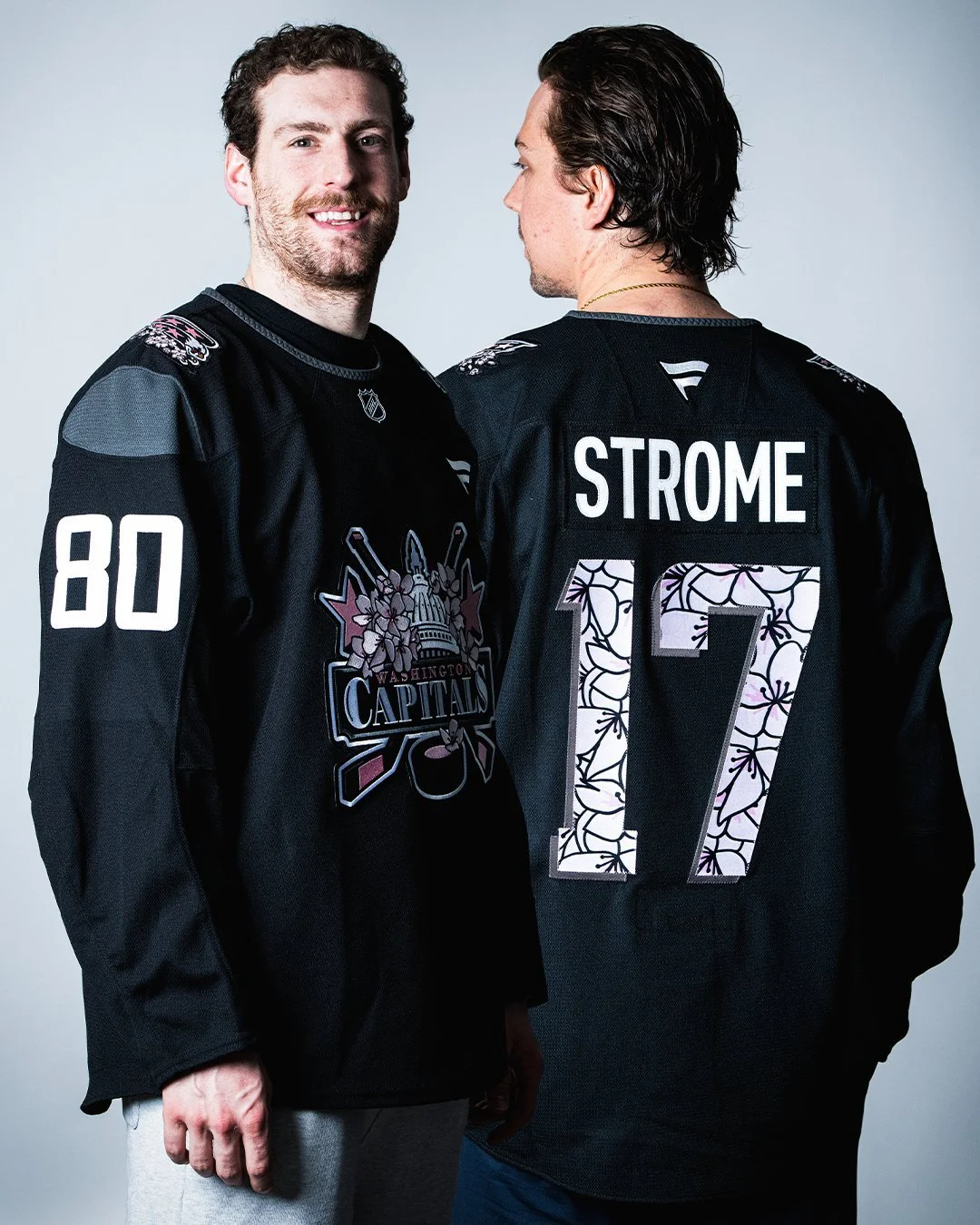
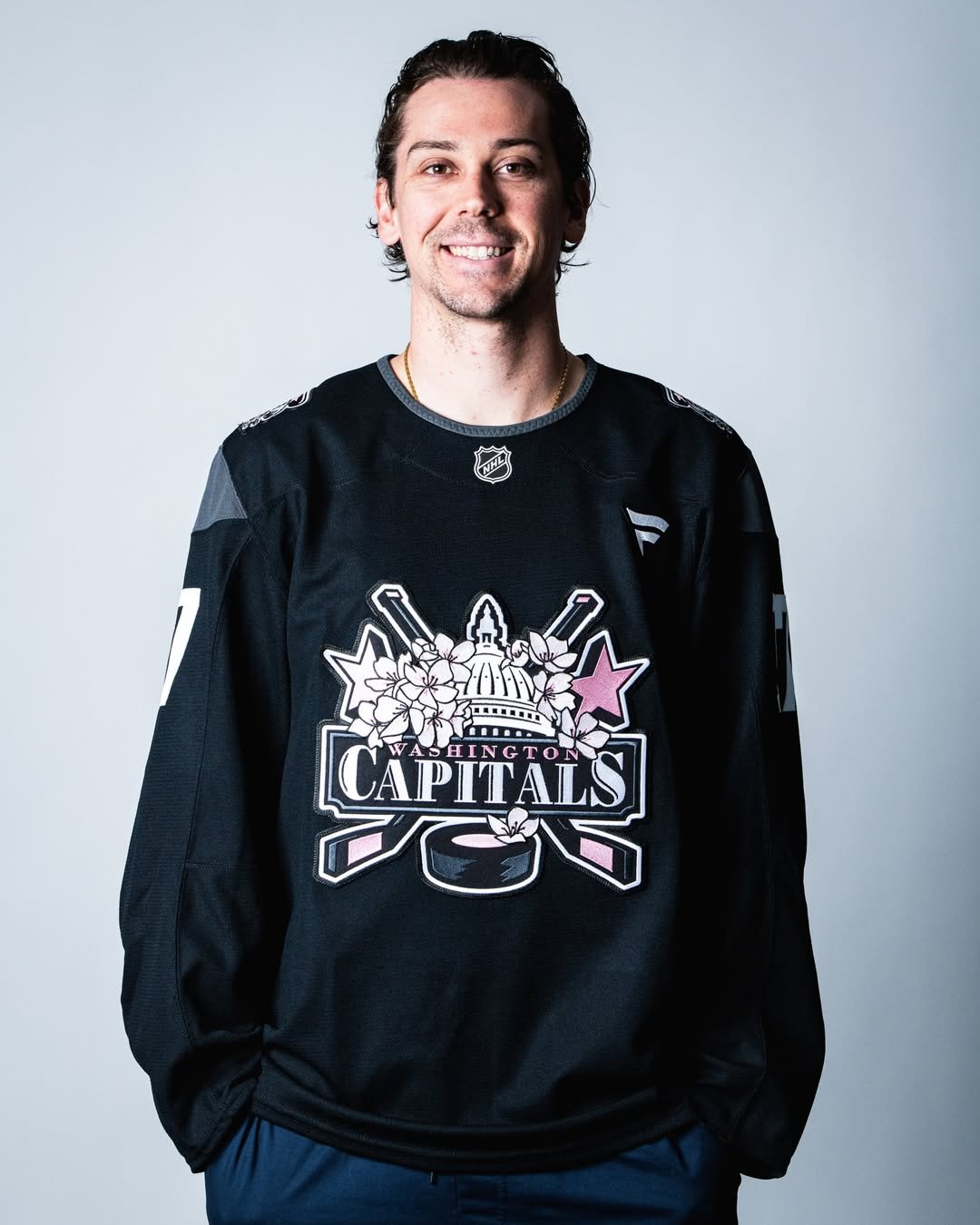
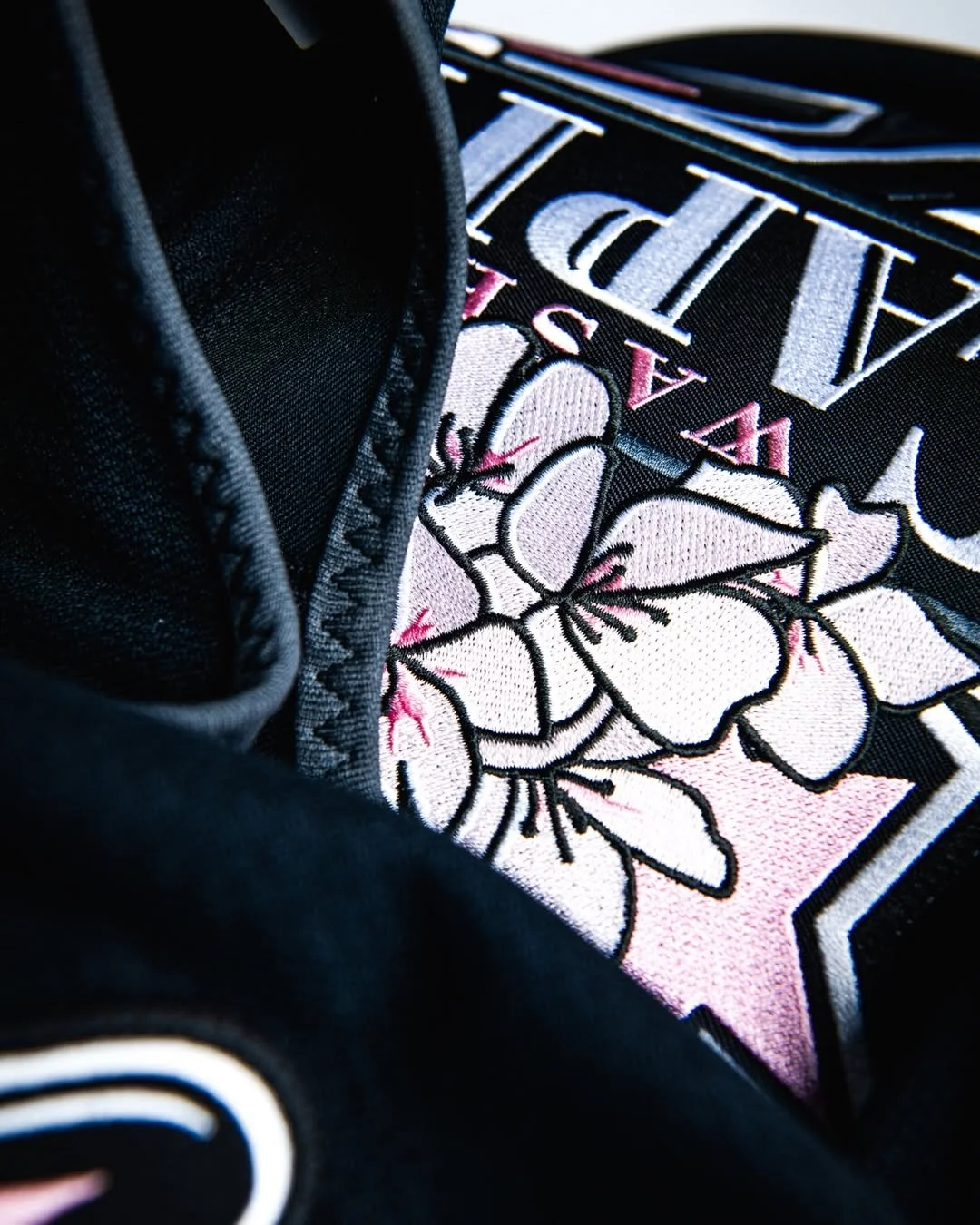
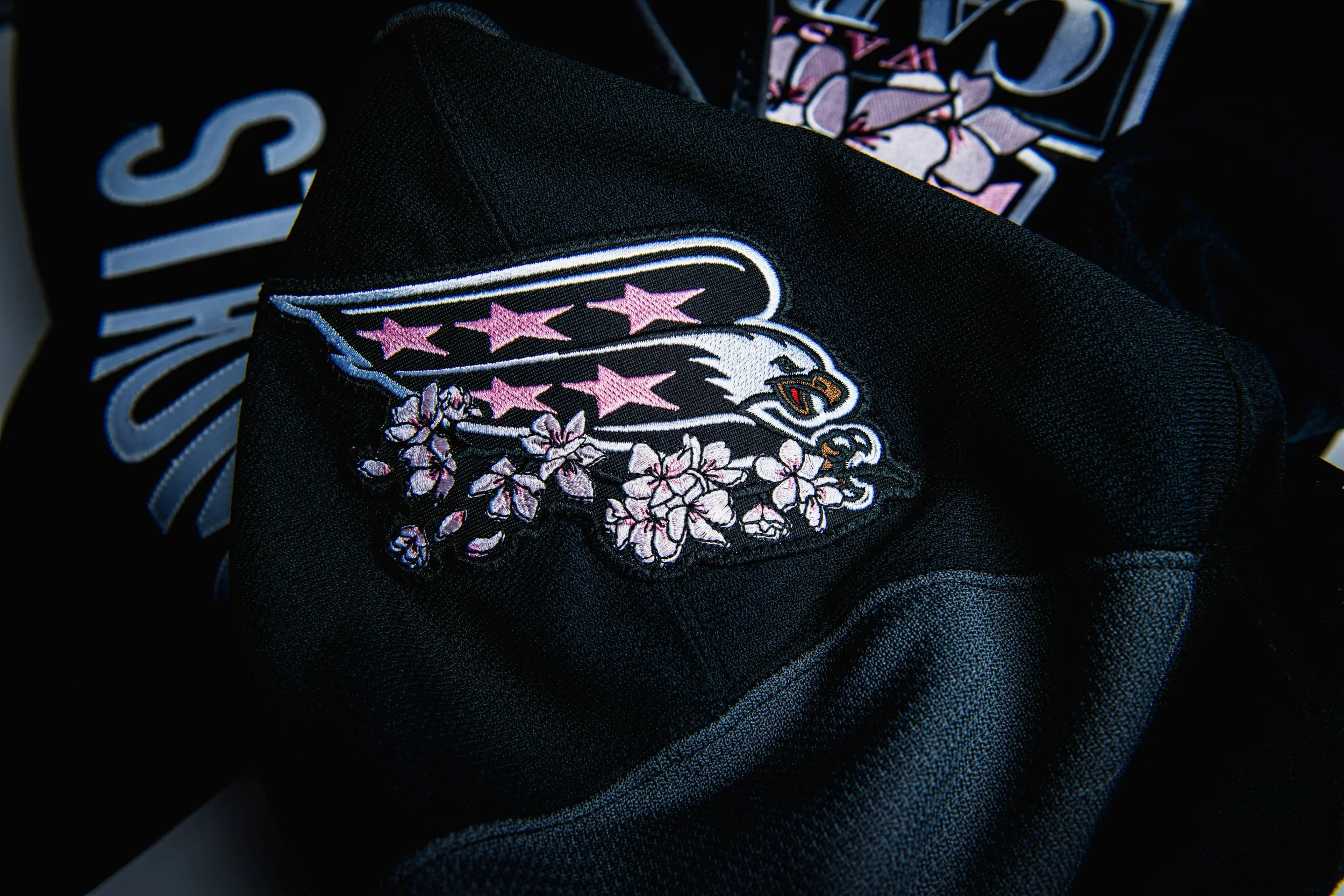
Spring in the nation’s capital means one thing: cherry blossom season. This year, the Washington Capitals are once again celebrating the city’s most iconic time of year with a special-edition Cherry Blossom jersey that blends local culture, art, and hockey style.
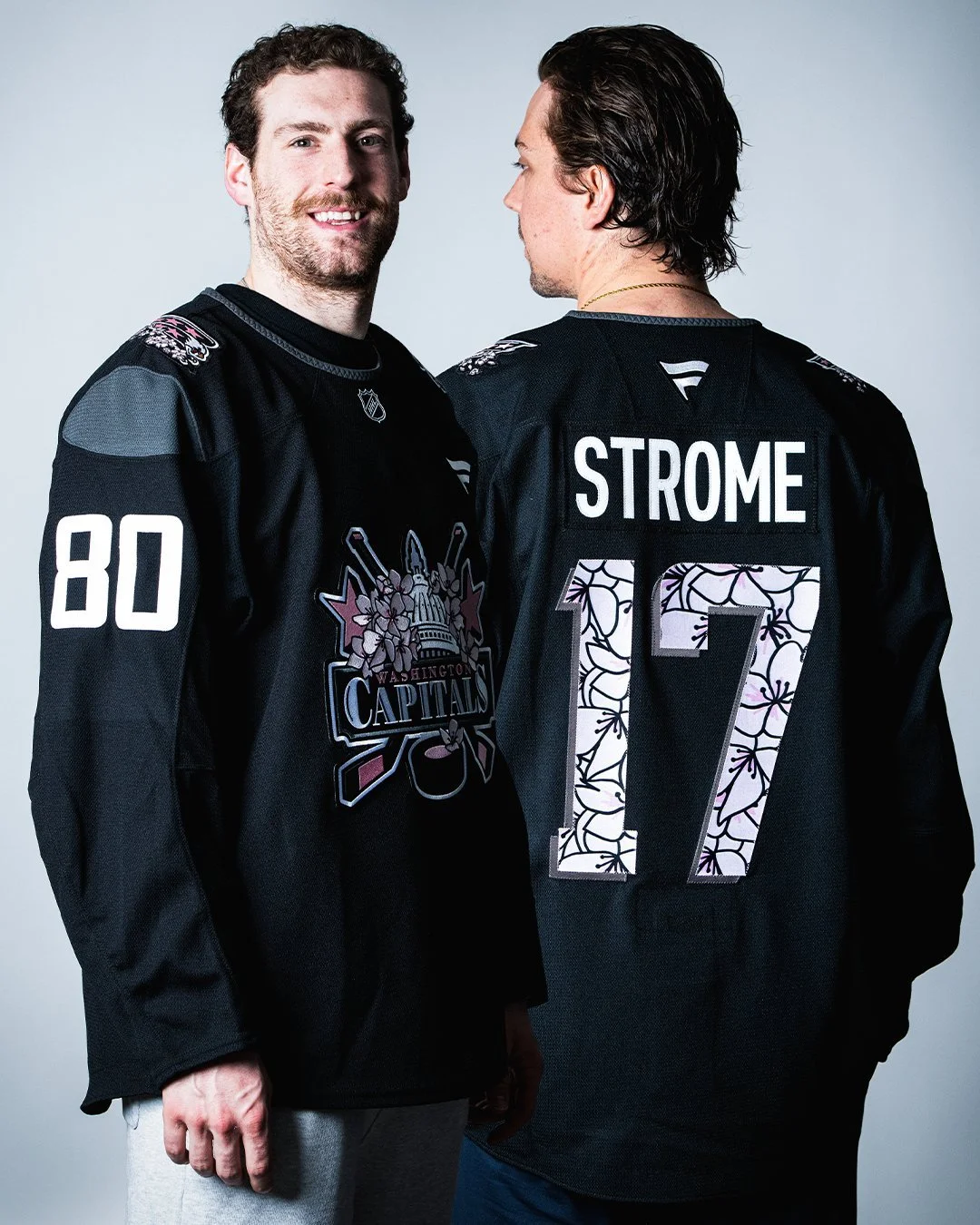
The team unveiled the new specialty sweater ahead of D.C. Cherry Blossom Night, which takes place March 18 at Capital One Arena. Capitals players will wear the jerseys during arrivals before the game, showcasing a design that captures the beauty and spirit of Washington, D.C.’s famous spring bloom.
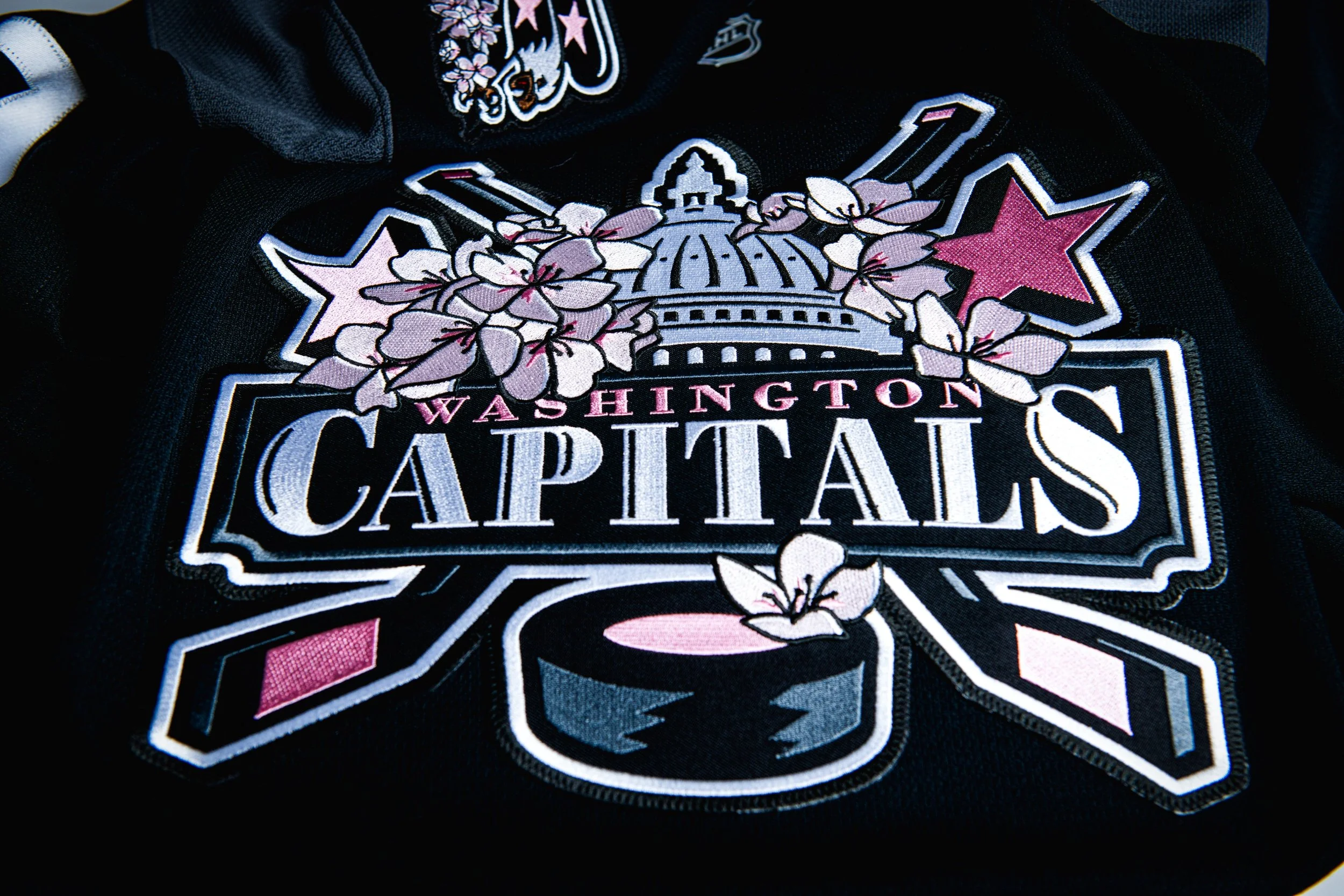
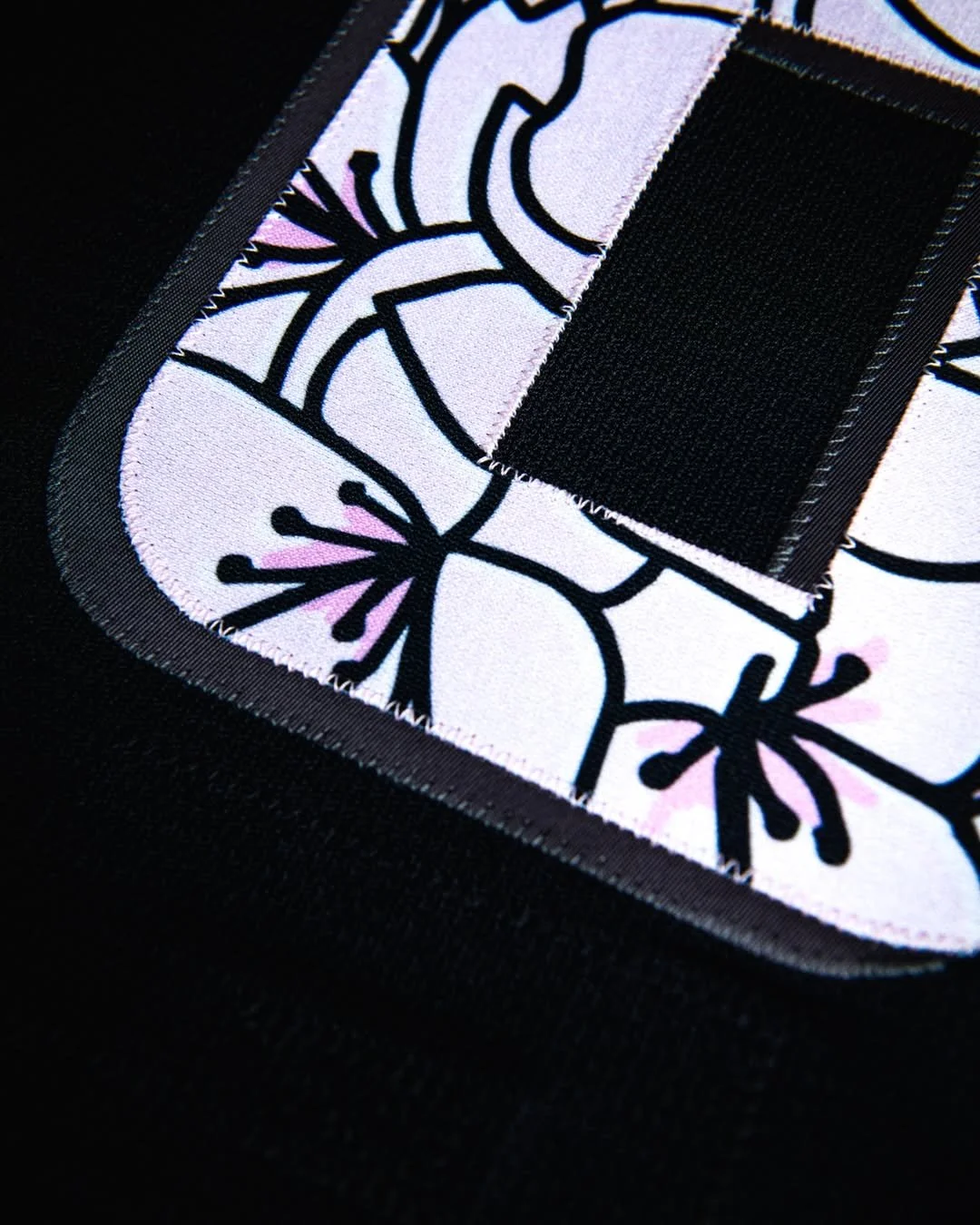
The jersey was created by Washington, D.C.–based artist Taylor Kampa Olson of TKOPaintings. Olson’s design reimagines the Capitals’ classic Capitol Building logo, surrounding it with blooming cherry blossoms that represent the seasonal transformation of the city when pink petals blanket streets, parks, and monuments.
According to the National Park Service, peak bloom for the famous blossoms is expected between March 29 and April 1, making the Capitals’ celebration perfectly timed with one of the most scenic periods of the year in the District.
The Cherry Blossom jerseys aren’t just for show. After players debut them during arrivals, a full team set of autographed jerseys will be auctioned off by the Monumental Sports & Entertainment Foundation.
Alongside the jerseys, Olson helped design a full lineup of Capitals Cherry Blossom merchandise, including apparel, headwear, and accessories. The designs extend the same visual identity seen on the jersey clean Capitals branding paired with soft pink blossom accents creating a seasonal look that ties directly to one of D.C.’s most recognizable traditions.
The Capitals’ Cherry Blossom initiative continues to show how sports teams can connect with the identity of their city. By pairing local art with one of the most recognizable seasonal events in Washington, the team has created a look that feels uniquely tied to the District.
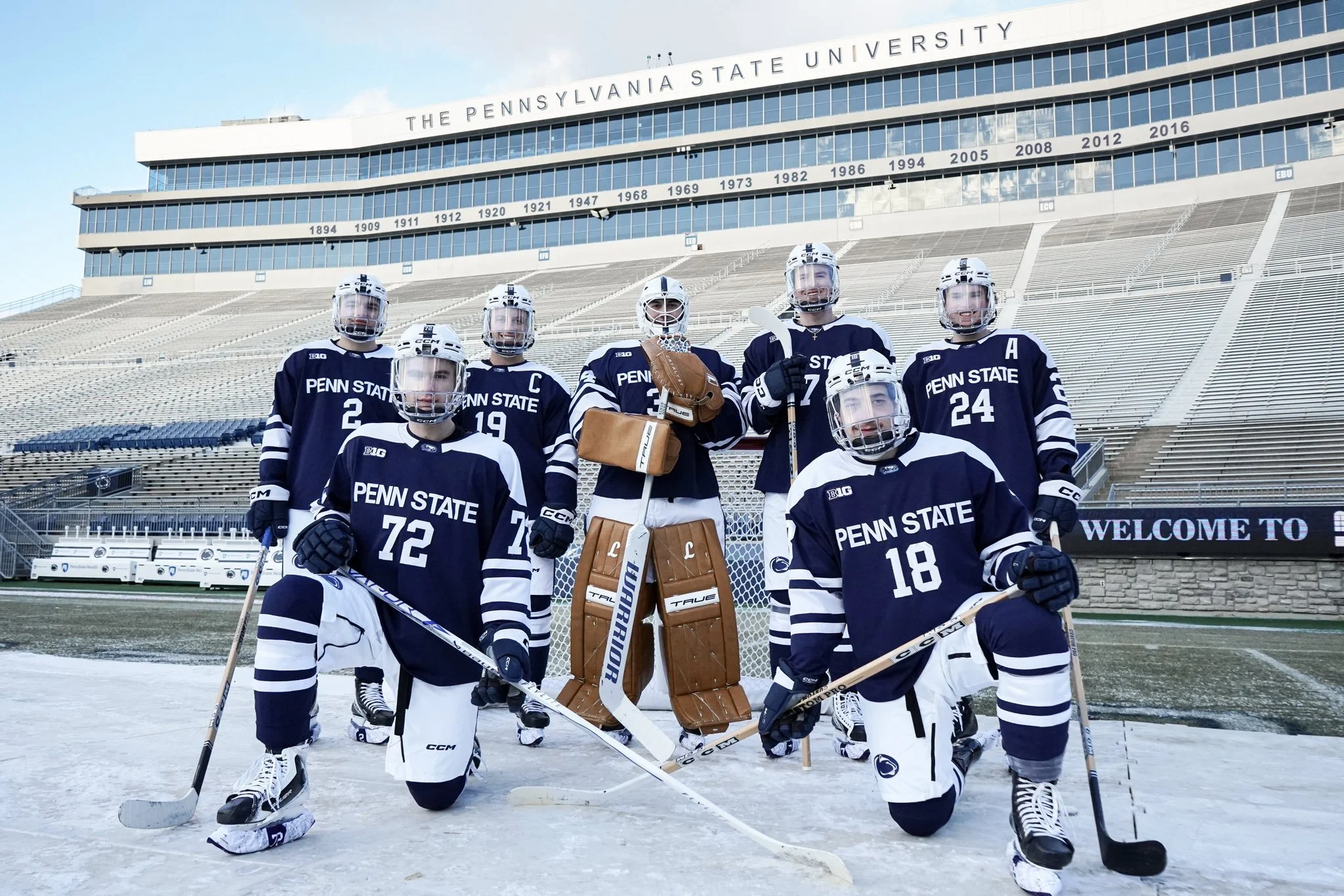
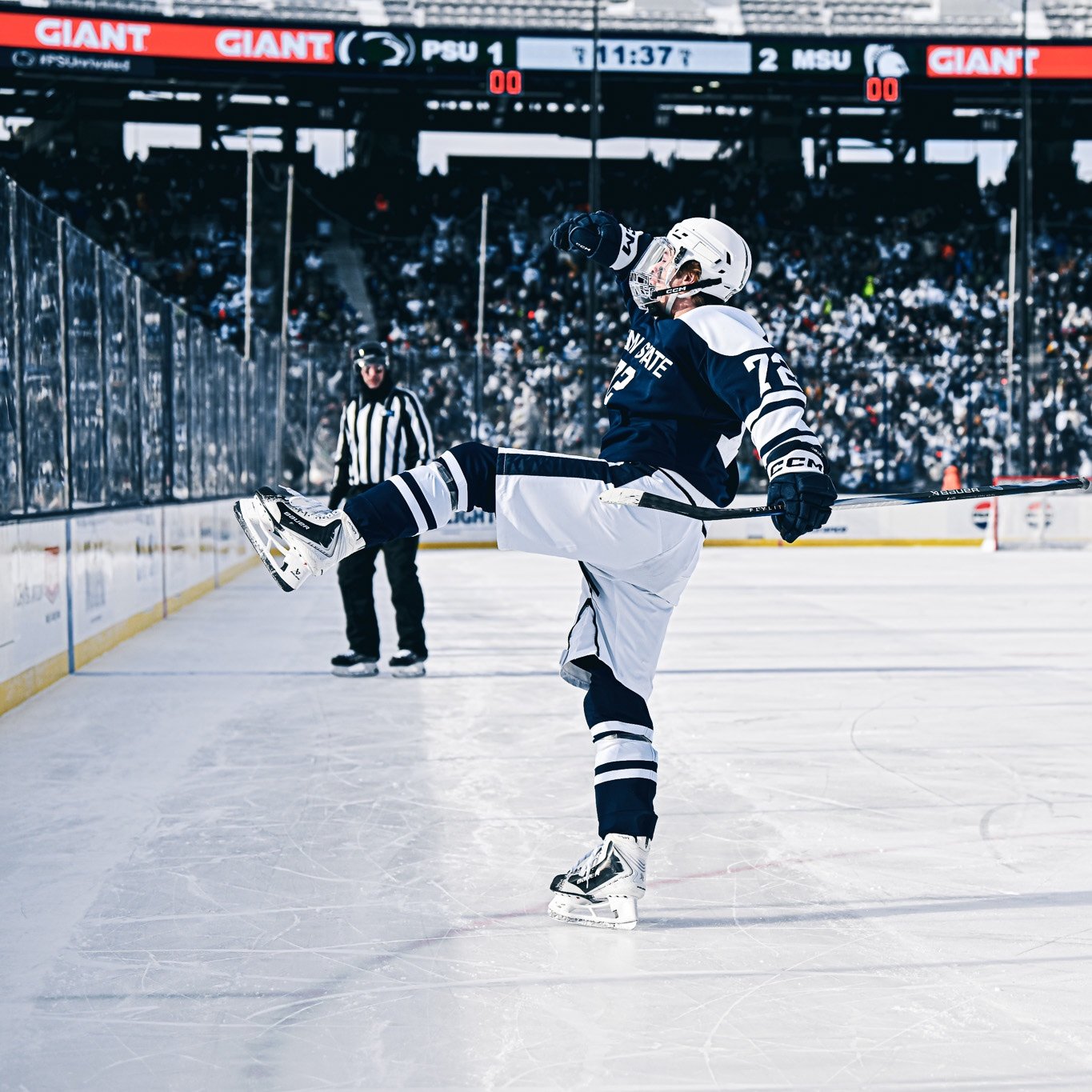
When you stage a hockey game inside one of college football’s most iconic stadiums, you don’t just show up in your regular set. You dress for the moment. Penn State Men’s Hockey understood that assignment perfectly.
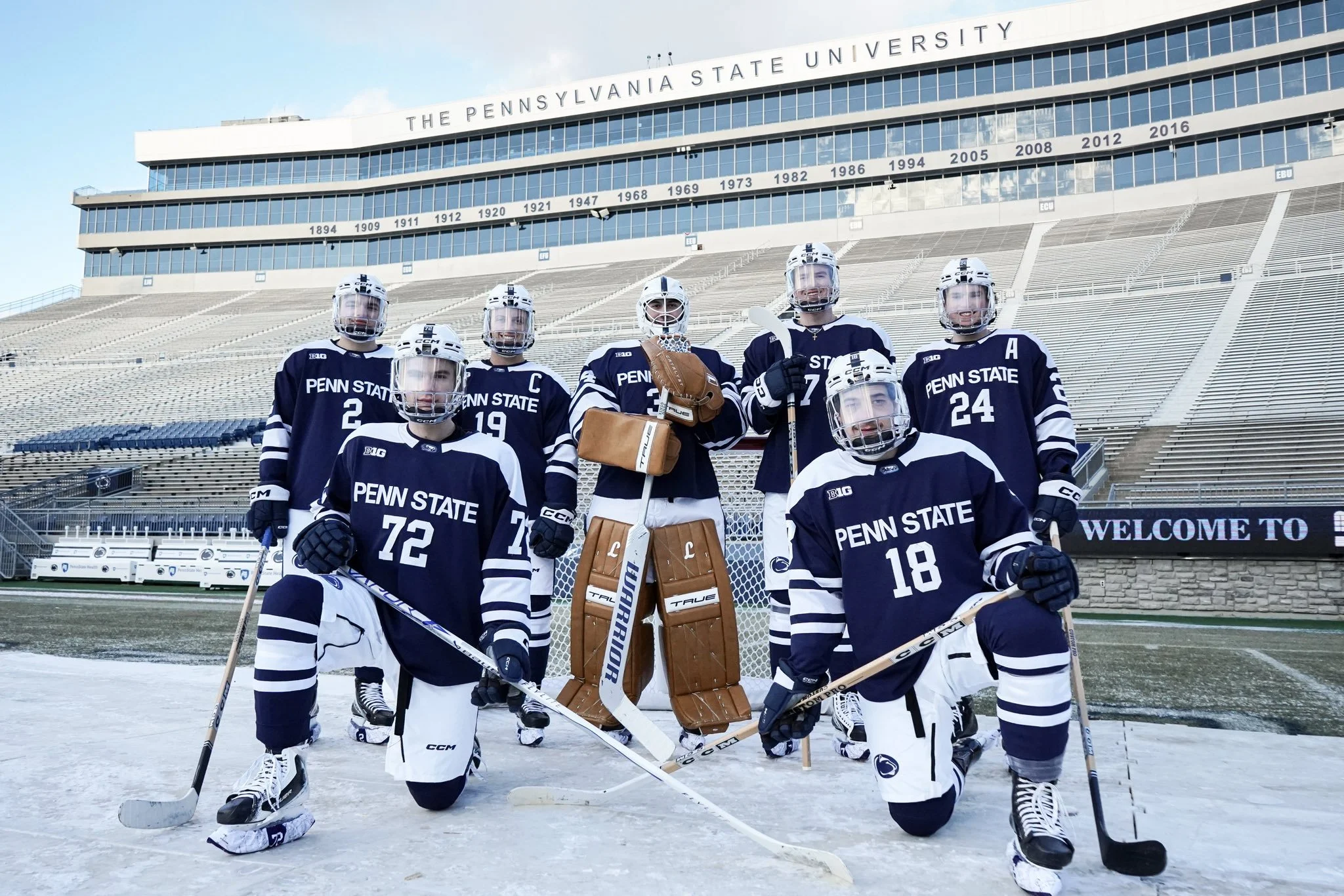
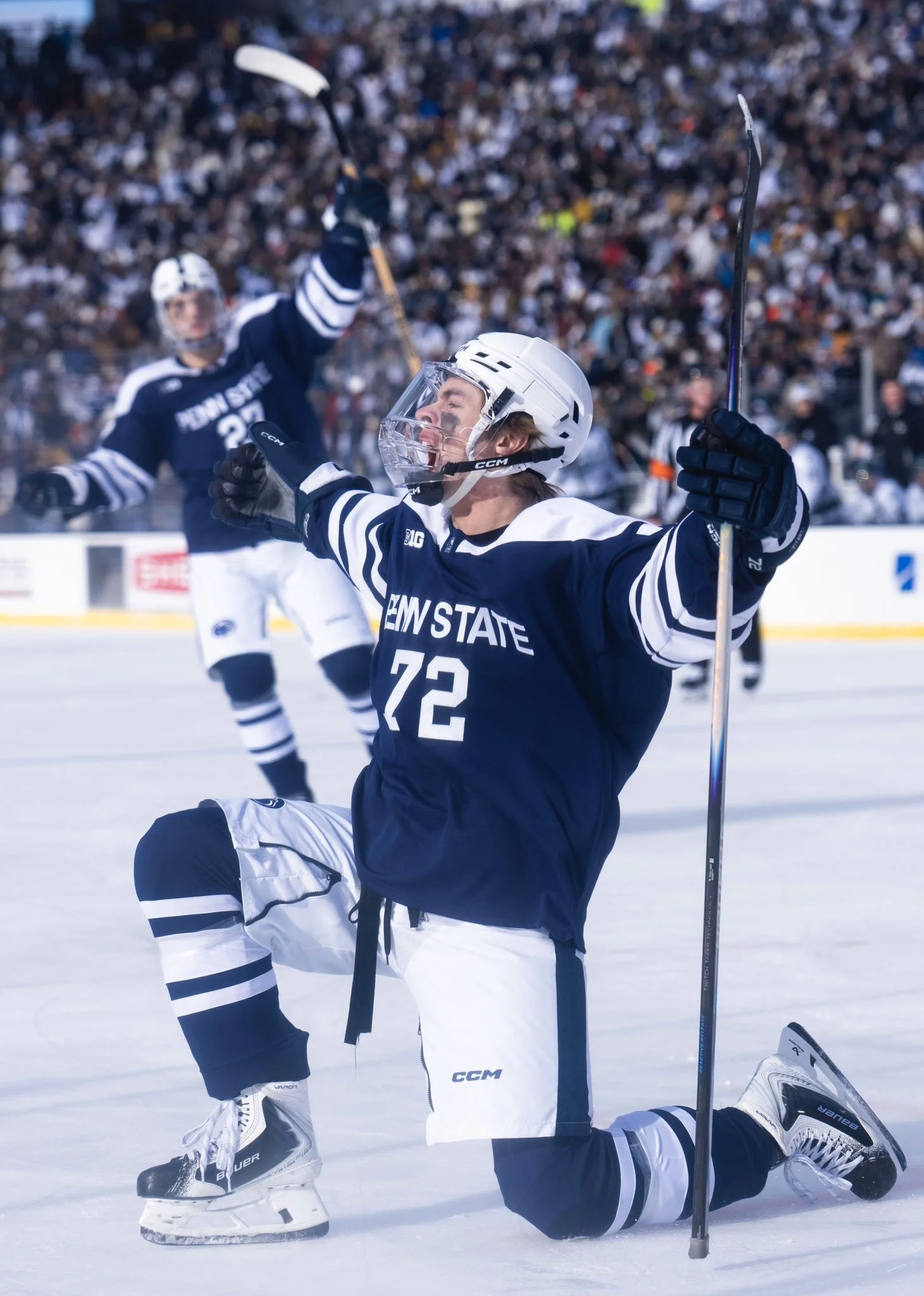
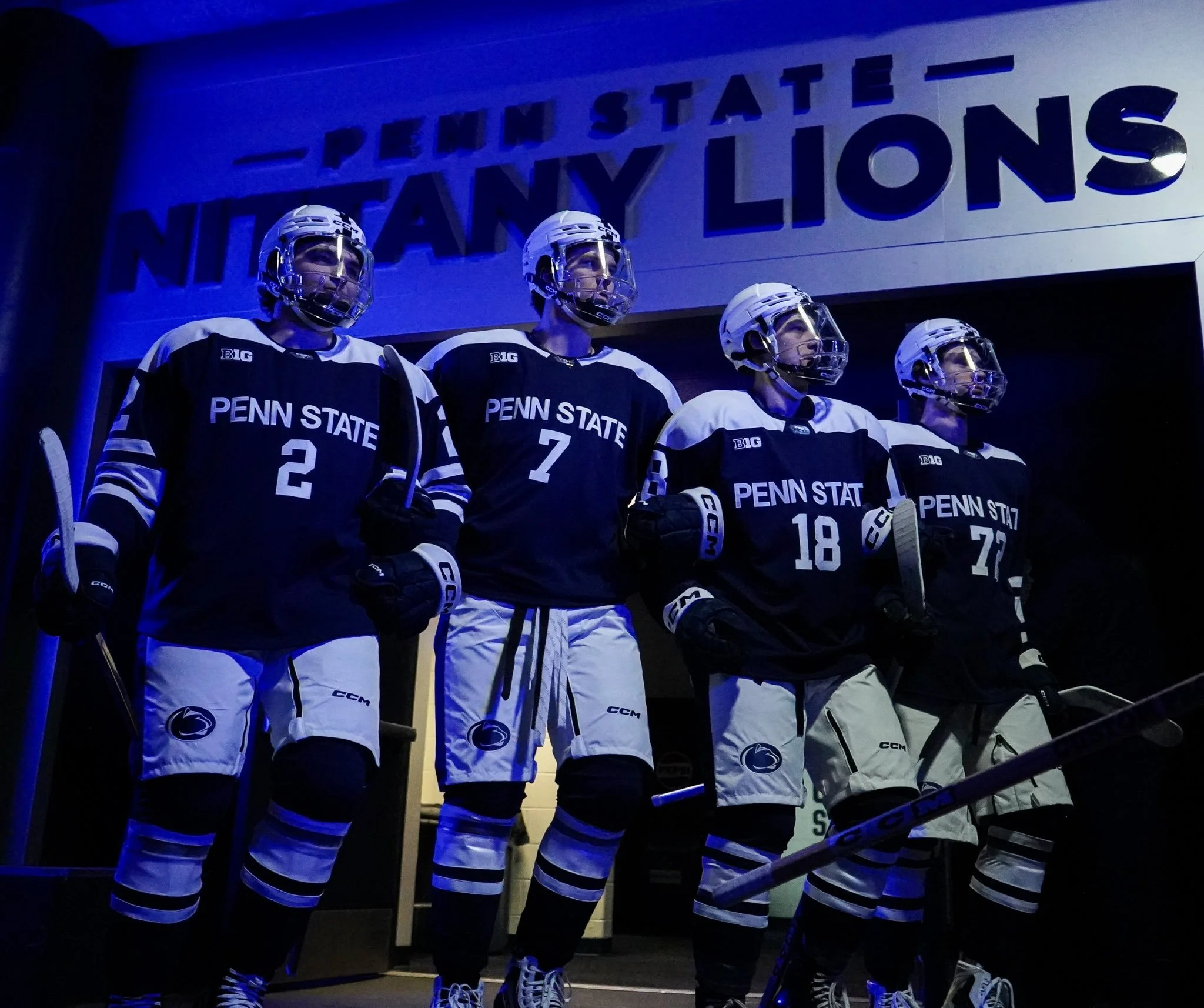
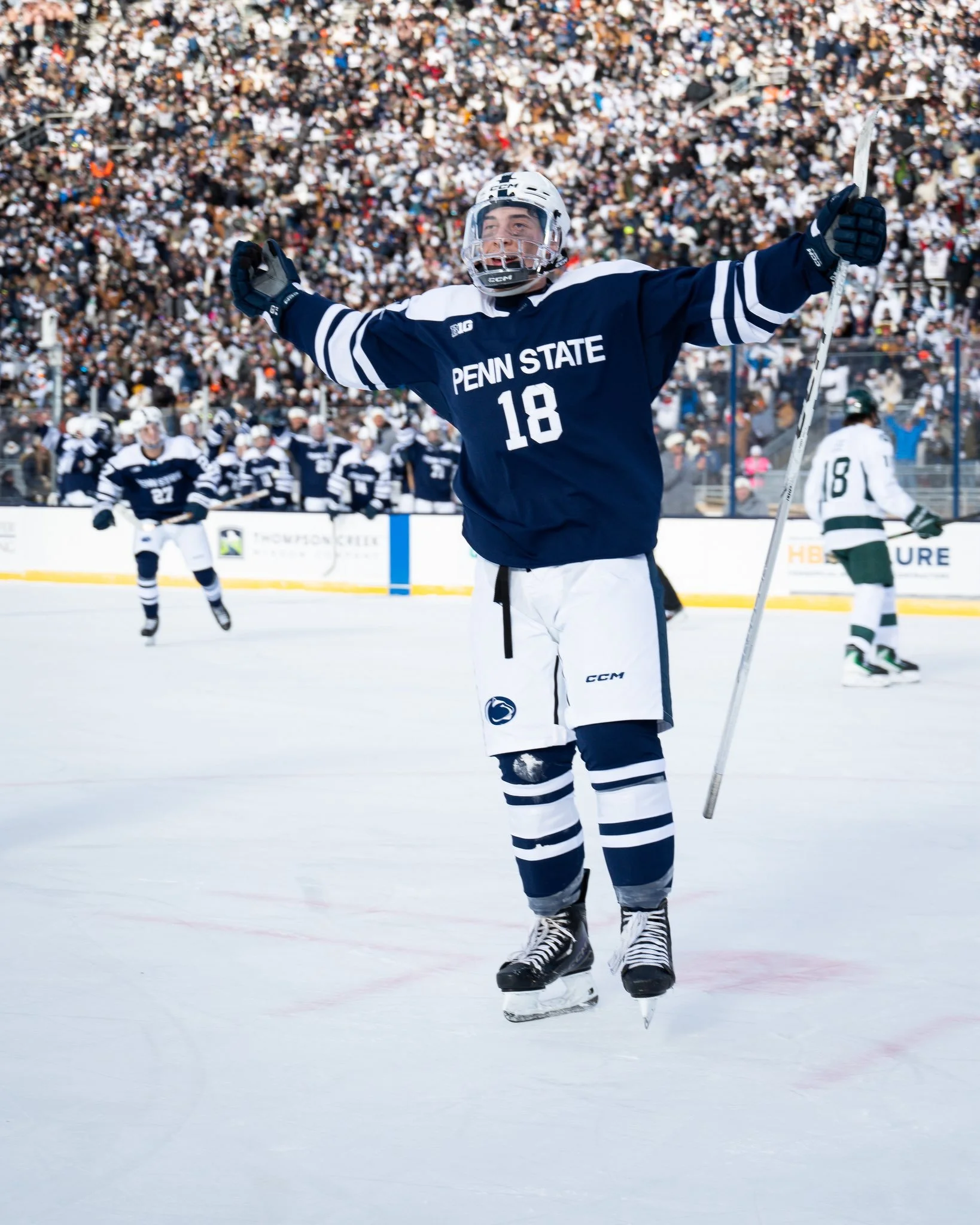
Ahead of their outdoor showdown against No. 2 Michigan State at Westshore Home Field at Beaver Stadium, the fifth-ranked Nittany Lions unveiled a one-game-only sweater that blends football heritage, hockey history, and stadium-scale design into one of the most thoughtful specialty uniforms we’ve seen this season.
The main crest features stitched twill “Penn State” lettering across the chest in Helvetica Neue Bold the same typeface used in Beaver Stadium’s end zones. It’s one of those hyper-specific typography decisions that design nerds appreciate and casual fans subconsciously recognize as “right.” But the nods don’t stop at football. The sweater also pulls heavily from the program’s first varsity hockey era from 1941–1947.
A white shoulder yoke gives the jersey a vintage, throwback silhouette, while matching white pants complete the old-school feel. Down the sides of those pants runs a solid blue stripe, a callback to the football program’s famed Generations of Greatness uniforms. The result is a perfect blend of eras: part archival, part modern, entirely Penn State.
Where this uniform really shines is in the small stuff. The front collar features the Nittany Lion Shrine, tying the look back to campus tradition and one of the university’s most recognizable landmarks. Inside the collar, though, the designers got creative. The lining mimics the look of brown leather with white laces, a direct homage to the texture of a classic football. It’s what’s known as a “hanger effect” detail: something players see and feel every time they put the jersey on, even if fans never notice it during the game. It’s subtle. It’s clever. And it’s exactly the kind of storytelling element that separates a good uniform from a great one. Built for Visibility and for Beaver Stadium.
Outdoor hockey games aren’t designed like arena games. Sightlines are longer. Fans are farther away. Numbers need to pop from the upper deck. Penn State responded with enlarged sleeve and back numbers specifically optimized for stadium viewing. But they didn’t just make them bigger, they made them meaningful. Each number features a sublimated blueprint pattern of Beaver Stadium itself. Even cooler? Every numeral is cut from a different section of that blueprint, meaning no two jerseys are exactly alike.
It’s a subtle way to bake the stadium’s architecture directly into the uniform, a detail that turns every game-worn sweater into a one-of-one collector’s piece.
Striping continues the storytelling. The sleeves and socks feature a thin-thick-thin stripe pattern inspired by the first-generation Generations of Greatness football socks, reinforcing the football DNA running through the entire kit.
In a move that feels straight out of the football playbook, Penn State will skip traditional nameplates on the back of the jerseys. Instead, they’re embracing a simple message: “No Names, All Game.” The back remains clean, finished only with the classic lion head logo on the nape.
The rest of the uniform keeps things timeless. A white helmet with a navy center stripe anchors the look. Standard blue gloves with white cuffs keep the color story tight and traditional. Inside each jersey, players will find a custom game-worn tag featuring Beaver Stadium’s iconic gate, another small but meaningful touch that locks this design to a specific place and moment in time.
The sweaters will be worn just once as part of Penn State Athletics’ Winter Weekend before heading to auction. A portion of the proceeds will benefit the State College Coyotes Sled Hockey program, adding a community impact element to an already memorable release.
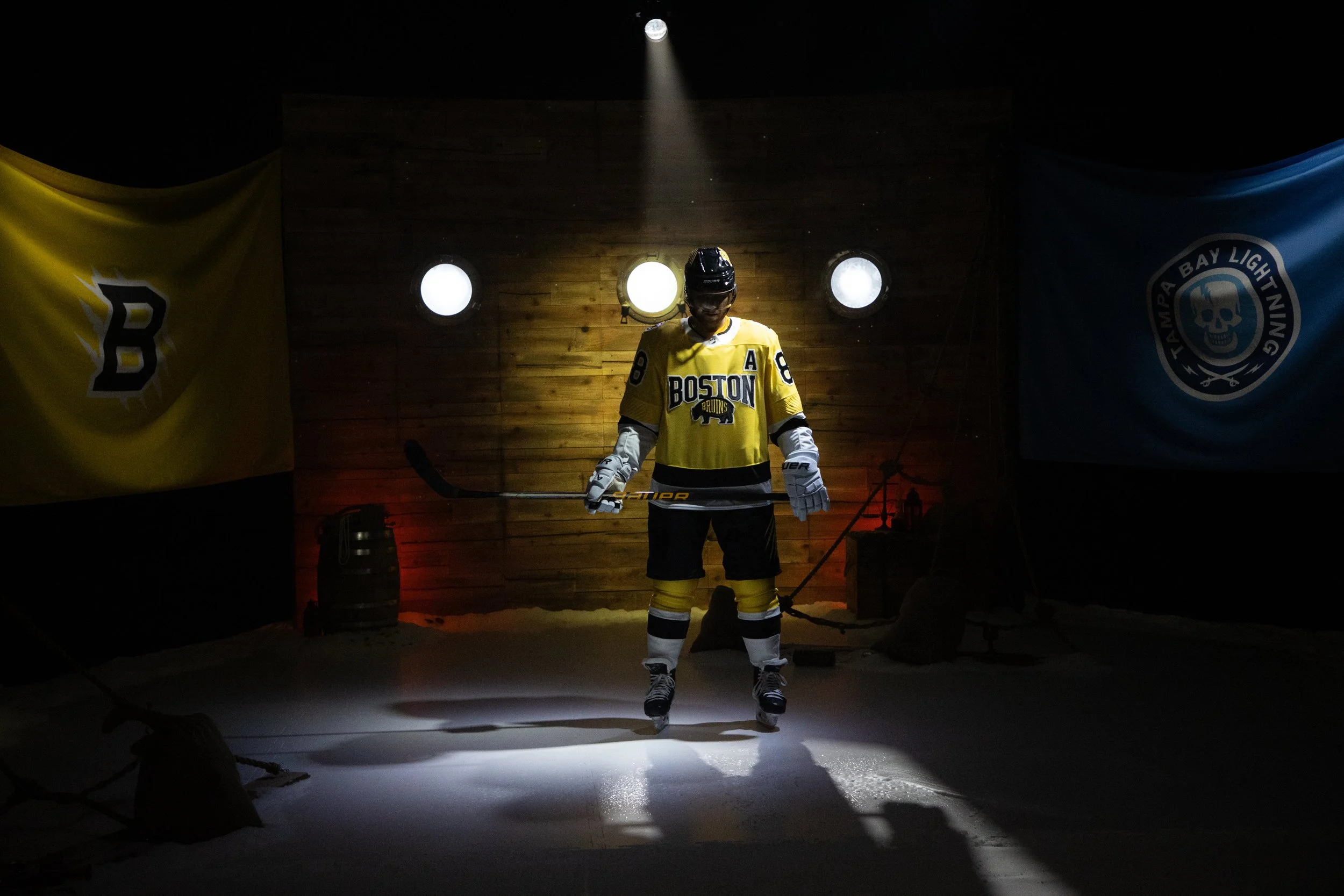
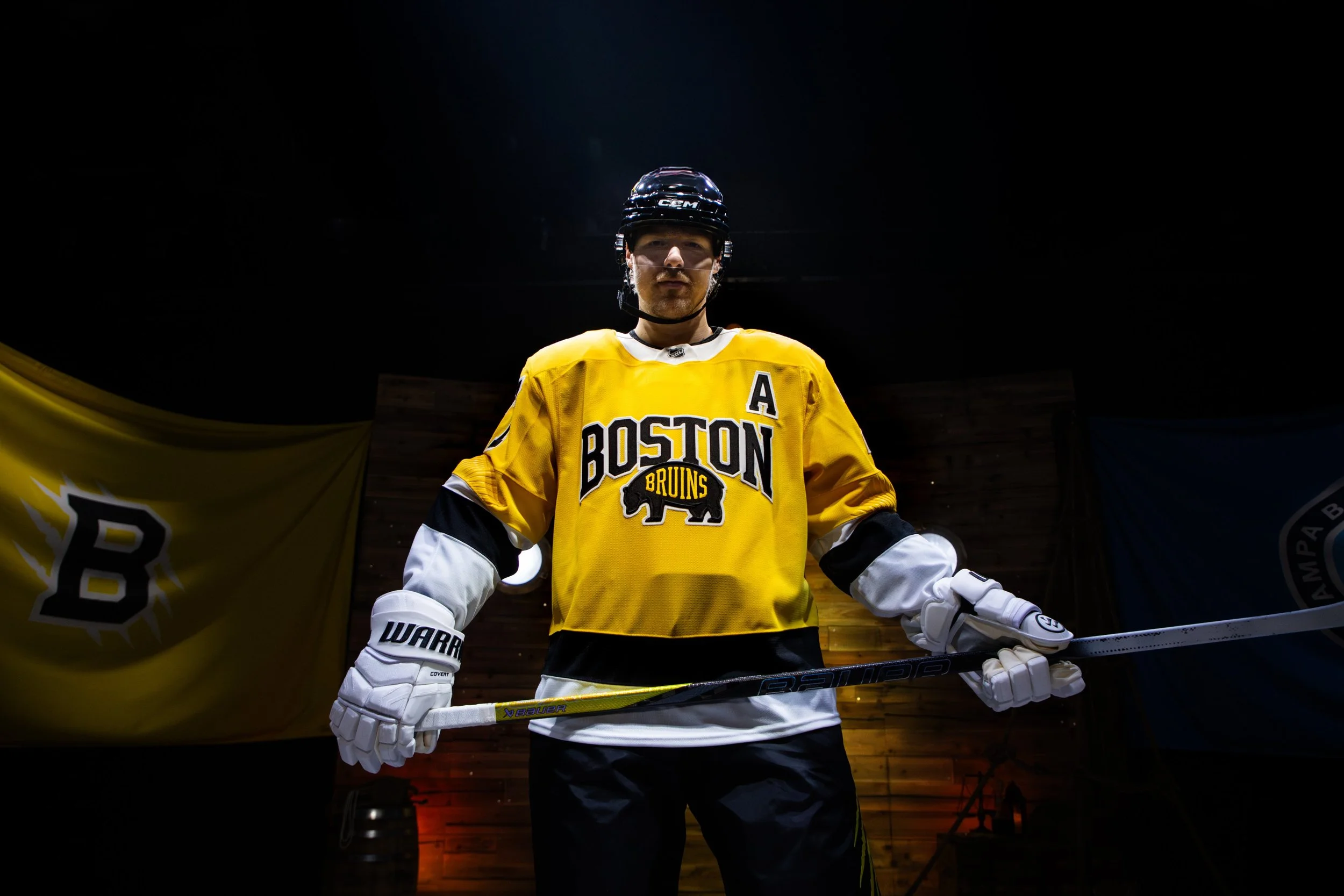
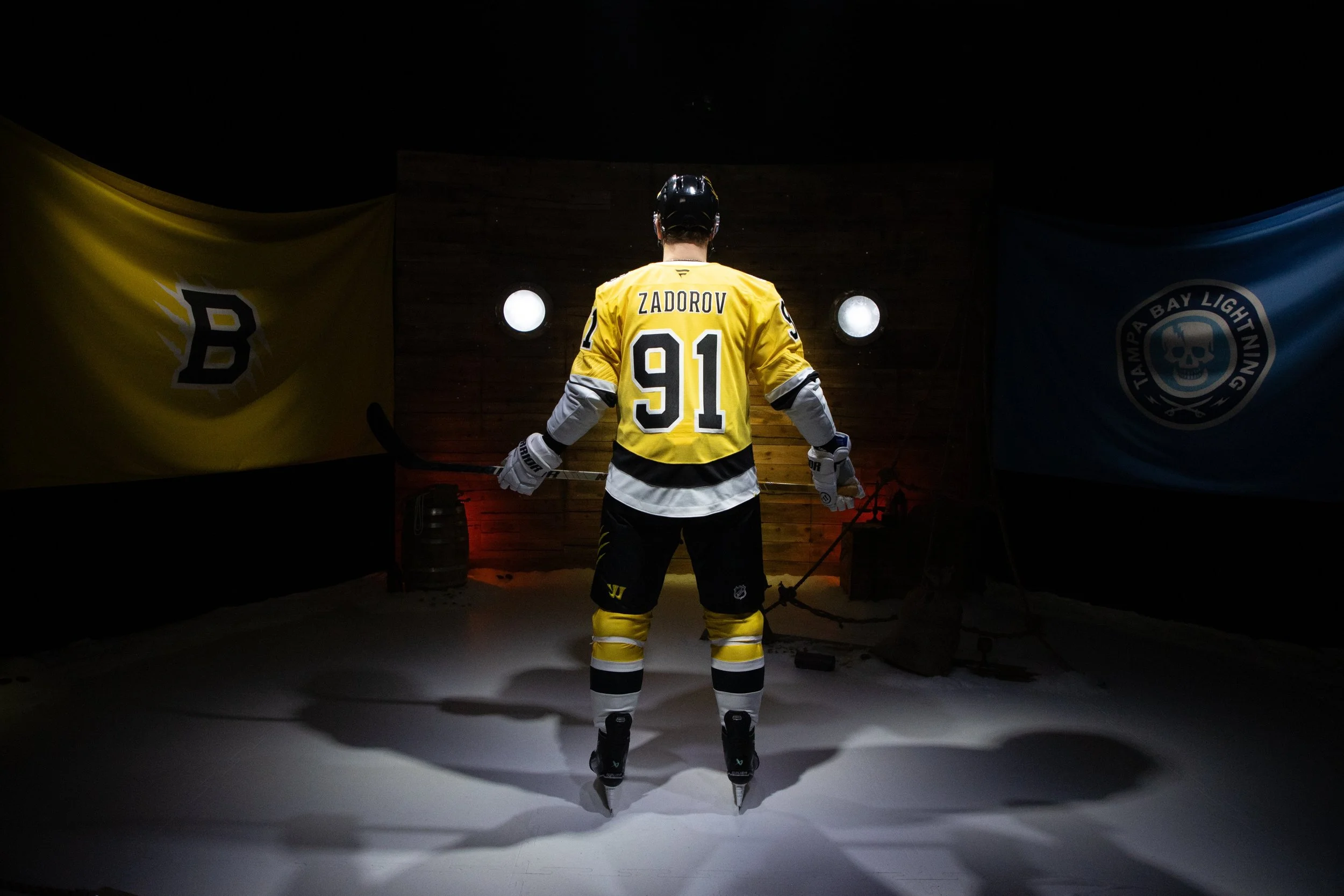
The Boston Bruins have officially unveiled their uniform for the 2026 NHL Stadium Series game against the Tampa Bay Lightning. The outdoor showdown is set for February 1, 2026, at Raymond James Stadium, marking the first time in NHL history that an outdoor game will be played in a football stadium in the state of Florida.
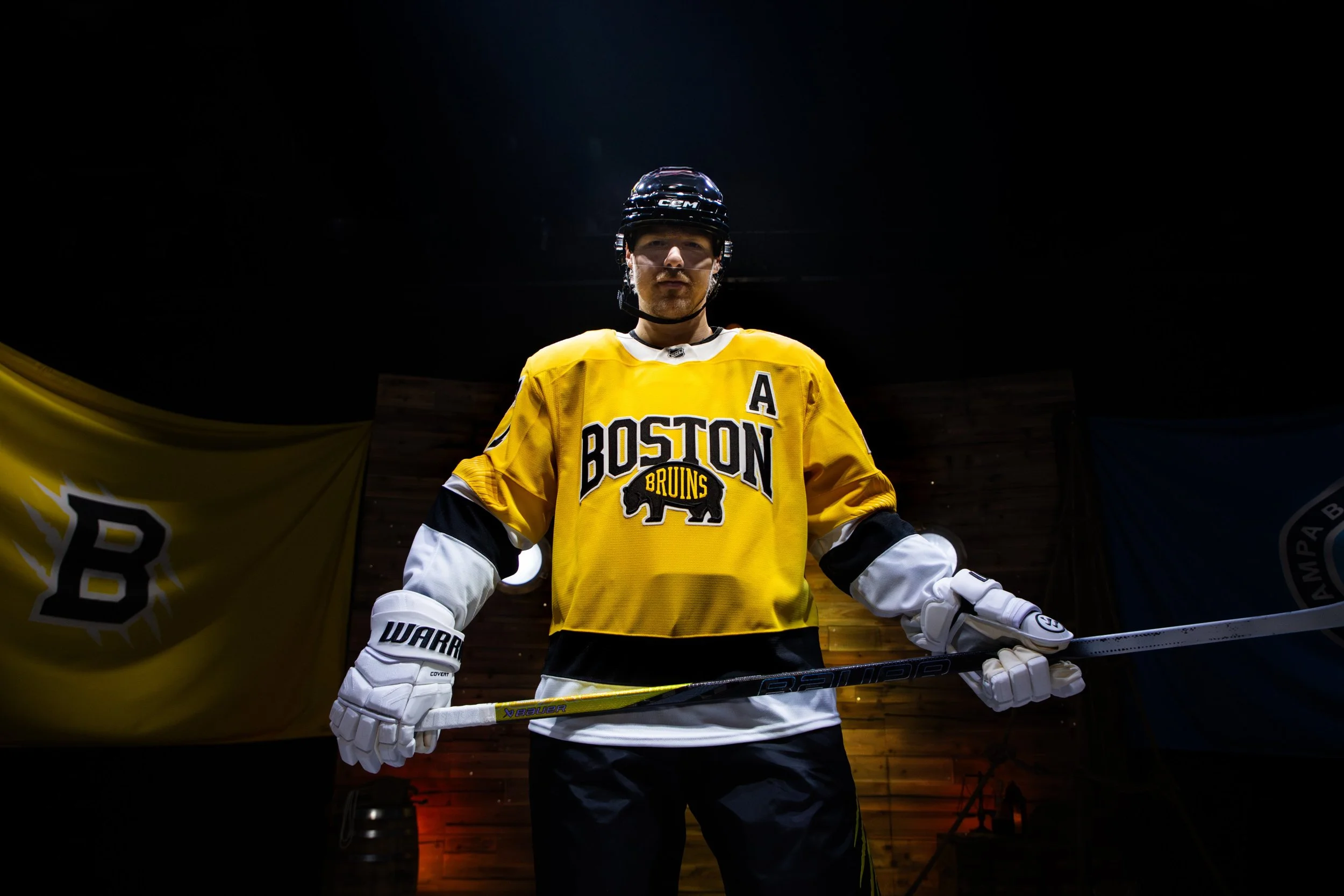
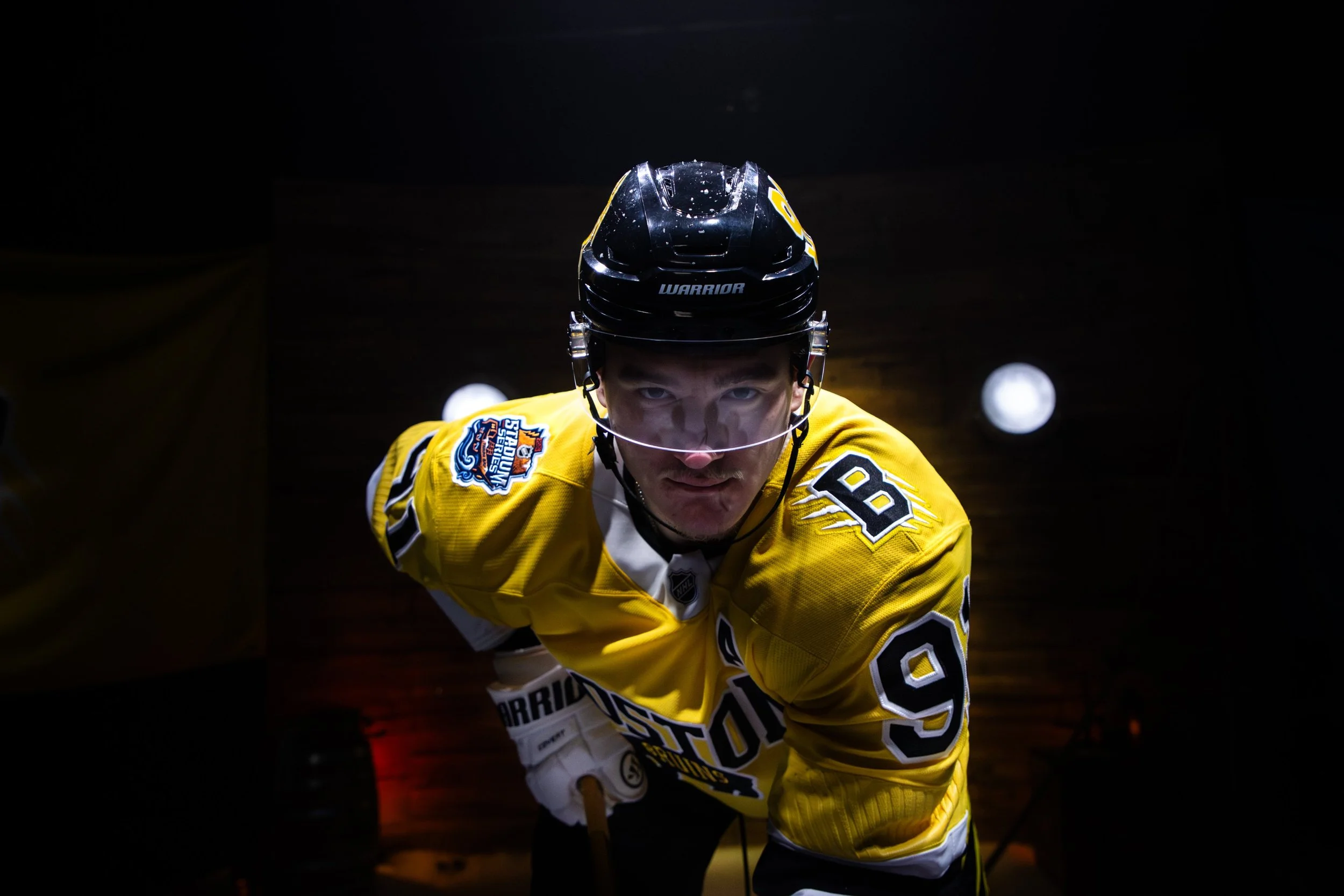
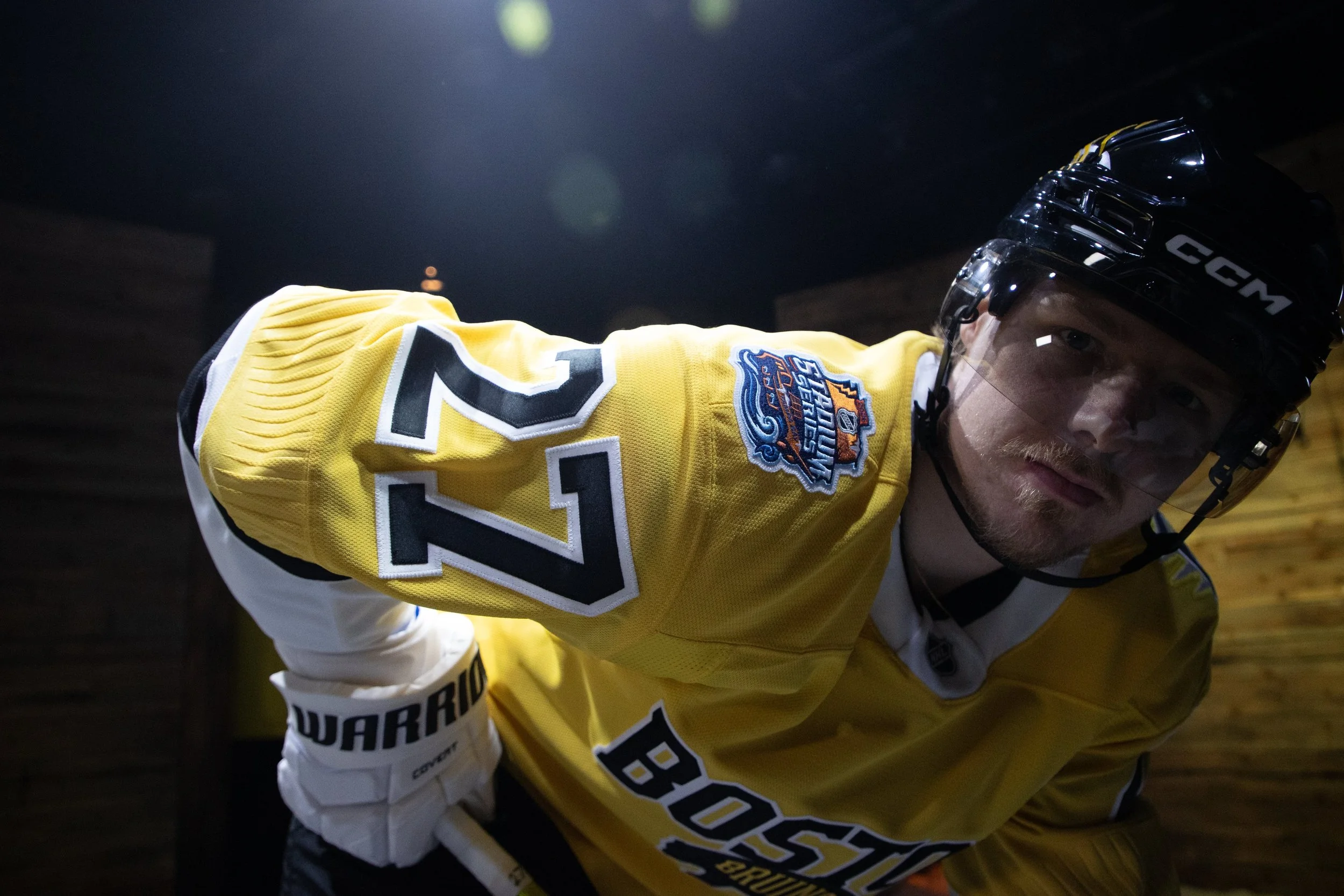
Fitting for a game in the Sunshine State, the Bruins’ 2026 Stadium Series look flips the script on tradition. The club’s iconic black-and-gold colorway is reversed, pushing a rich, vibrant gold to the forefront while black accents bring balance and bite. The result is a uniform built for scale and spectacle, complete with oversized numbers on the sleeves and helmet that are designed to pop under the Sunday night lights.
Boston Bruins President Cam Neely emphasized that the Stadium Series stage offered a rare opportunity to push beyond the club’s recent retro-heavy designs. After multiple Winter Classics and a centennial celebration rooted in heritage, this uniform leans forward while maintaining the toughness and edge synonymous with Bruins hockey. Neely described the look as “dialed up,” combining classic Bruins snarl with bold color and modern detailing meant to shine in a one-of-a-kind setting.
Sunshine-inspired details are woven throughout the jersey, subtly grounding the design in its Florida backdrop. Debossed sun rays appear on the sleeves and along the hem loop label, which also features “BOS,” a nod to Boston’s airport code and the Bruins’ passionate fan base that travels far beyond New England. It’s a quiet tribute to the road warriors who carry black and gold into every arena.
The football stadium setting plays a major role in the uniform’s identity. The “Boston” wordmark across the chest draws inspiration from the New England Patriots’ typography, intentionally linking the Bruins to their NFL counterparts for this crossover moment. That wordmark is paired with a bold lock-up featuring the crawling bear logo, a traditionally secondary mark that takes on a larger, more prominent role for the Stadium Series stage.
Grit and toughness remain central themes. A new secondary logo featuring a varsity-style “B” slashed with a bear claw appears on the shoulder, reinforcing more than a century of Bruins physicality. That claw motif extends across the uniform, showing up on the jersey, helmet, and pants to create a cohesive, aggressive visual language.
Inside the collar, the Bruins paid homage to their regional roots. The abbreviations of all six New England states are stitched within the neckline, a reminder that while the game may be played in Florida, the heart of Bruins hockey belongs to New England.
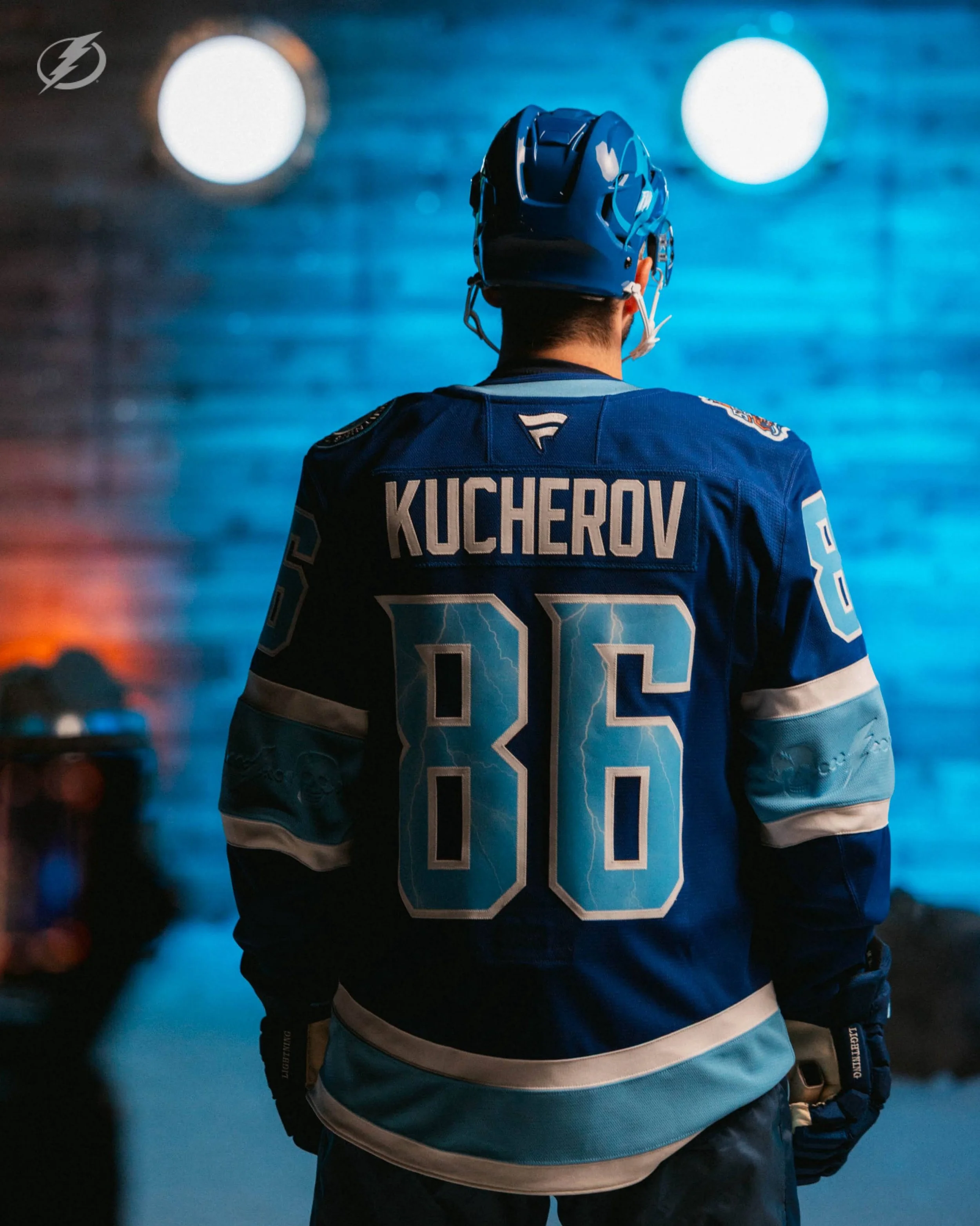
The Tampa Bay Lightning have officially unveiled the uniforms for one of the most anticipated events on the 2025–26 hockey calendar: the 2026 NHL Stadium Series outdoor game against the Boston Bruins. Set for February 1, 2026, the matchup will take place at Raymond James Stadium in Tampa, marking a historic first for the league as the NHL hosts an outdoor game in a football stadium in the state of Florida.
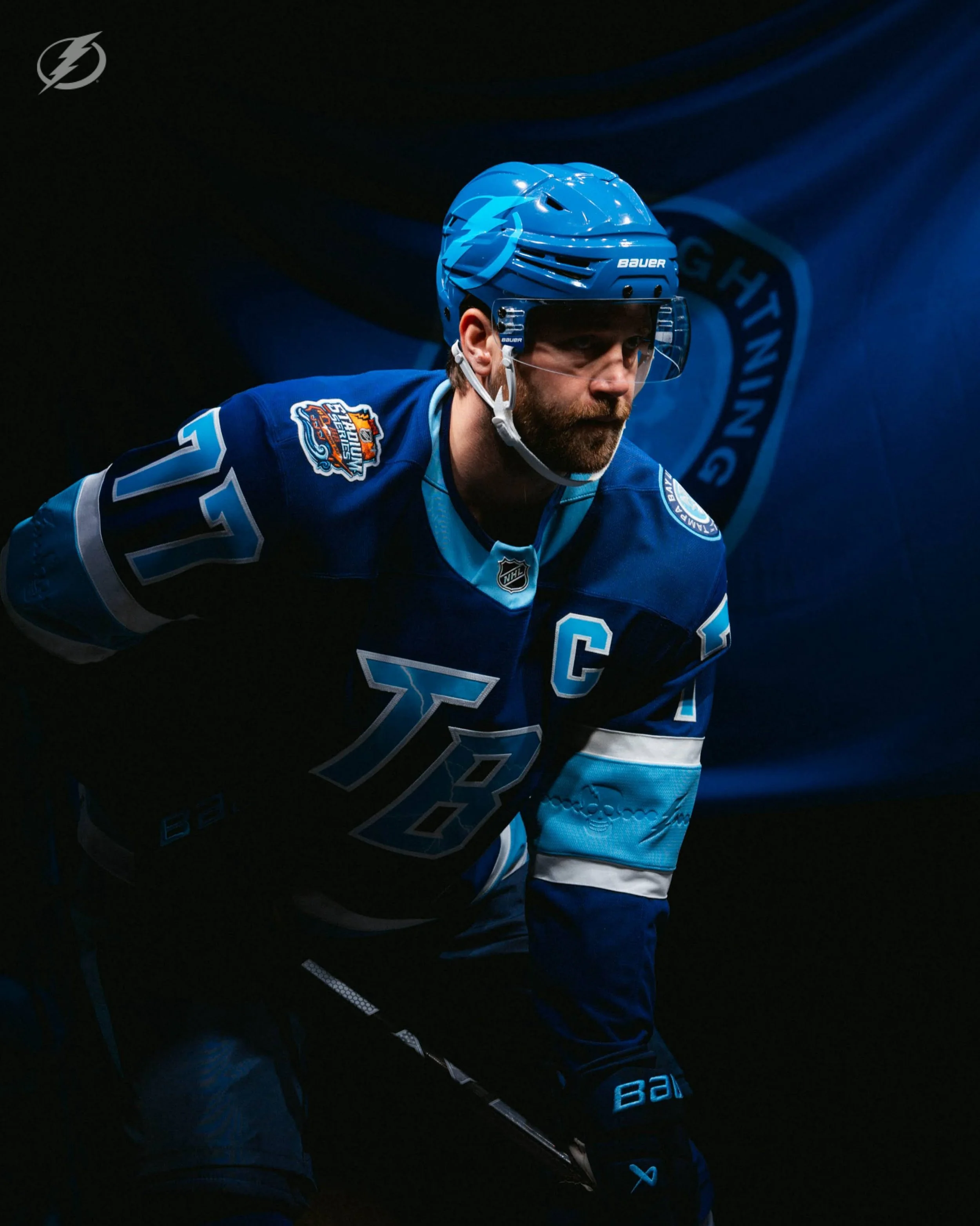
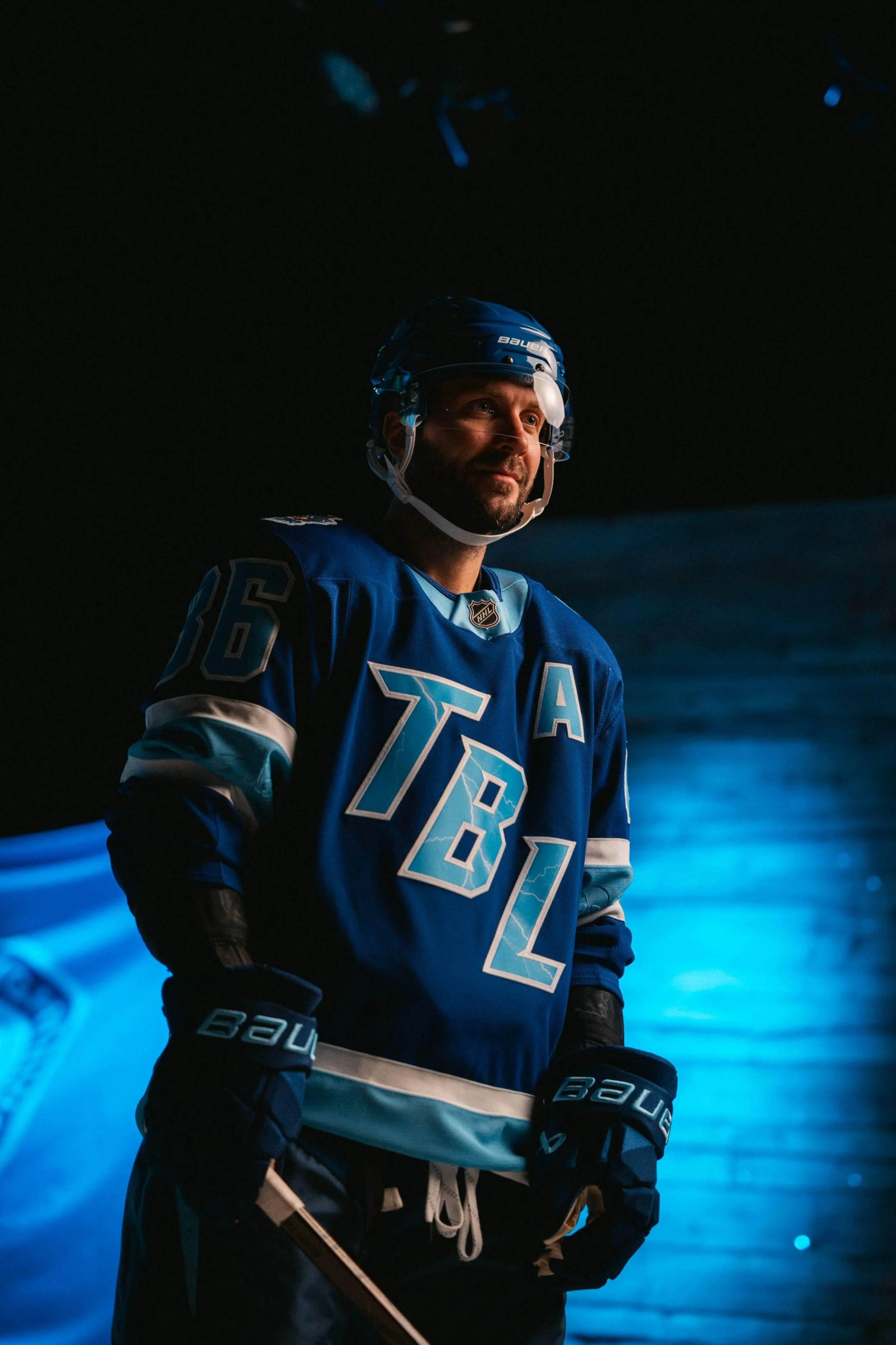
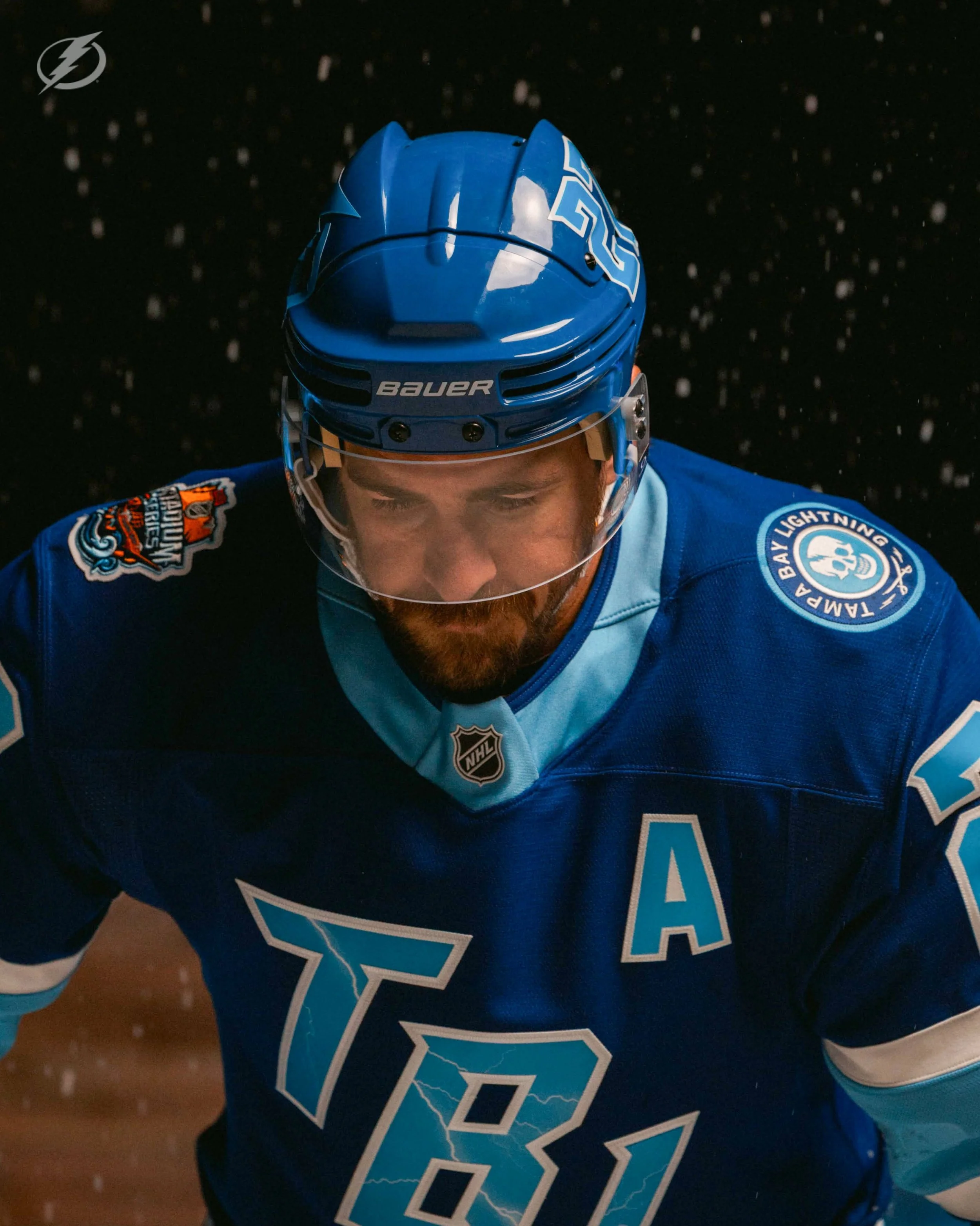
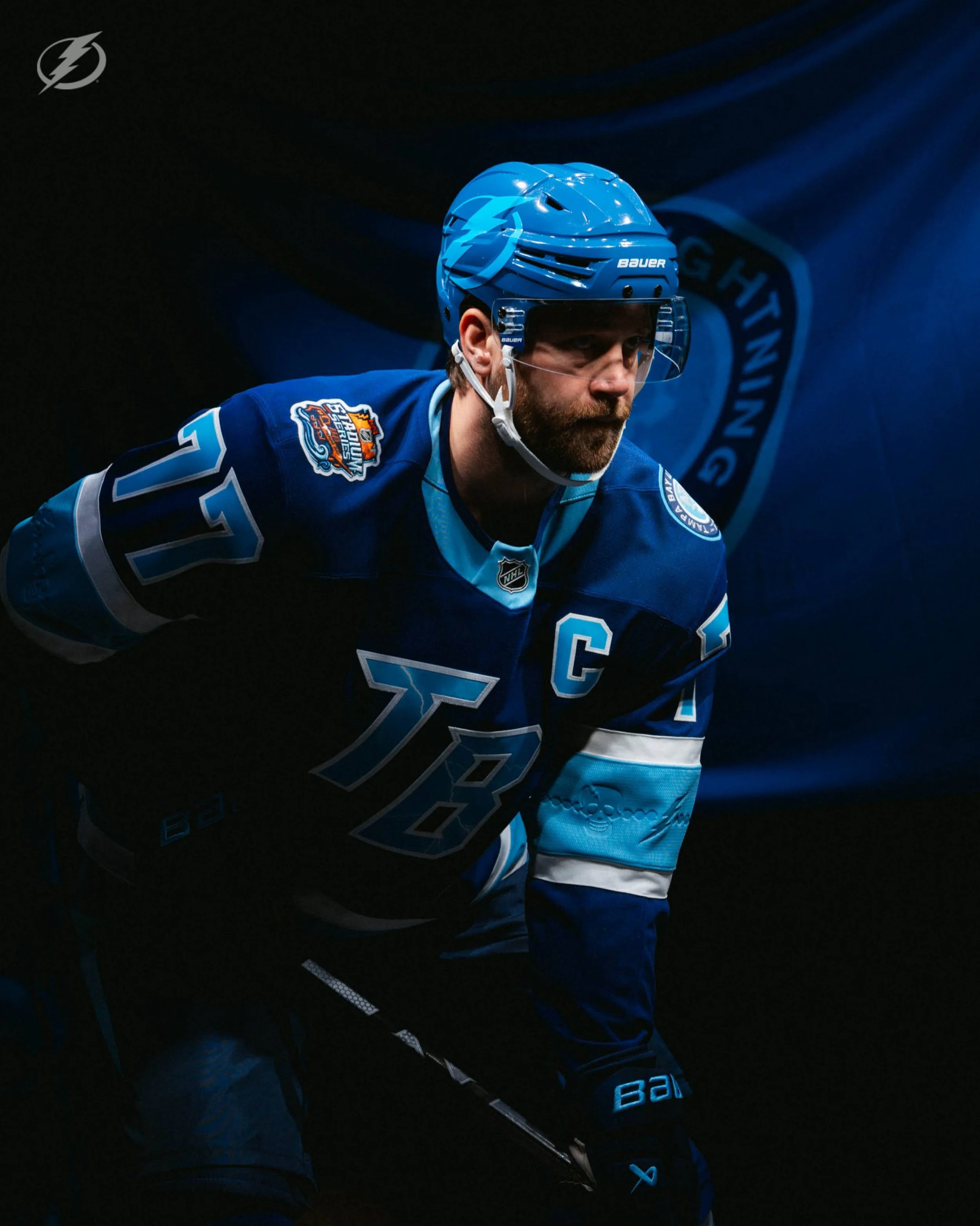
Designed by Fanatics in collaboration with the Lightning and the NHL, the 2026 Stadium Series uniform pushes beyond the traditional hockey sweater. It embraces the league’s next-generation outdoor jersey philosophy, where creativity, storytelling, and local influence take center stage. The Lightning’s look features a striking two-tone design that pairs the franchise’s familiar royal blue with a brand-new sky blue accent. The lighter shade brings a fresh brightness meant to reflect an outdoor game played beneath the Tampa sky, while the royal blue anchors the jersey in the team’s established visual history.
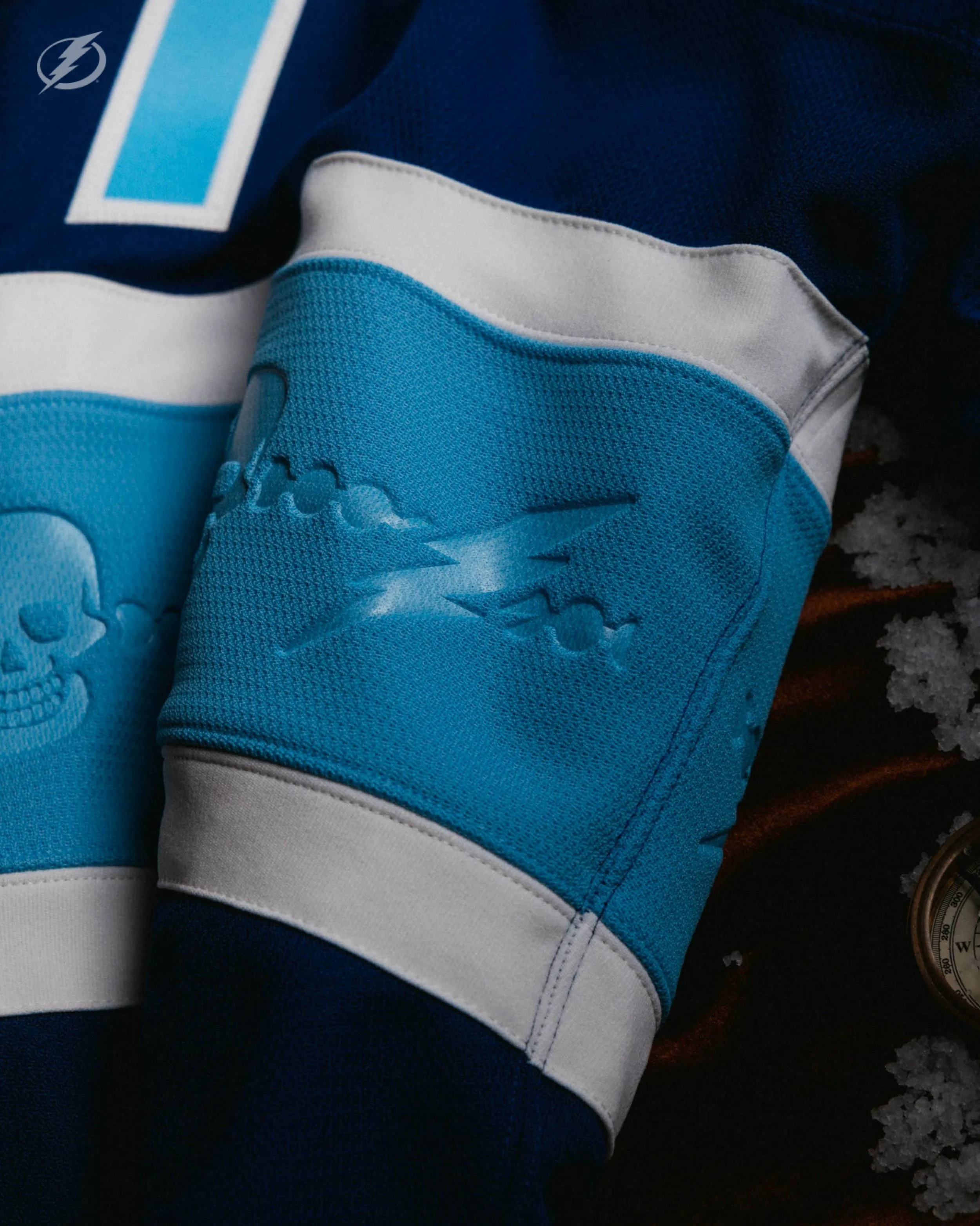
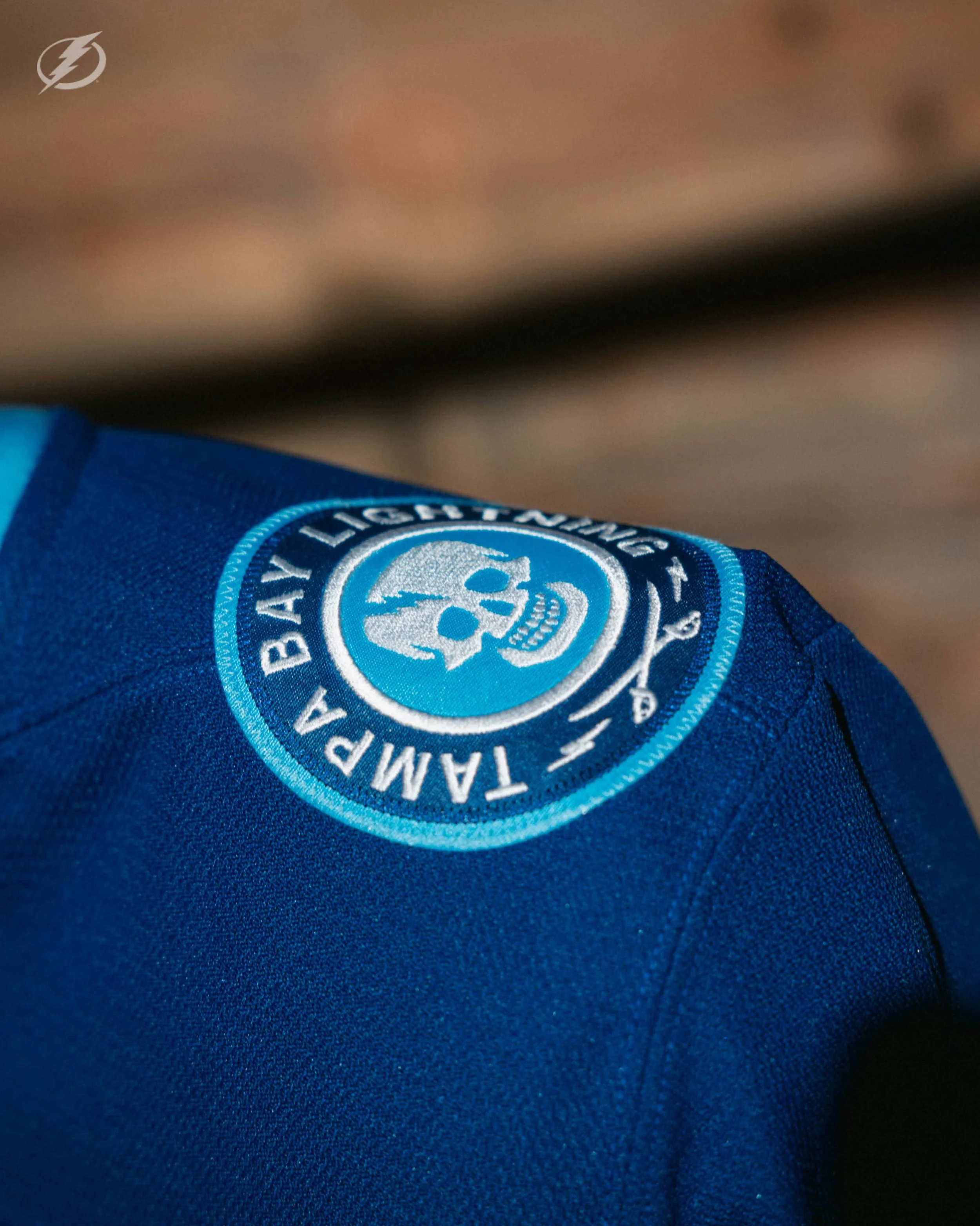
Throughout the uniform, Tampa Bay’s personality is woven into the details. Pirate-inspired elements nod to the city’s swashbuckling lore, including a newly designed shoulder patch and subtle references to the jolly roger. The lightning bolt texture remains front and center, reinforcing the franchise’s core symbol, while the crest and number font carry over from the Lightning’s 2022 Stadium Series appearance in Nashville, creating continuity between the organization’s outdoor hockey moments.
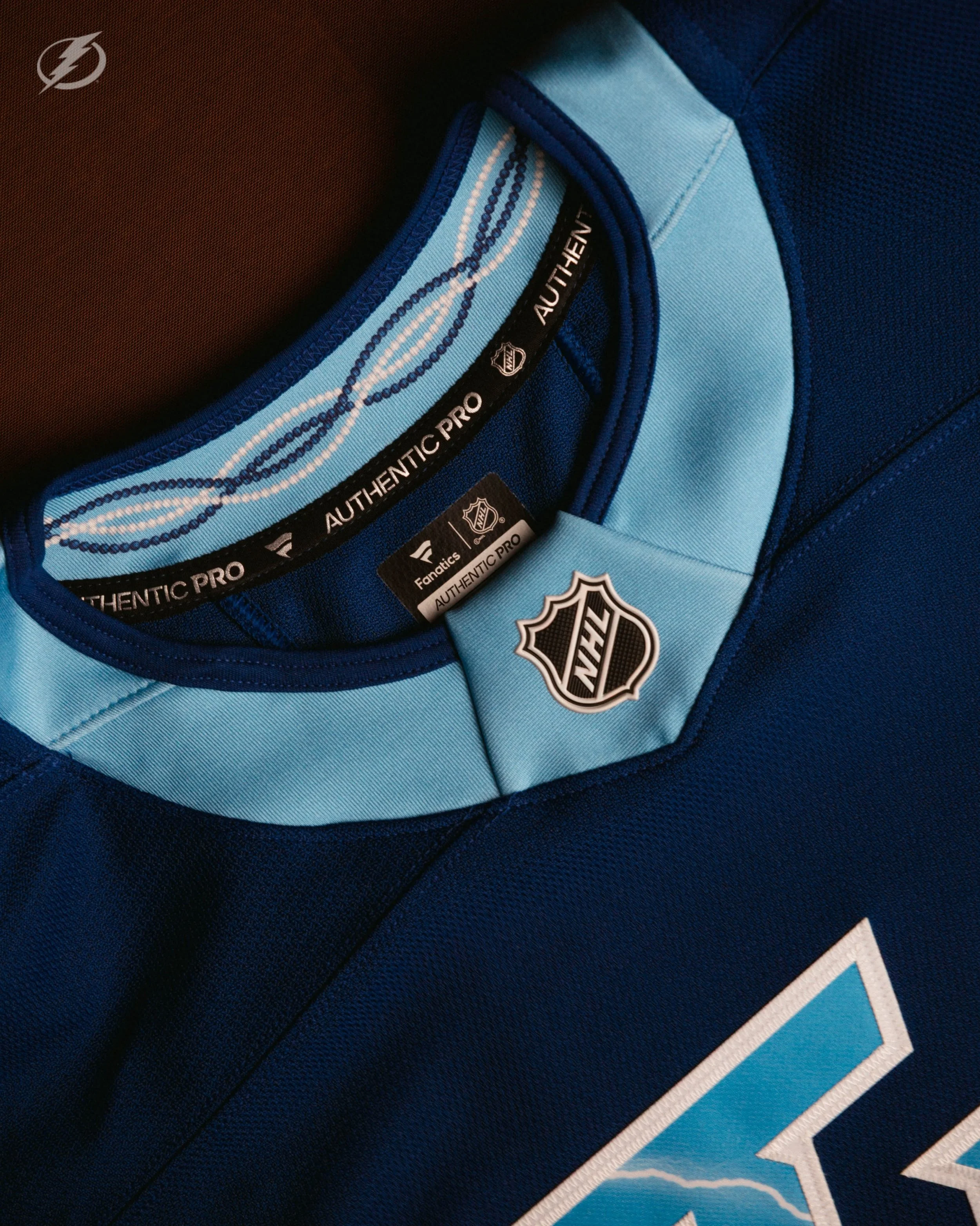
Hidden details elevate the jersey even further. Debossed sleeve designs reveal bead patterns that form a connection to the Lightning’s “Bolt for Life” logo, a tribute to the team’s season ticket members and long-standing supporters. Beaded elements also appear along the collar, offering a quiet homage to pirate culture and reinforcing the layered storytelling found throughout the uniform.
When the Lightning hit the ice at Raymond James Stadium, they won’t just be wearing a jersey. They’ll be carrying Tampa Bay’s history, culture, and identity into an outdoor moment unlike anything the NHL has seen before.
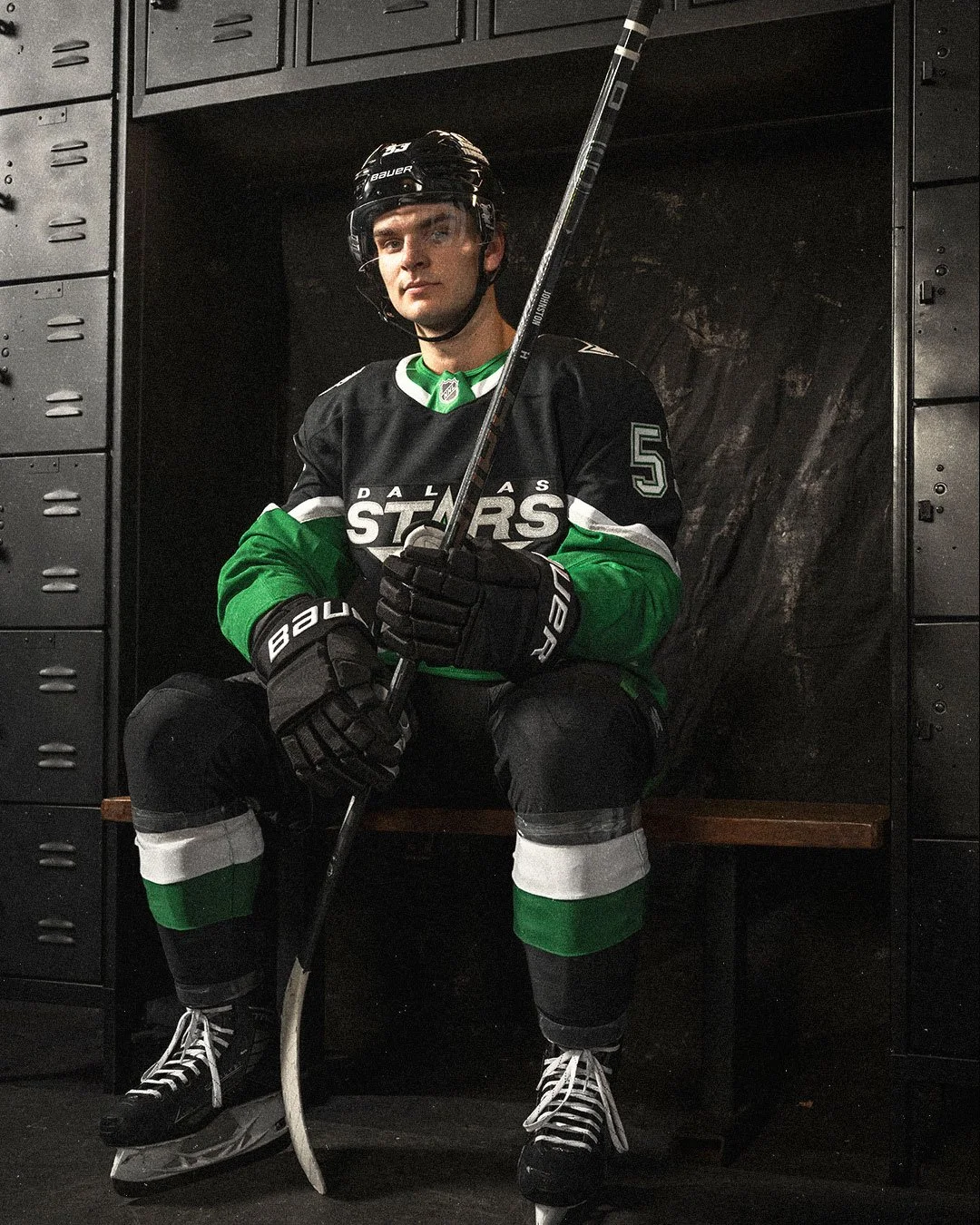
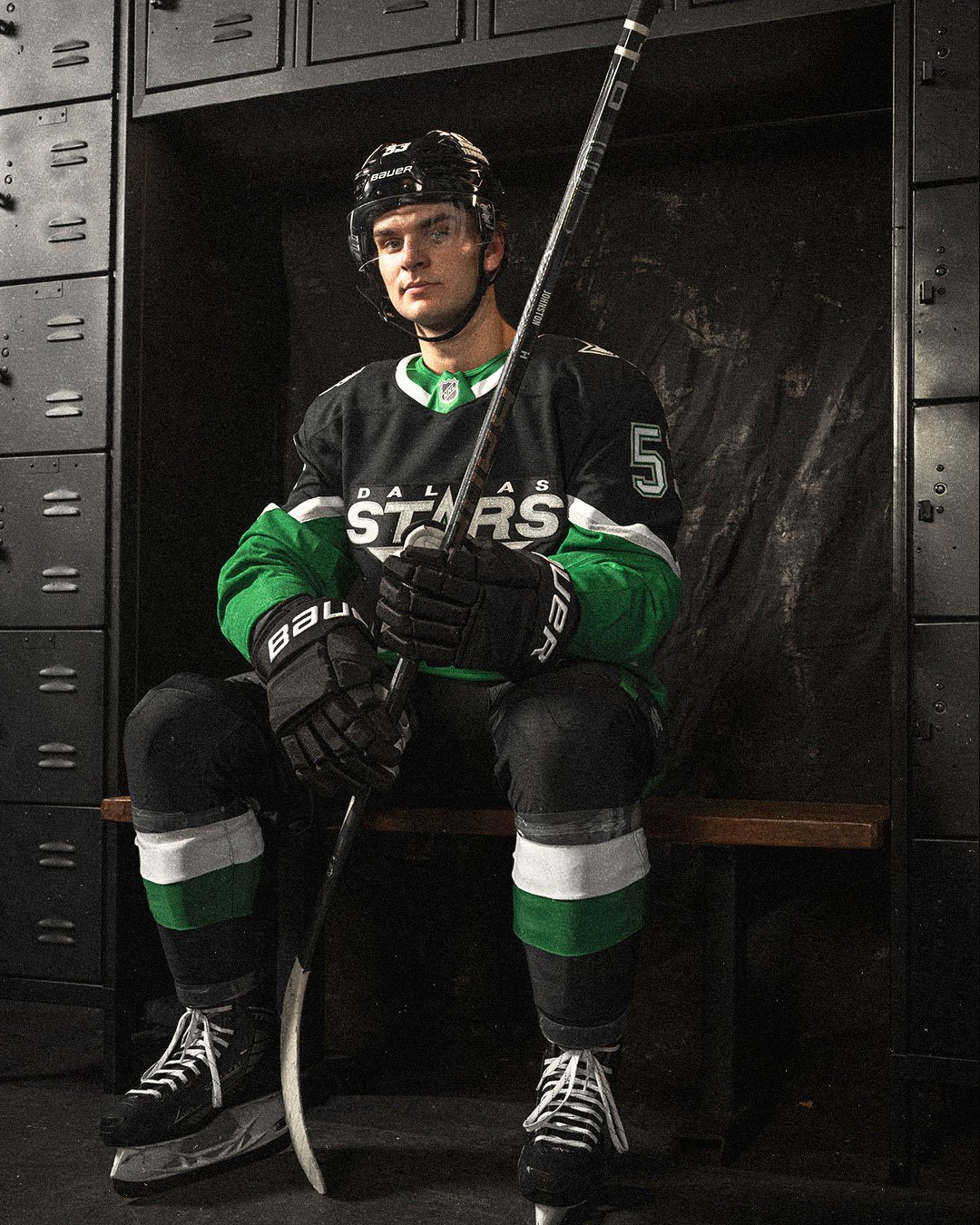
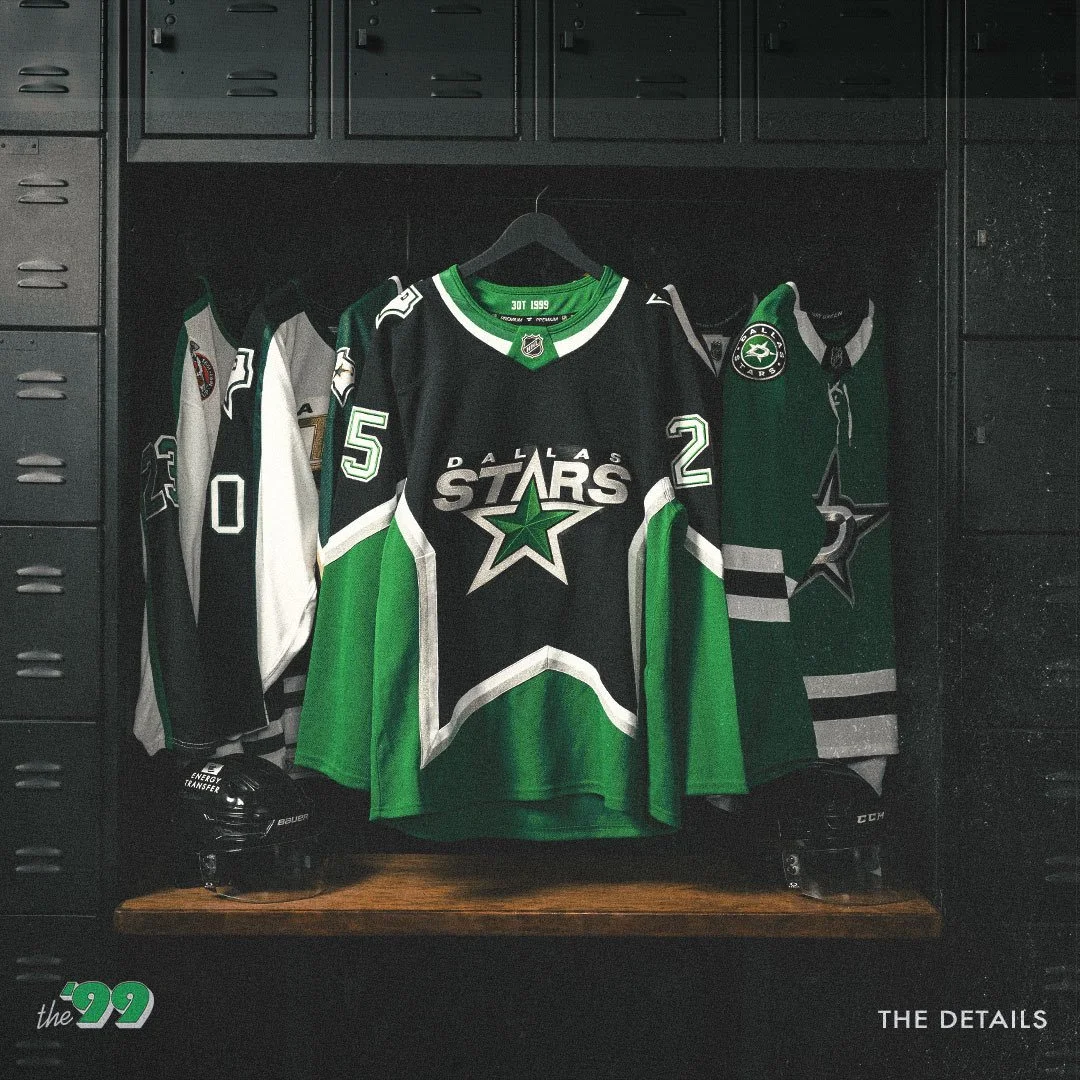
The Dallas Stars are turning back the clock in the most iconic way possible. Interwoven with history and engineered with intention, the new ’99 jersey is a work of art honoring one of the franchise’s greatest moments, the 1999 Stanley Cup Playoffs. Every stitch carries meaning, every detail calls back to greatness, and the entire design breathes new life into the Stars’ identity for this season. This is more than a throwback. It’s a bridge across eras.
At the heart of the design is a tribute to the championship run that defined a generation of Stars hockey. Subtle, meaningful, and packed with symbolism, the jersey pulls directly from the energy of that unforgettable 1999 playoff push.
Inside the collar sits “3OT 1999,” a nod to the triple-overtime thriller that secured the franchise’s first Stanley Cup. It’s a detail that instantly transports fans back to the moment the Cup became reality when endurance, grit, and belief sealed the deal.
The jersey’s star-stripe design blends the unmistakable visual identity of 1999 with today’s modern aesthetic. It creates a clean connection between past and present, reminding fans that while the eras evolve, the spirit of Stars hockey endures.
Legacy logos return but refreshed. Each mark is reinterpreted through the team’s current color palette, merging tradition with contemporary energy. It’s nostalgia without feeling dated, and innovation without losing authenticity.
The ’99 jersey is a symbol of legacy, ambition, and belief. It reminds Stars fans where they’ve been and what the team still strives to achieve. With modern craftsmanship woven together with iconic memories, Dallas delivers a uniform that honors the champions of yesterday while energizing the chase for tomorrow.
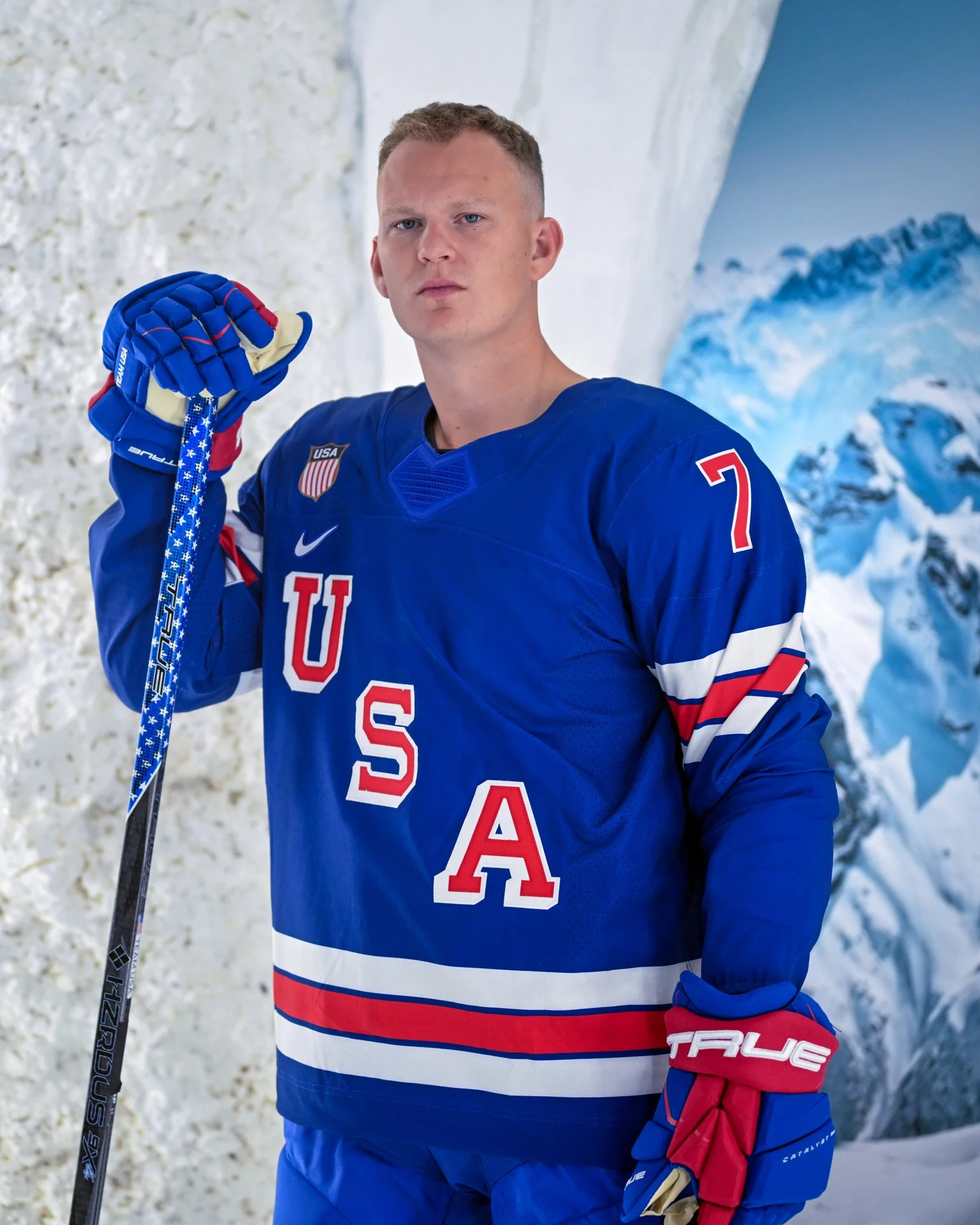
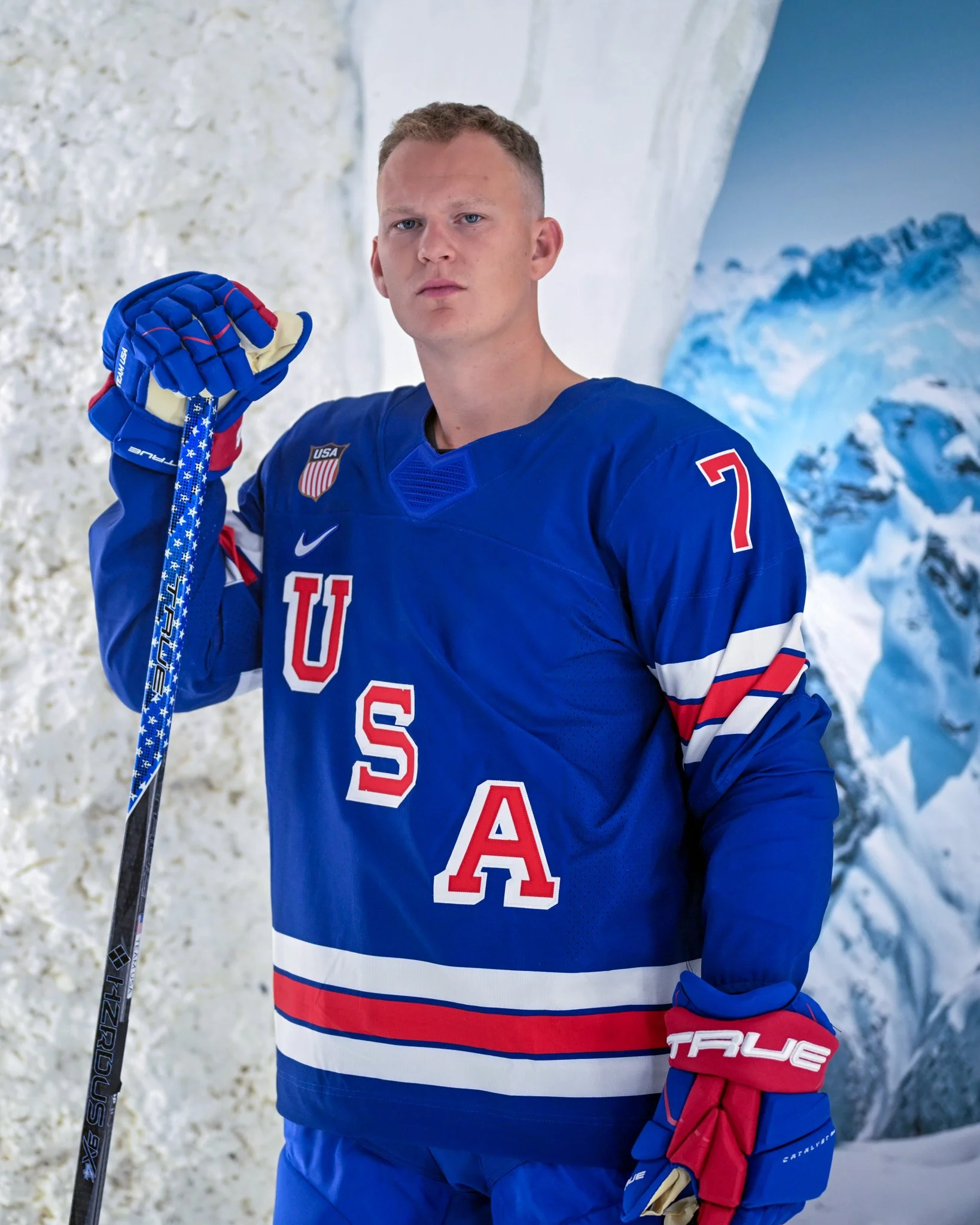
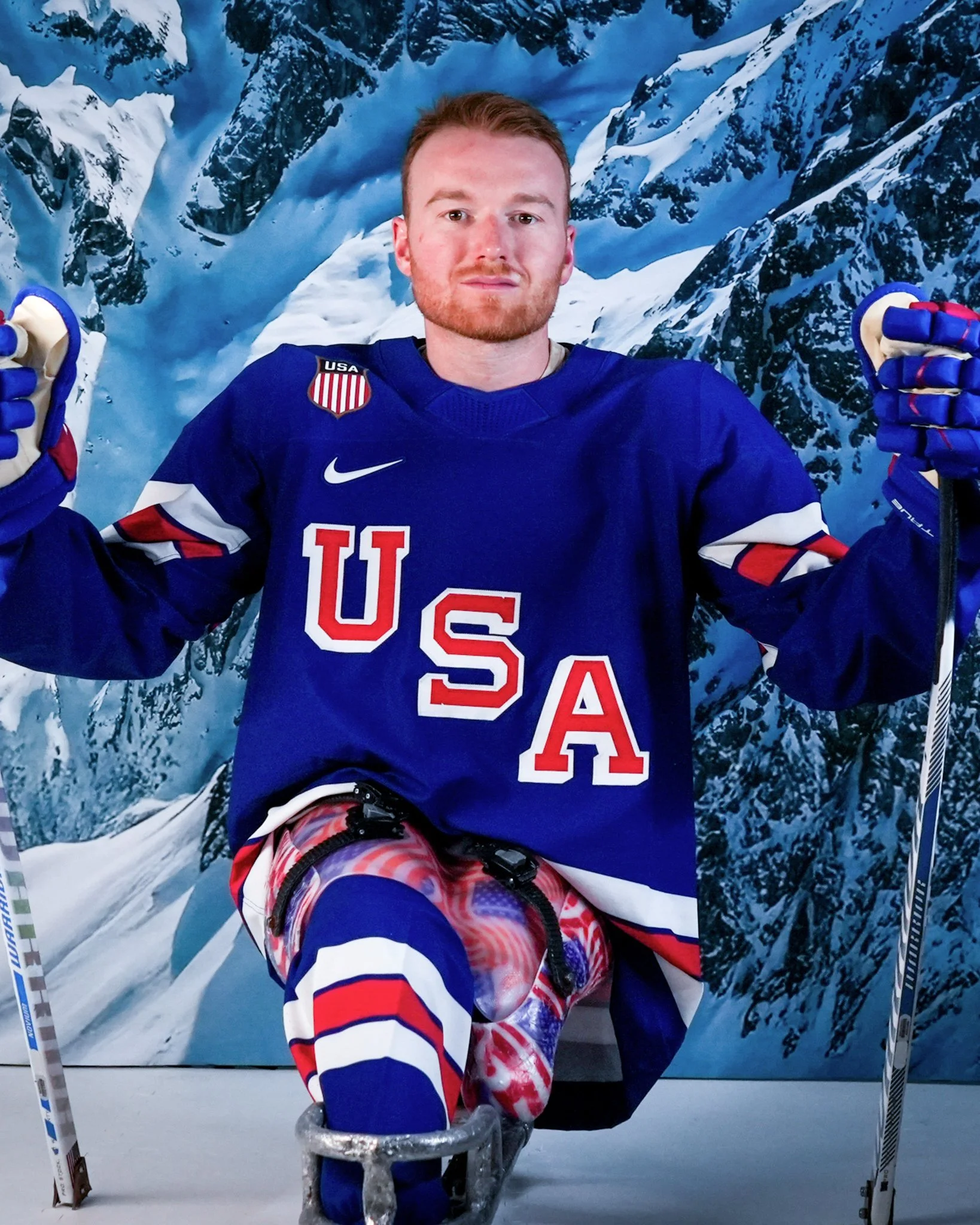
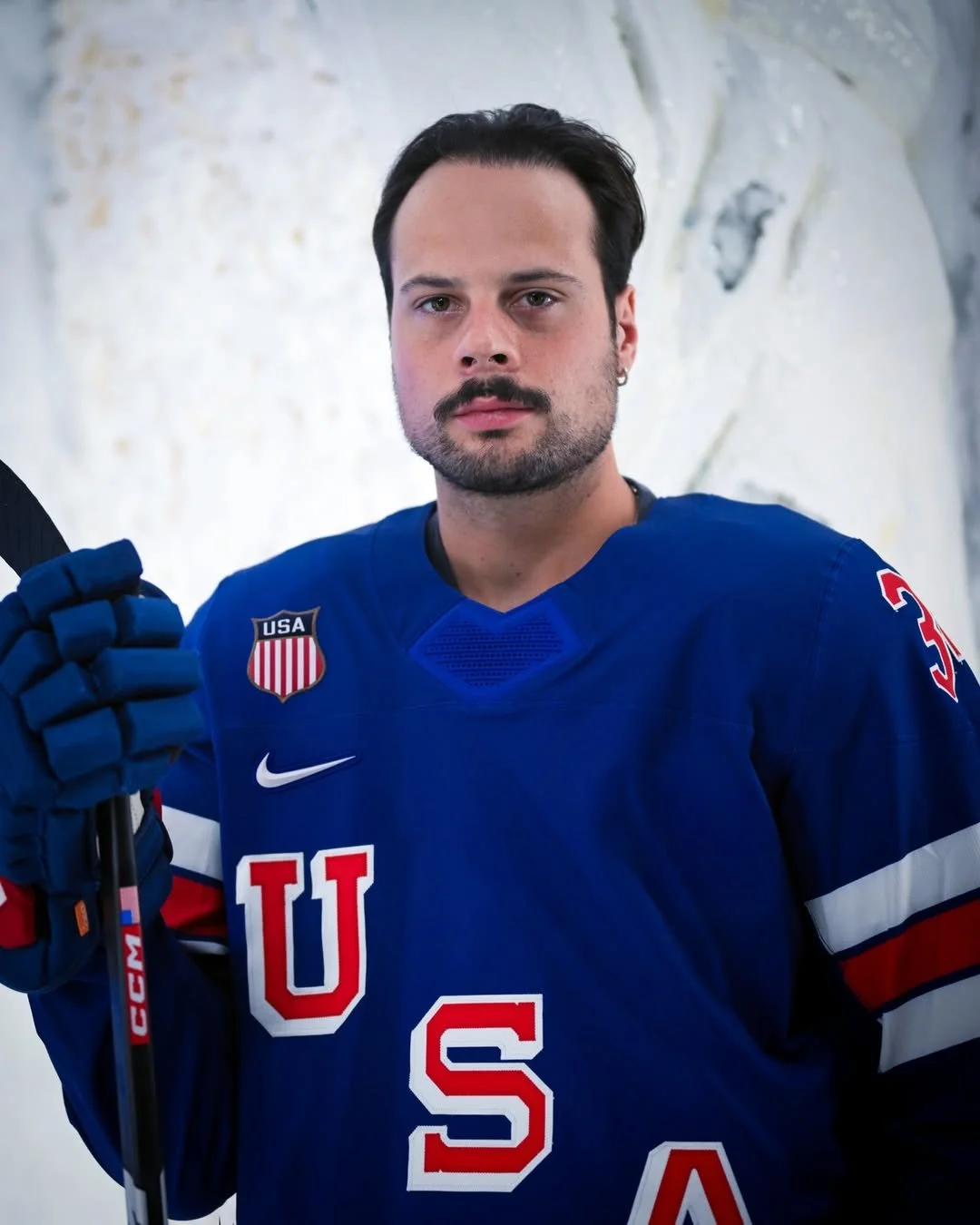
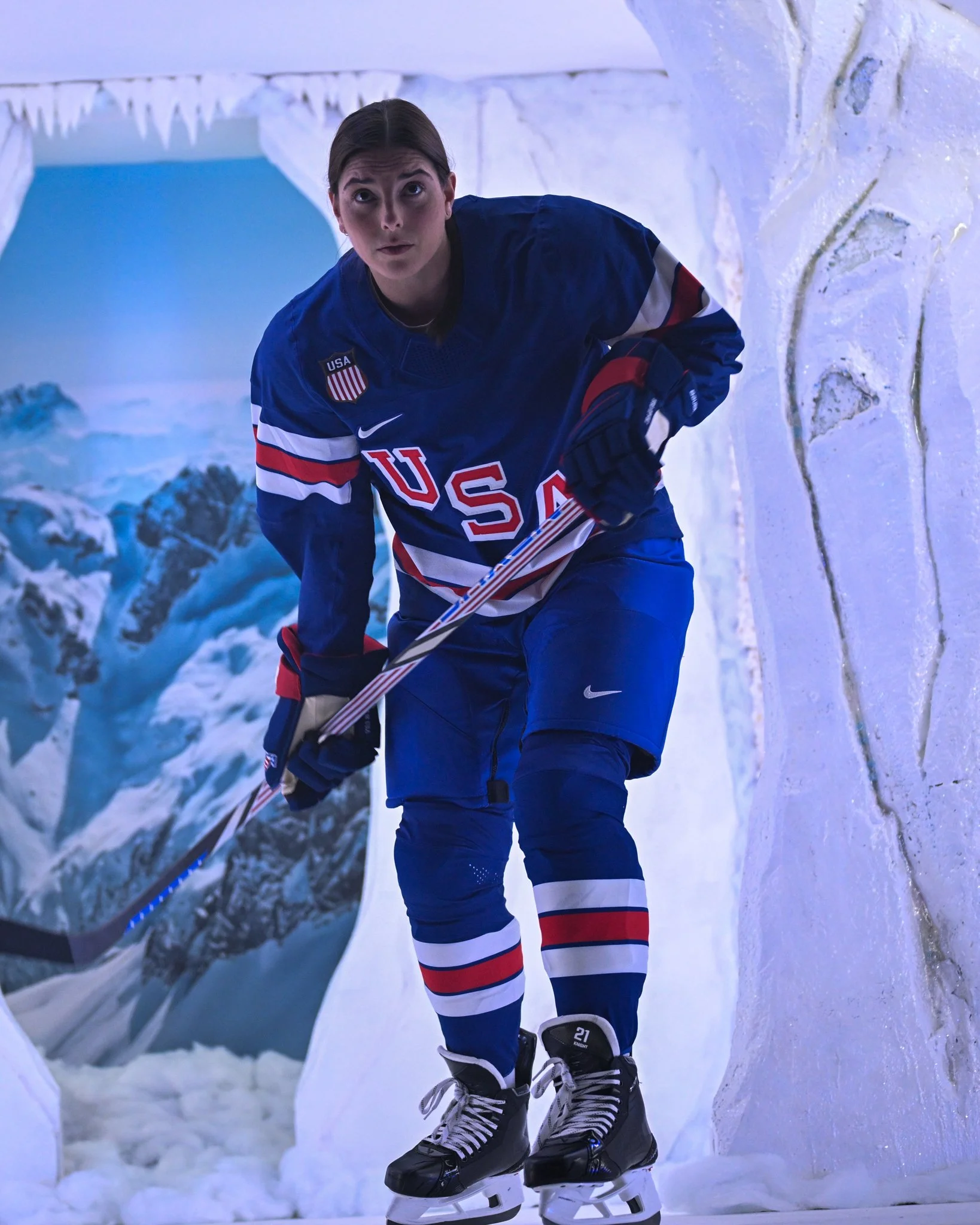
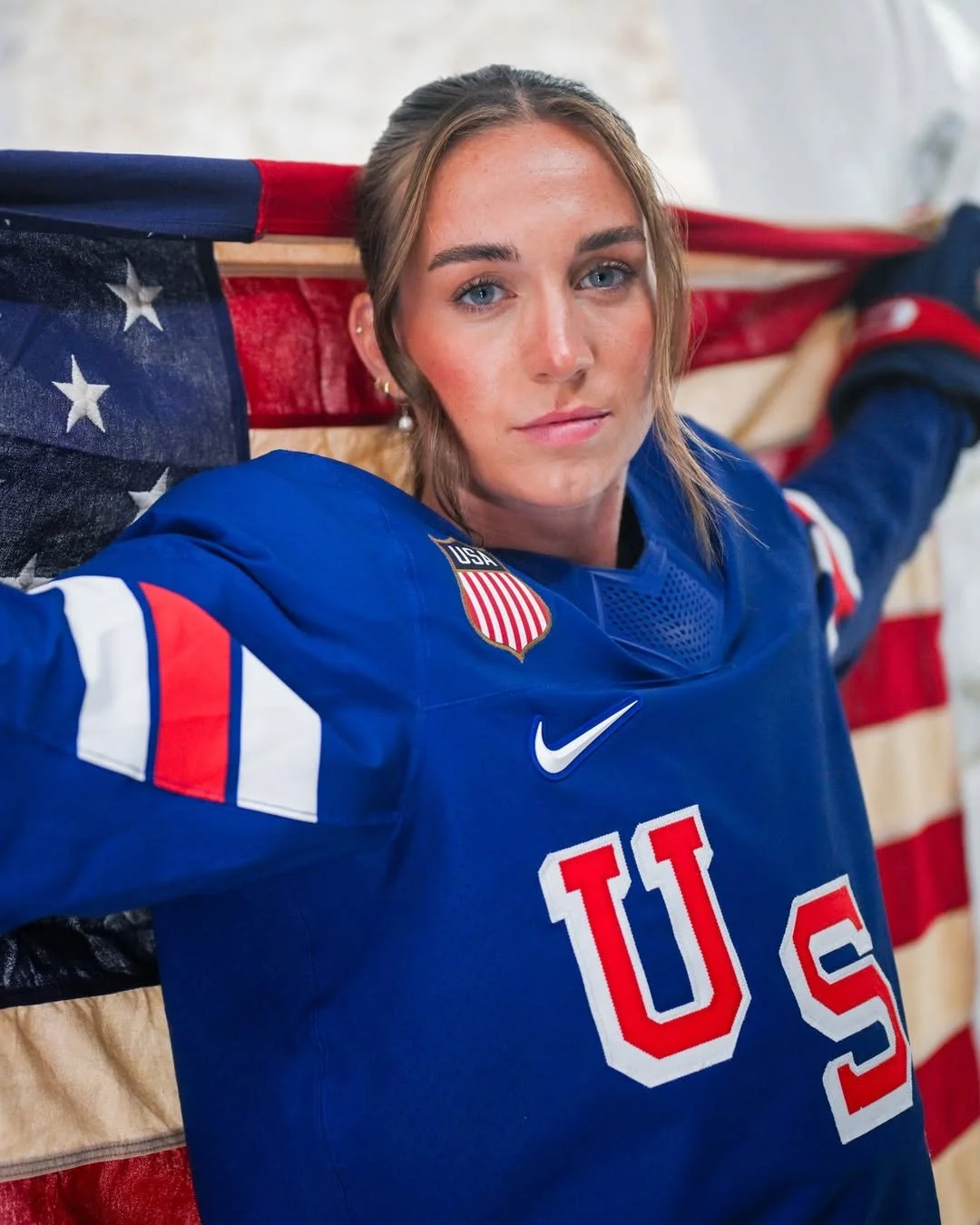
With five months until the world’s best hit the ice in Milan-Cortina, USA Hockey has officially revealed its 2026 Olympic and Paralympic jerseys, a pair of sweaters rooted in history, built for performance, and designed to remind fans of a legendary American run.
This year’s look pulls direct inspiration from the 1960 U.S. Olympic men’s hockey team, the squad that shocked the world in Squaw Valley by winning America’s first-ever gold medal in the sport. Now, more than six decades later, Team USA is chasing gold again this time wearing a modern uniform that connects past glory to present ambition.
The diagonal “USA” lettering across the chest immediately grabs attention. Classic, bold, and unmistakably vintage, it mirrors the typography worn by the ’60 team. Fans of the New York Rangers will also recognize the diagonal wordmark, giving the jersey an unmistakable throwback vibe with a contemporary Nike finish.
This isn’t the first time Team USA has leaned into the 1960s aesthetic. During the 2010 Winter Games in Vancouver, the men’s team wore a set inspired by the same era and famously defeated Canada 5–3 in group play. That game marked the Americans’ first win over Canada at the Olympics since 1960.

With the NHL returning to the Olympic stage for the first time since 2014, and with February’s 4 Nations Face-Off rivalry matchups still fresh in fans’ minds, anticipation is sky-high for another USA–Canada showdown. History may not repeat itself but the jerseys certainly do.
The 2026 uniforms released in both white and royal blue were built by Nike using its latest Nike Swift technology, engineered to reduce weight and enhance aerodynamics. While sleek and modern on the ice, the sweaters are filled with subtle historical cues:
A gold-accented USA Hockey crest near the shoulder serves as a nod to America’s recent international success on the world stage.
A small silicone triangle at the neckline, a signature Nike design touch.
Inside the collar, the phrase “Land of the free, home of the brave.” This hidden detail also appeared in the 2014 Sochi jerseys, tying multiple Olympic eras together.
Despite the classic influence, the design isn’t confined to the past it’s built for high-speed play in a tournament where every edge counts.
This new 2026 look represents more than nostalgia. It’s a reminder of American resilience, growth, and belief that history can be rewritten again—on one of the biggest stages in sports.