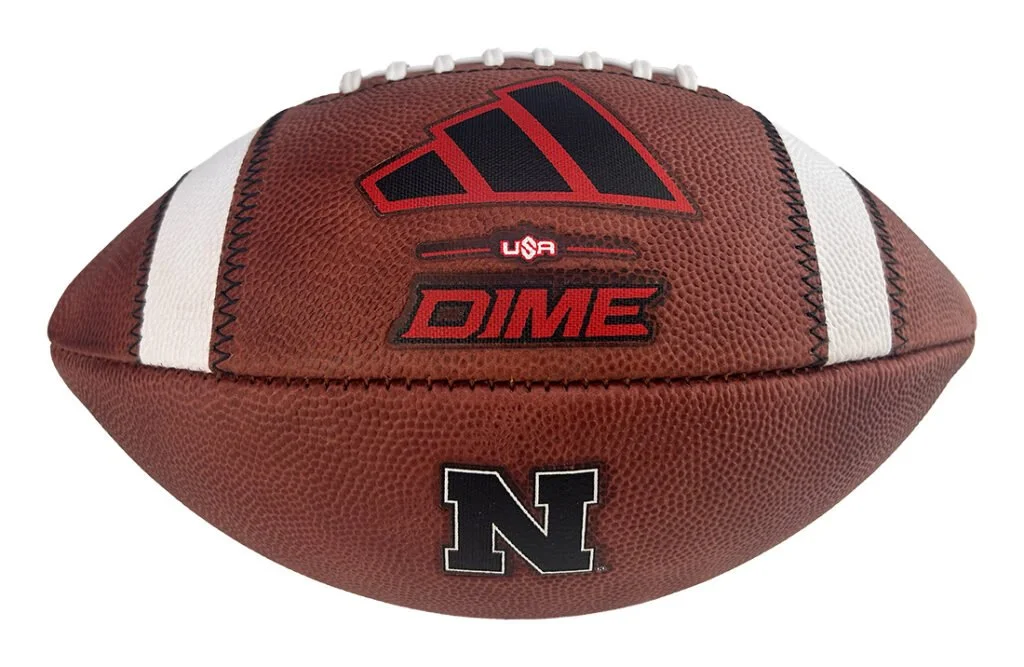
Patrick Mahomes' influence on Texas Tech football continues to grow.
The Red Raiders have unveiled their third Patrick Mahomes-inspired uniform, introducing a new "Let's Ride" look in collaboration with adidas and the Kansas City Chiefs quarterback ahead of the 2026 college football season.
Texas Tech will debut the uniform Sept. 18 against Houston in a Week 3 matchup at Jones AT&T Stadium.
The new uniform features a red and black color scheme, continuing the visual direction established by Texas Tech's previous Mahomes-inspired designs.
The look features Mahomes' signature "Gladiator" logo, which appears throughout the uniform. His name is featured on the back of the helmet, making the connection to the Red Raiders legend impossible to miss. The result is another uniform that blends Texas Tech's identity with the personal brand Mahomes has built since leaving Lubbock for the NFL.
The "Let's Ride" uniform continues a partnership that began before the 2024 season.
The “Let’s Ride” uniform is built around a sleek black base with bold red detailing throughout. The jersey features Texas Tech’s iconic Double T prominently on the chest, while the Big 12 logo and Adidas branding are incorporated into the upper design. The shoulder treatment is one of the standout elements, with angular red and silver striping creating a sharp, modern look that carries onto the sleeves. Mahomes’ signature Gladiator logo is featured prominently on the right chest, while the red numbers are outlined in black for a clean, aggressive finish.
The helmet continues the all-black aesthetic with a large red-and-white Double T on the side and Patrick Mahomes’ branding incorporated throughout. His name appears on the back bumper alongside the “GUNS UP” phrase, while the Gladiator logo returns to tie the entire uniform together. The pants continue the black base with subtle Texas Tech branding, giving the Red Raiders an almost entirely blacked-out look with red and silver accents providing the contrast.
Tennessee is taking a century of history onto the field.
The 2026 football season marks 100 years since Gen. Robert Neyland began his first season as head coach of the Tennessee Volunteers, and Tennessee Athletics has teamed up with adidas to celebrate the milestone with a new "Smokey Grey" alternate uniform honoring his legacy.
The Vols will debut the uniform Oct. 3 against Auburn at Neyland Stadium, bringing together design elements from throughout Neyland's legendary tenure from 1926 through 1952.
Rather than recreating one specific uniform, Tennessee pulled details from multiple eras of Neyland's career, incorporating references to his military background, championship teams, football philosophy and the evolution of Shields-Watkins Field into what is now Neyland Stadium.
The helmet might be the most striking piece of the collection. The design draws inspiration from the leather helmets Tennessee players wore from the program's early days through 1949, including cross-pattern and stitching details pulled from the Vols' 1938 national championship helmet.
That 1938 team was dominant, allowing just 16 points across an 11-game season, including eight shutouts, on its way to Tennessee's first national championship.
A bold star appears on the back of the helmet, representing Neyland's rank as a Brigadier General. His signature is featured on the back bumper, while a stenciled "UT" on the front bumper references the type of lettering seen on Tennessee practice gear during the Neyland era.
One of the most personal details is the Neyland patch. The patch uses the silhouette of Neyland's famous kneeling pose, the same image used for his statue that now serves as the centerpiece of Champions Corner on the southwest side of Neyland Stadium. His signature is incorporated into the patch, making it one of the uniform's most direct tributes to the legendary coach.
Neyland wasn't only a football coach. His background in the Army Corps of Engineers also influenced the development of Tennessee's home venue.
The shoulder design features architectural blueprints from the 1948 expansion of Shields-Watkins Field, which helped create the south end of the stadium. Those architectural details remain visible in some of the oldest portions of what is now Neyland Stadium. It's a particularly fitting detail considering how closely Neyland's legacy is tied to the stadium that eventually carried his name.
Another deep-cut historical reference appears in the form of the interlocking UT. The design comes from a 1952 photograph of Neyland wearing a rarely seen, baseball-inspired version of the Tennessee logo. The reference also connects to Neyland's own playing career.
Before becoming one of college football's legendary coaches, Neyland played baseball at Army from 1913-16 as a pitcher and first baseman. He finished his Army pitching career with a 35-5 record, an .875 winning percentage that remains second in program history.
While Tennessee officially adopted orange and white as its primary colors in 1891, the Vols' early uniforms weren't always the instantly recognizable orange-and-white combination fans know today. During the program's first half-century, Tennessee uniforms featured a mixture of orange, white, grey, black and tan. The cream accents on the new uniform specifically reference the color of the tan leather helmets and football pants worn during the early years of the program.
That helps explain why the Smokey Grey uniform feels so different from a typical Tennessee alternate while still being rooted in legitimate program history.
The uniform's number font is another historical callback.
The typography and sizing recreate the numbers used by Tennessee's 1938 and 1939 teams, bringing another detail from Neyland's championship era into the modern design. It's the kind of small detail that may go unnoticed at first glance but gives the uniform considerably more historical depth.
Perhaps the most personal detail is hidden inside the uniform. Neyland developed 38 team maxims throughout his coaching career. Seven of them, known as the Game Maxims, continue to be used by Tennessee teams today.
The inside of the back collar features "Carry the Fight" in Neyland's handwriting, referencing the opening command of his seventh Game Maxim. It's a subtle reminder that the uniform isn't only celebrating what Neyland wore or how his teams looked. It's also celebrating the philosophy he left behind.
Tennessee and adidas went even deeper with the design. The front collar features checkerboard perforations, referencing Neyland's famous command for his players to "charge the checkerboards" atop Ayres Hall, which sits north of Shields-Watkins Field.
Meanwhile, the perforations at the bottom of the jersey feature vertical traction lines inspired by the stripes found on some of Tennessee's earliest football uniforms.
Tennessee's Smokey Grey uniform is much more than another alternate.
Nearly every major element has a purpose, from the leather helmet-inspired construction and 1938 championship details to Neyland's signature, military rank, stadium blueprints and handwritten maxims.
The result is a uniform that tells the story of Robert Neyland, Tennessee football and the evolution of one of college football's most iconic programs.
Baylor is bringing back one of the most recognizable looks in program history.
The Bears unveiled a throwback uniform featuring the iconic bear paw, which will take the field Sept. 26 when Baylor hosts Colorado at McLane Stadium for its Big 12 opener.
The uniform pays tribute to the Grant Teaff era, recreating a look worn by Baylor from 1982 through 1992 and celebrating some of the most memorable teams in program history.
The centerpiece of the throwback is the return of the bear paw on the shoulder pads, marking the first time the iconic design has appeared on a Baylor football uniform in more than three decades.
The jersey also features Baylor across the chest, recreating another defining element of the original uniforms. Rather than simply copying the past, Baylor has incorporated several details that connect the uniform directly to the Teaff era and the program's history.
The helmet features 10 stars, a tribute to Hall of Fame head coach Grant Teaff. Teaff originally introduced the star decals to Baylor's helmets and led the Bears to their first 10-win season. He also recorded 10 victories over Texas during his legendary tenure in Waco.
The stars therefore carry multiple layers of meaning, connecting the throwback uniform to one of the most successful periods in Baylor football history.
The Sept. 26 game against Colorado will have an even stronger connection to the past as Baylor honors the 1991 team, one of the most memorable squads from the Teaff era.
That team delivered one of the program's signature victories when the Bears traveled to Boulder and defeated defending national champion Colorado.
The bear paw uniform has remained popular among Baylor fans long after it disappeared from the field.
Its return gives the program an opportunity to celebrate the players who wore it while introducing a new generation of fans to an important chapter of Baylor football history.
The Third Saturday in October is getting a throwback look.
Alabama and Tennessee announced that they will bring back a long-standing rivalry tradition, with both teams wearing their home jerseys when they face each other in 2026 and 2027.
That means Alabama will wear its iconic crimson jersey at Neyland Stadium on Oct. 17, 2026, while Tennessee will wear its orange jersey at Saban Field at Bryant-Denny Stadium in 2027. The two-year agreement was coordinated by both schools, their head coaches and the SEC.
The 2026 matchup will mark the first time since Oct. 17, 1970 that Alabama and Tennessee have both worn their home jerseys in Knoxville.
The 2027 meeting will make even more history. When Tennessee travels to Tuscaloosa, the Volunteers will wear their orange jerseys inside Saban Field at Bryant-Denny Stadium for the first time ever.
The uniform decision is a natural callback to the history behind the rivalry's famous nickname. Alabama and Tennessee first played on the traditional third Saturday in October in 1928, and the matchup continued on that date for 66 consecutive years through 1994. SEC scheduling changes ended the annual third-Saturday tradition in 1995, although the rivalry has continued to carry the name.
The rivalry itself dates back even further, with the programs first meeting in 1901. The teams have played every season since 1928 except 1943, when Tennessee did not field a team during World War II. The 2026 matchup will be the 109th meeting between the two programs.
Alabama currently leads the series 61-39-8 under the NCAA's historical accounting.
The Third Saturday in October, that's about as fitting as it gets.
Missouri is taking a trip through its football history to celebrate a century of Memorial Stadium.
The Tigers unveiled a special throwback uniform that will be worn Sept. 19 against Troy as part of the celebration marking the 100th anniversary of Memorial Stadium.
Rather than recreating one specific uniform from the past, Mizzou's Centennial look pulls details from several defining eras of Tigers football, creating a uniform that connects the program's history from the 1920s to today.
The centerpiece of the look is a black jersey featuring a classic M logo inspired by the 1920s, when Memorial Stadium was constructed and opened. The jersey also takes a minimalist approach by leaving the chest completely clean.
One of the most noticeable details comes on the sleeves. The black, gold and white striping is inspired by the 1970s, a period when Missouri transitioned from the defense-heavy style of the 1960s into a more modern, high-powered offense.
The helmet continues the historical theme with the Block M, which first appeared on a Mizzou helmet in 1971.
For the Centennial uniform, the logo features a narrow type treatment paired with a gray facemask, recreating another distinctive element from the program's past.
The Block M has gone through numerous iterations over the decades, making it one of the most recognizable symbols in Missouri football history.
The helmet also features an especially meaningful detail on the front bumper. The bumper showcases the six Ionic-style columns of Mizzou's Francis Quadrangle, which have stood as a symbol of the university since 1892.
The pants complete the throwback look with a shade of gold inspired by the historic color worn by the Tigers through the 20th century and before the 21st-century evolution of Mizzou's gold.
Combined with the black jersey and vintage-inspired helmet, the pants help give the entire uniform the feel of a classic Mizzou football era.
Mizzou has essentially created a visual timeline of its football program, pulling individual details from different eras and bringing them together for one game.
Boise State is celebrating four decades of one of the most recognizable playing surfaces in sports with a helmet that is just as unique as The Blue itself.
The Broncos will wear a one-of-a-kind, hand-painted 40th anniversary helmet when they host Memphis on Sept. 12 for their 2026 home opener.
Created by renowned artist Armando Villarreal, the custom helmet transforms Boise State's traditional blue shell into a tribute to 40 years of The Blue, incorporating details that celebrate the field's history, the university's identity and the fans who helped make it one of college football's most iconic symbols.
The helmet features a textured rendering of Boise State's famous blue turf, with individually painted blades of turf creating the illusion of the actual playing surface.
On the right side, an oversized "40" takes center stage. The numeral uses the same font featured on Boise State's original blue turf when it debuted in 1986.
Seven hashmarks run across the top of the helmet, representing each installation of The Blue throughout its 40-year history.
The left side pays tribute to another piece of Boise State history, featuring the retro logo that was painted at midfield when The Blue debuted in 1986.
Designed by Boise artist John Collias, the vintage mark features an orange-and-blue bronco over the outline of Idaho. The logo served as Boise State's primary emblem from 1982 through 2002.
Additional anniversary details appear throughout the helmet, including "The Blue" on the front bumper and "EST. 1986" centered on the back bumper underneath the U.S. flag and Pac-12 logo.
The Blue made its debut in 1986 following a bold decision by then-athletics director Gene Bleymaier. What began as an unconventional playing surface has since become one of the most recognizable visual identities in college football.
For Boise State, The Blue represents more than a football field. It has become synonymous with the Broncos and has helped put Boise State, the city of Boise and the state of Idaho on the national sports map.
The helmet was created by artist Armando Villarreal, who has become known for his custom college football helmet work.
Each helmet is sanded to create a surface that allows the paint and design to properly adhere. From there, the helmets are scuffed, airbrushed and cleaned, with each individual helmet requiring at least three hours of work. Completing an entire order can take at least two months.
Fans will also have an opportunity to own one of the hand-painted helmets.
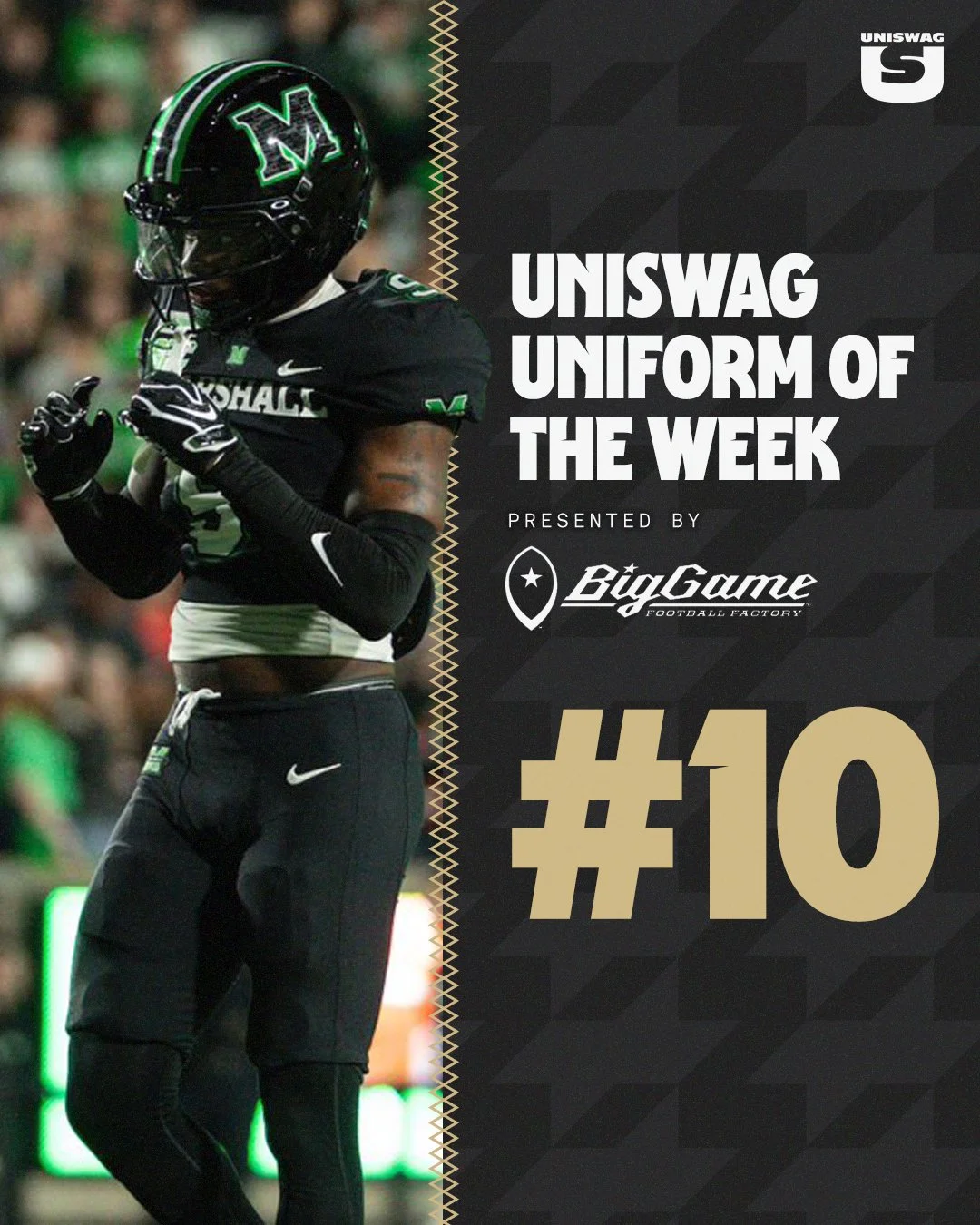
Marshall University is turning back the clock for one of the most meaningful games on its 2026 football schedule.
The Thundering Herd unveiled a special throwback uniform honoring the 75 people who lost their lives in the 1970 Southern Airways Flight 932 crash, while also commemorating the 20th anniversary of the 2006 film We Are Marshall.
Marshall will wear the uniforms during its annual “75” game against Appalachian State on Nov. 14, exactly 56 years after the tragic crash.
The uniforms closely recreate the look worn by Marshall during the 1970 season, bringing back the classic green-and-white aesthetic of the Thundering Herd.
The throwback also carries special significance because 2026 marks the 20th anniversary of We Are Marshall, the 2006 film that brought the story of the crash and Marshall's rebuilding efforts to a national audience.
The film, starring Matthew McConaughey as head coach Jack Lengyel, chronicles Marshall's efforts to rebuild its football program following the tragedy.
The uniforms featured in the film were inspired by Marshall's 1970-era look, making the 2026 throwback a fitting connection between the real history of the program and the movie that introduced the story to a new generation.
While the overall uniform recreates Marshall's 1970 look, the helmets feature one of the most meaningful details.
Marshall's helmets will feature a sticker depicting the silhouette of the fountain on campus that honors the 75, accompanied by the date: NOV. 14, 1970
It's a small detail that makes the uniform more than simply a retro design. Every element is intended to serve as a reminder of the people who were lost and the legacy they left behind.
When Marshall takes the field against Appalachian State on Nov. 14, the uniform will connect the 1970 team, the 2006 film and the 2026 Thundering Herd through one of the most important stories in college football history.
Arizona State is bringing one of the greatest teams in program history back to life.
In 2026, the Sun Devils will celebrate the 40th anniversary of their 1986-87 Rose Bowl championship season with a throwback uniform inspired by the team that remains the only Arizona State squad to bring home the Rose Bowl trophy.
The uniform takes the Sun Devils back to the look of the mid-1980s, featuring a gold helmet, maroon jersey, gold pants and a series of classic maroon, white and gold stripes that run throughout the uniform.
The throwback begins with a gold helmet paired with a white facemask and a classic Sparky decal. The Sparky logo features a thicker white outline than the modern version, giving it a distinctly vintage appearance.
The centerpiece of the helmet is a five-stripe maroon and white pattern running down the middle. A thick maroon stripe sits at the center, flanked by thinner white stripes and additional maroon stripes on the outside.
While the original 1986 decals featured a slightly lighter red shade, Arizona State has updated the colors for the 2026 version to better match the program's modern maroon. The result is a more cohesive interpretation of the original design while maintaining its unmistakable 1980s character.
The Sun Devils will return to their traditional maroon home jersey, with gold collegiate block numbers outlined in white on the front and back.
Across the chest, “Arizona State” appears in simple white lettering, while the nameplate on the back uses gold text. The sleeves feature another signature element of the design: a three-stripe horizontal pattern with a gold stripe in the center and white stripes above and below it.
Player numbers are also placed on the tops of the shoulders in the same classic block style.
While the uniform is designed around historical accuracy, Arizona State added one detail specifically to celebrate the team's Rose Bowl championship.
A small leather Sparky patch sits on the back collar of the jersey.
Flip the patch around, and the inside features the year “1987” along with three embossed roses, a subtle tribute to the Rose Bowl victory. It's a detail that wouldn't have appeared on the original 1986 uniform, but it gives the 2026 version a unique connection to the championship being celebrated.
The pants keep things relatively simple while continuing the uniform's stripe-heavy design. The gold pants feature the same maroon-and-white five-stripe pattern running down each side, creating a consistent visual connection between the helmet, jersey and pants.
What makes Arizona State's 2026 uniform stand out is the consistency of the design. From the five-stripe helmet to the shoulder stripes and matching pant stripes, the maroon, white and gold elements create a cohesive look from head to toe.
This time, they're celebrating the only team in program history to do what every Sun Devil team dreams of: win the Rose Bowl.
Louisville is bringing a piece of the city's boxing history to the football field.
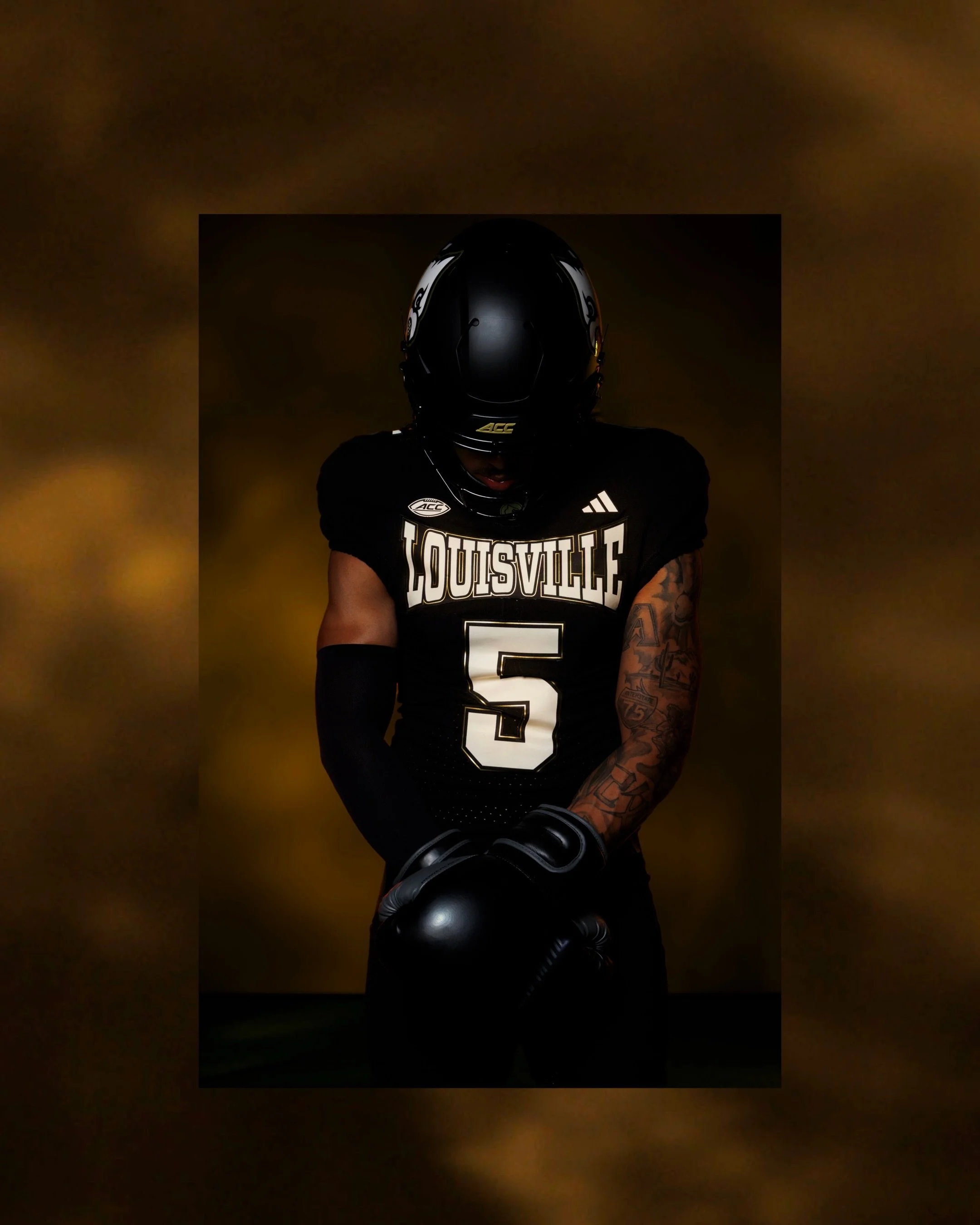
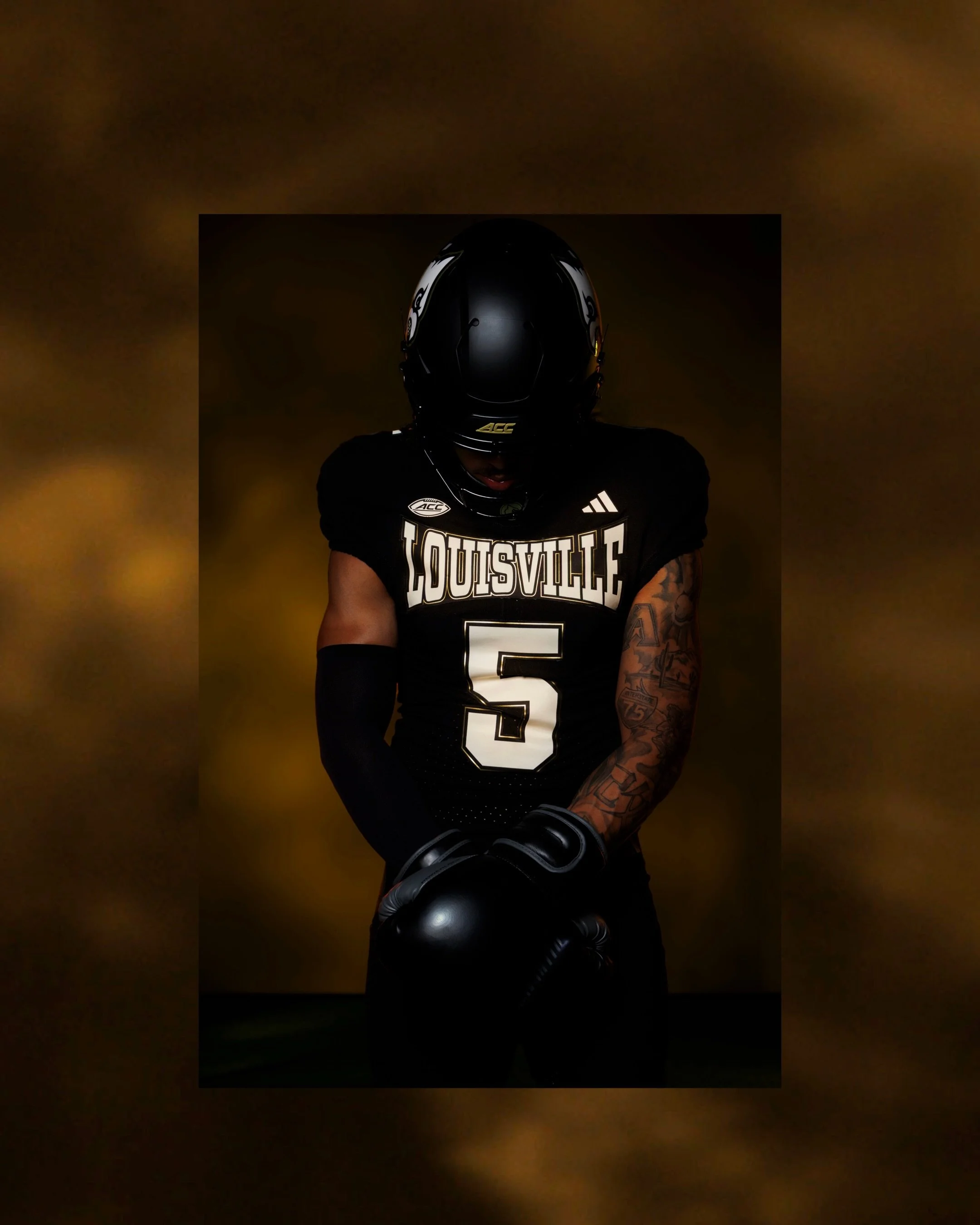
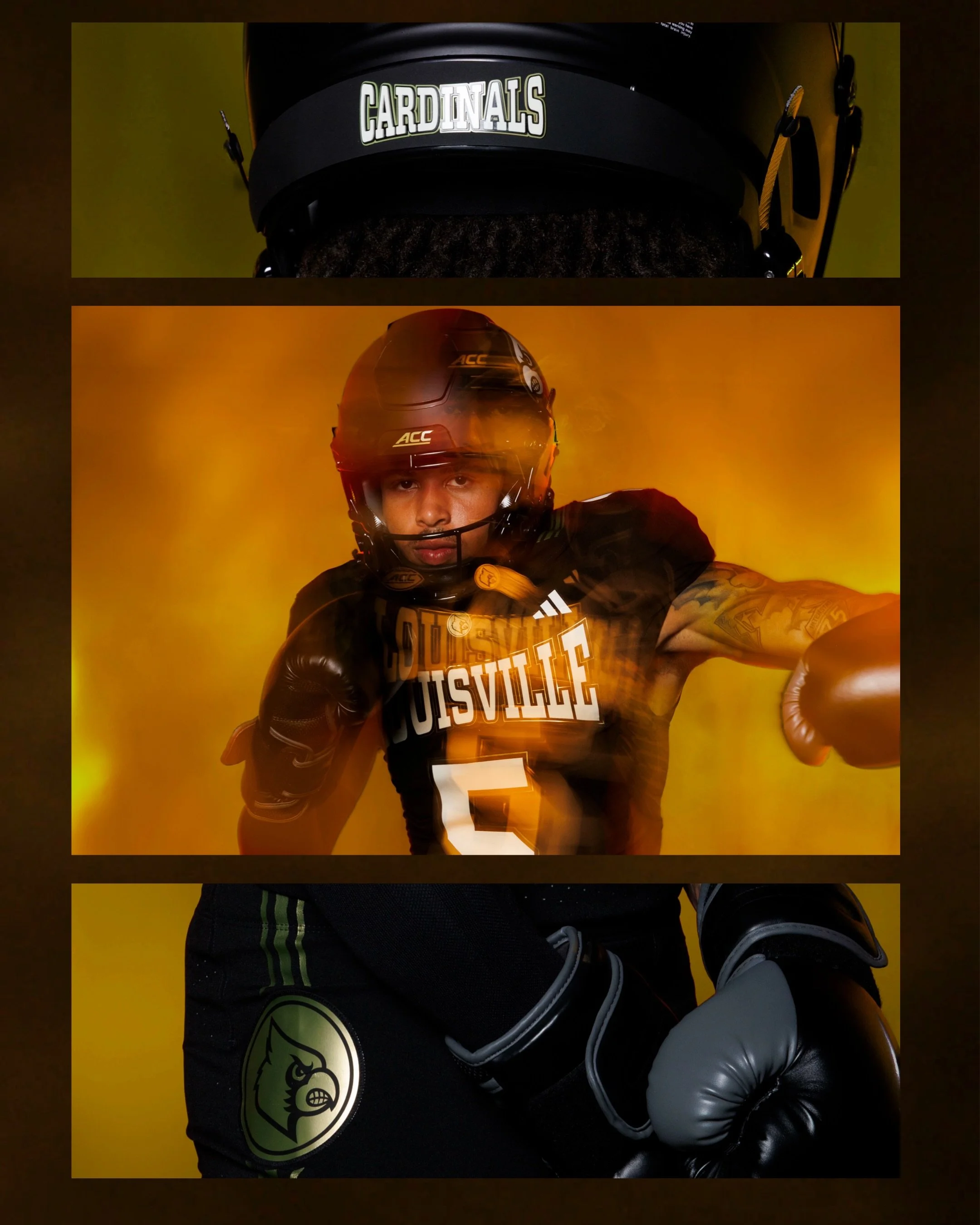
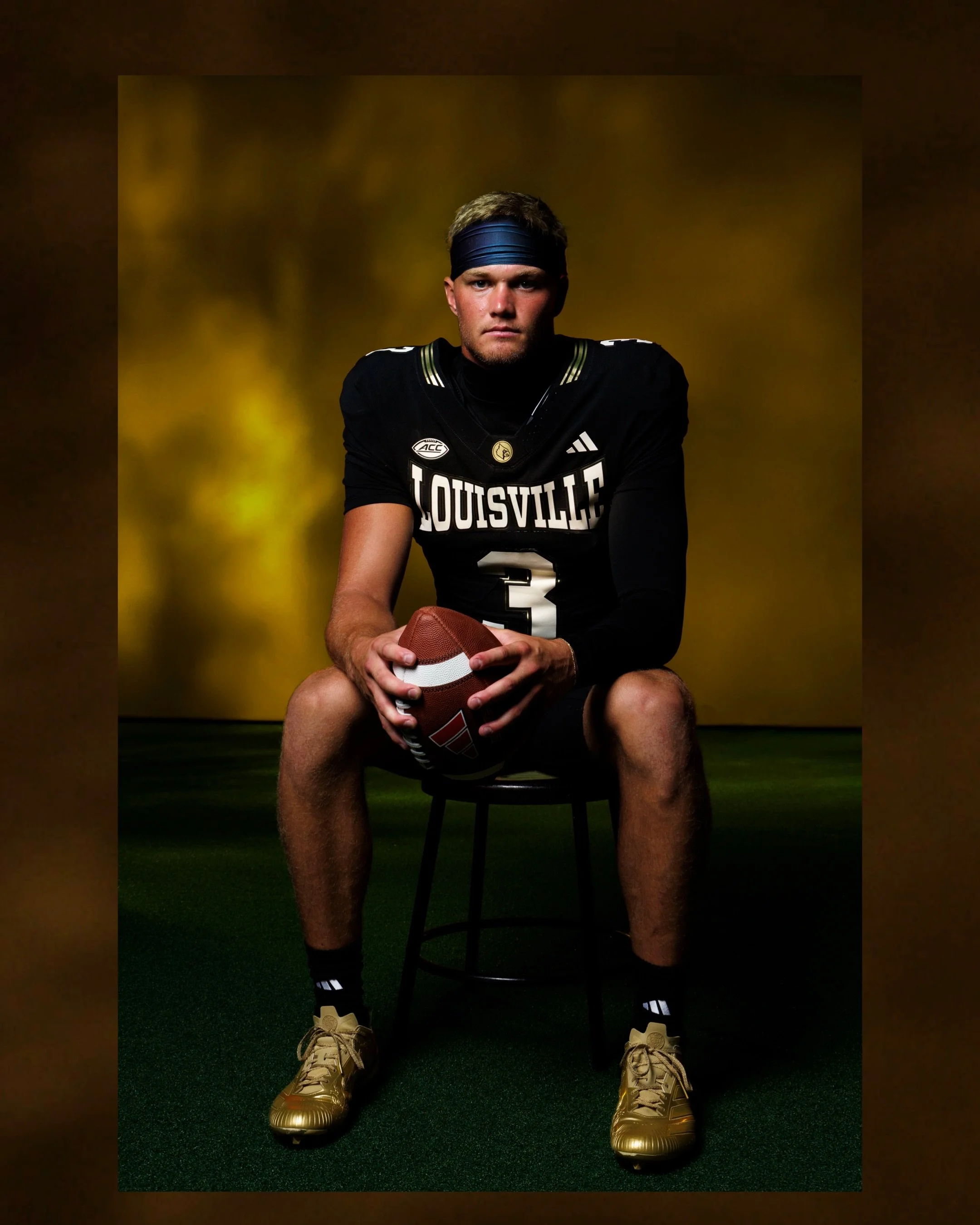
The Cardinals have unveiled their new “For The Ville” uniform, a 2026 alternate inspired by Louisville legend Muhammad Ali. The design draws heavily from the look of Ali's iconic boxing gear, giving Louisville one of its most unique football uniforms in recent years.
Ali's connection to Louisville runs deep, making him a natural source of inspiration for the Cardinals' latest alternate.
The new jerseys feature a black base with “Louisville” across the chest in white, using a typeface that closely resembles the branding associated with Everlast, the boxing brand famously connected to Ali and the sport.
The stripped-down black-and-white design gives the uniform the appearance of a classic boxing kit while translating Ali's legendary aesthetic to the football field.
The result is a look that feels distinctly different from Louisville's traditional red-and-black uniforms.
Louisville has previously honored Ali with alternate uniforms, including an all-white design during the 2019 season and a uniform inspired by Ali's famous “Rumble in the Jungle” bout against George Foreman in 2024.
The 2026 version takes a different approach, using Ali's boxing aesthetic as the foundation rather than simply recreating one of his famous fight uniforms.
The Cardinals will debut the “For The Ville” uniforms on October 31, when Louisville hosts Stanford.
The Washington Huskies are bringing back the blackout.
Washington has unveiled a new all-black alternate uniform that the Huskies will wear for one game during the 2026 season. While the specific matchup has not yet been announced, the new look gives Washington another option to step outside of its traditional purple and gold.
The biggest change to the new uniform can be found across the chest.
Instead of the traditional Washington wordmark, the new jerseys prominently feature “Dawgs” stitched in gold lettering, giving the uniform a distinctly different personality.
The black jerseys are accented with purple and gold piping, while the uniform numbers are rendered in purple. The combination creates a much darker look than Washington's traditional purple-and-gold uniforms while maintaining the program's signature colors.
The “Dawgs” branding is particularly notable, giving the Huskies a more informal and player-driven identity on the field.
For Washington, the new look provides another tool in that arsenal, and the “Dawgs” wordmark gives the uniform a personality that feels distinctly different from the Huskies' standard uniforms.
With black jerseys, purple numbers, gold detailing and “Dawgs” across the chest, Washington's latest alternate is a significant departure from its traditional look.